Scotland’s two recent by-elections have triggered renewed political debate across the United Kingdom, with the Scottish Conservatives securing a breakthrough victory in Aberdeen South while the Scottish National Party (SNP) retained Arbroath and Broughty Ferry.
Political observers believe the results extend beyond local politics and reflect voter sentiment on national political issues, energy policy and Scotland’s future constitutional direction.
Scottish Conservative candidate Douglas Lumsden won the Aberdeen South by-election, marking the party’s first by-election victory in Scotland since 1973.
The seat was previously held by SNP MP Stephen Flynn, who resigned his parliamentary position after being elected to the Scottish Parliament. In the by-election, Lumsden defeated SNP candidate and former MP Richard Thomson by a margin of more than 6,000 votes.
The results indicated that the Conservatives secured support from nearly half of participating voters in the constituency.
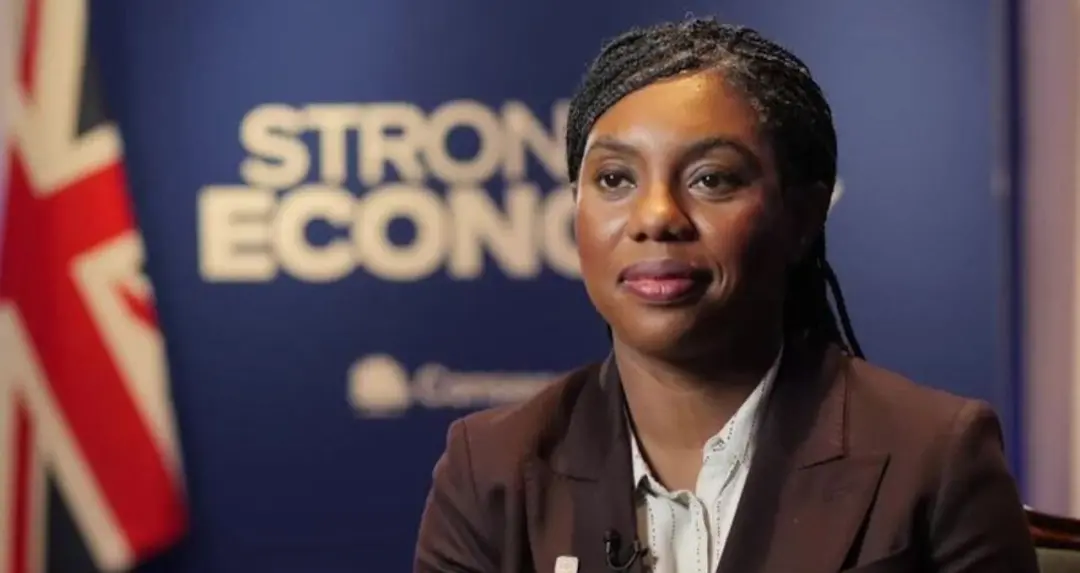
Conservative Party leader Kemi Badenoch said the outcome represented more than a local victory and carried national political significance.
She stated that voters in Aberdeen had sent a clear message to both the governing Labour Party and the SNP that concerns of communities connected to the oil and gas industry could not be ignored.




Badenoch linked the result to broader issues of energy security and national security, saying the United Kingdom must give serious consideration to its future energy strategy. She said the vote reflected the views of people whose livelihoods are connected to the energy sector.
Aberdeen has long been regarded as the centre of the United Kingdom’s oil and gas industry and has become a focal point in debates over national energy policy.
The British government recently decided to establish the headquarters of public energy company GB Energy in Aberdeen. Despite that decision, concerns remain among local communities that energy transition policies could affect the traditional oil and gas industry.
Douglas Lumsden, a former oil and gas industry employee, repeatedly highlighted the issue during the campaign. He said voters had signalled opposition to policies that could weaken the sector.
While the Conservatives won in Aberdeen South, the SNP retained Arbroath and Broughty Ferry with a decisive victory.
SNP candidate Lara Bird defeated the Conservative candidate by a margin of more than 5,000 votes. The result provided a boost to the party following a period of political challenges in recent months.
Following her victory, Bird said voters had rejected divisive politics and had reaffirmed support for a future based on self-determination and independence for Scotland.

The SNP has long supported Scottish independence, and party leaders described the by-election result as a positive signal for the independence movement.
Political observers said that while the prospect of an independence referendum appears limited in the immediate future, the SNP continues to place the issue at the centre of its political agenda.
The victory in Arbroath and Broughty Ferry enabled the party to argue that support for independence remains influential in Scottish politics.
The governing Labour Party recorded disappointing results in the by-elections.
In Arbroath and Broughty Ferry, Labour fell from second place to fourth place. Analysts said the outcome could raise concerns for Prime Minister Keir Starmer and his party and may prompt a review of Labour’s strategy and organisational structure in Scotland.
Reform UK also increased its presence in some areas and secured third place, highlighting growing multi-party competition in British politics.
The by-election results have intensified discussion over the United Kingdom’s energy policy.
Environmental groups continue to advocate reducing dependence on fossil fuels, while communities linked to the oil and gas industry have expressed concerns about employment and economic security.
Greenpeace UK criticised the Conservatives, saying reliance on traditional industries alone may not provide a long-term economic solution for the region.
Conservative leaders, meanwhile, have argued that protecting local industries and jobs should remain a priority during the energy transition.
The results in Aberdeen South and Arbroath indicate that Scottish politics remains highly competitive and shaped by multiple issues.
While the Conservatives attracted support on energy and employment concerns, the SNP maintained its position through its focus on independence and regional identity.
The outcomes may influence future debates on national politics, energy policy and Scotland’s constitutional future in the months ahead.