
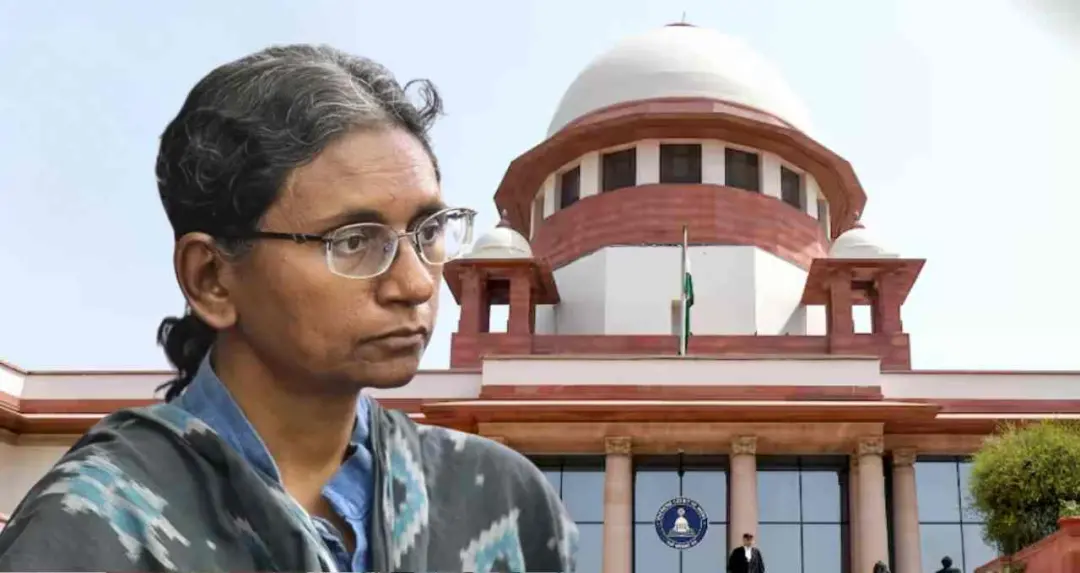
Congress leader Meenakshi Natarajan’s petition challenging the rejection of her nomination for the Rajya Sabha election held in Madhya Pradesh on June 9, 2026, was dismissed by the Supreme Court of India on Friday, June 12, 2026.
A bench comprising Justices P.K. Mishra and A.S. Chandurkar declined to entertain the plea, holding that Article 329 of the Constitution of India restricts judicial intervention in matters connected with an ongoing electoral process and that an election petition is the prescribed legal remedy for resolving such disputes.
Natarajan had filed her nomination for the Rajya Sabha election from Madhya Pradesh. However, the Returning Officer rejected her nomination on the ground that she had not disclosed details of a summons issued in connection with proceedings before a court in Hyderabad in her election documents.



Following the rejection, Natarajan approached the Supreme Court directly, challenging the Returning Officer’s decision. She contended that the legal proceedings concerned were at a preliminary stage and that disclosure of the matter was not mandatory under the law.
In its order, the Supreme Court referred to Article 329 of the Constitution, which bars judicial interference once the electoral process has commenced and provides a specific legal mechanism for addressing election-related disputes. The bench observed that creating exceptions to the established constitutional framework could result in inconsistency if courts intervened in some nomination rejection cases while declining to do so in others.

The court stated that election-related disputes are required to be addressed through election petitions and that the prescribed procedure must be followed. Accordingly, it held that the petition could not be entertained.
Appearing for Natarajan, senior advocate Abhishek Manu Singhvi argued that the Returning Officer’s decision was not legally justified. He submitted that under the Representation of the People Act, candidates are required to disclose only those cases in which charges have been framed against them or in which they have been convicted by a court.
Singhvi told the court that the Hyderabad court had merely sought a response at a preliminary stage and that the process of taking cognisance of the complaint had not been completed. He argued that the omission of the matter from the nomination documents could not constitute a valid ground for rejecting the nomination.
Referring to its earlier judgments, the Supreme Court said that maintaining judicial restraint in election matters is an important aspect of the constitutional framework. The bench noted that, in keeping with the spirit of Article 329, the court has consistently refrained from exercising its writ jurisdiction during the electoral process. It added that candidates aggrieved by the rejection of their nominations have the remedy of filing an election petition.
The court also clarified that dismissal of the petition did not extinguish Natarajan’s legal rights. It stated that if she, or any other person on her behalf, files an election petition before the appropriate High Court, the matter would be considered independently in accordance with law.


