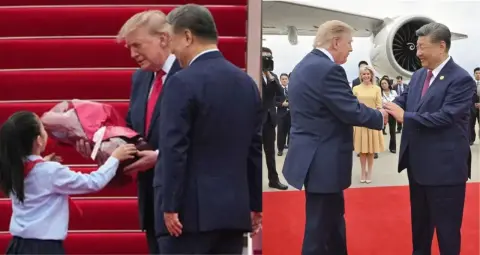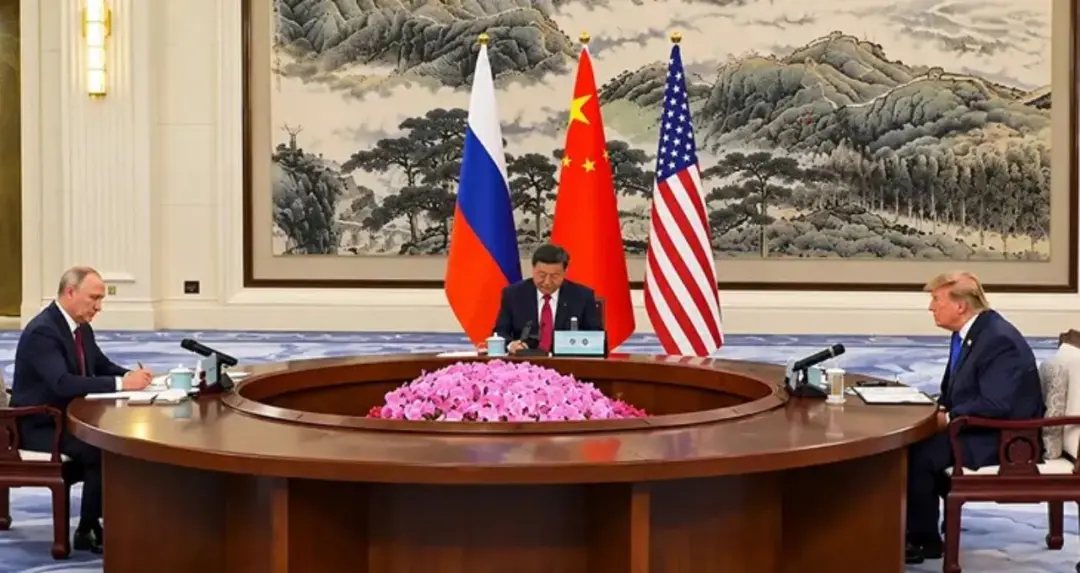
The presidents of the United States, Russia and China met for their first trilateral summit in Shenzhen, China, on Thursday, November 19, 2026, during the Asia-Pacific Economic Cooperation (APEC) summit. The three leaders agreed to continue discussions on preventing nuclear war, strengthening energy security and reforming international institutions, but reached no concrete decisions on the wars in Ukraine and Iran.
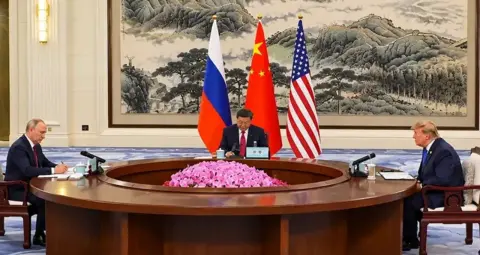
The presidents of the United States, Russia and China met at the Qilin Villa in Shenzhen, China, in a meeting that attracted international attention. The three countries have long-standing differences over trade, security and international disputes. Their presidents sitting together at the same table marked their first trilateral summit.
At the beginning of the meeting, US President Donald Trump said the three leaders were making history. He noted that the United States, Russia and China possess substantial nuclear capabilities and therefore share responsibility for reducing the number of nuclear weapons worldwide and limiting the risks associated with their use.
Chinese President Xi Jinping described the discussions as positive and useful. Russian President Vladimir Putin said the three countries share several common interests and have an important role to play in maintaining international peace.
Nuclear security was one of the central issues discussed at the summit. The three leaders acknowledged that no country can win a nuclear war and that such a conflict must never be fought.
In their joint declaration, they agreed to continue discussions aimed at preventing the proliferation of nuclear weapons and reducing the risks associated with them.
However, the summit did not produce any new agreement to reduce nuclear arsenals. No timeline was established, and no date was announced for formal negotiations.



Trump has long advocated a common agreement between the United States, Russia and China to reduce nuclear weapons. China, meanwhile, has maintained that its nuclear arsenal is considerably smaller than those of the United States and Russia.
The International Criminal Court (ICC) was another subject addressed during the meeting. The three countries said international courts should not misuse their jurisdiction.
Their joint statement emphasised respect for the legal immunities granted to government officials and the principle of state consent.
The issue is particularly relevant to Russian President Vladimir Putin. In March 2023, the ICC issued an arrest warrant against Putin over allegations involving the unlawful transfer of children from Ukraine. Russia has consistently rejected the allegations.
However, the joint declaration does not cancel the ICC warrant against Putin or automatically change the court's legal powers.
The United States, Russia and China agreed to work towards increasing the production and supply of refined petroleum products worldwide.
The three leaders acknowledged the importance of maintaining stable energy supplies in international markets. However, they announced no specific production targets or timelines for increasing oil output.
Reform of the United Nations was another issue raised during the summit. The three countries said the organisation should be made more capable of addressing international challenges.
No detailed plan was presented on how the proposed reforms would be implemented.
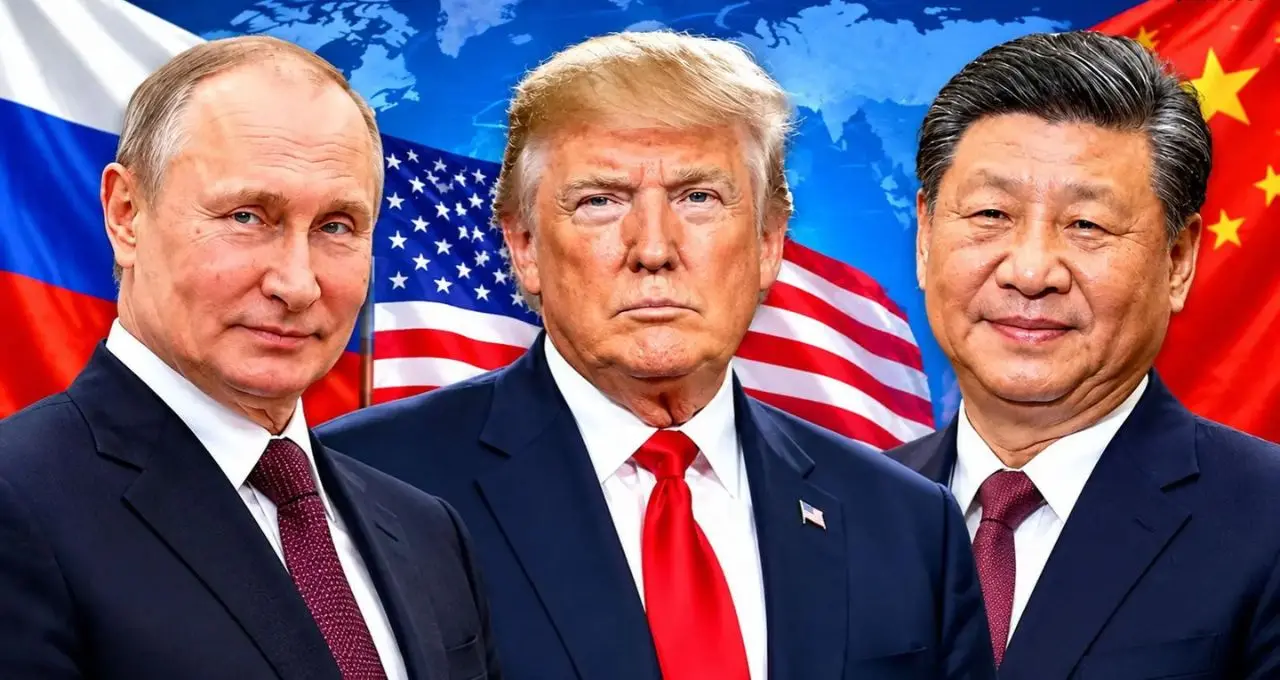
Before the summit, there were expectations of important announcements concerning the Russia-Ukraine war and the ongoing conflict involving Iran.
Trump said he had discussed the Ukraine war with Putin and Xi Jinping. However, the joint peace declaration made no reference to the conflict. Similarly, no agreement was announced regarding the conflict involving Iran.
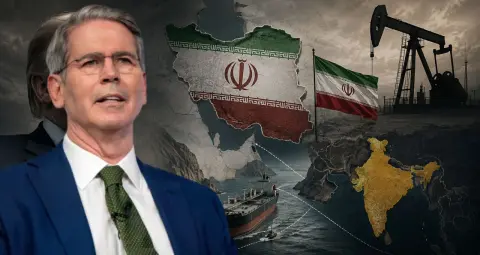
Trump had also discussed maintaining energy supplies through the Strait of Hormuz with China.
The Taiwan issue was also absent from the joint statement. China considers Taiwan part of its territory, while the issue has remained a longstanding source of disagreement between Washington and Beijing.
Technological relations between the United States and China also remained an area of discussion during the summit.
The two countries continue to face disagreements over advanced artificial intelligence (AI) chips, technology exports and rare earth minerals.
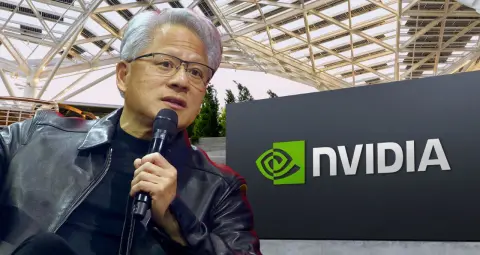
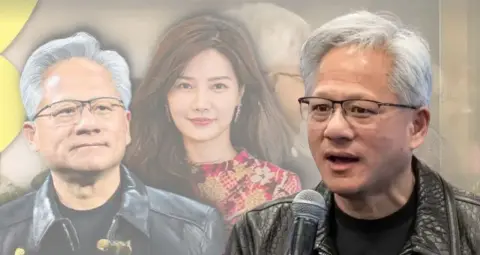
Nvidia CEO Jensen Huang also resigned from his position in November. Following this development, scrutiny and debate in the United States intensified over the company's business relationships involving China.
However, the joint statement issued after the Shenzhen trilateral summit announced no agreement on AI chip exports or the removal of US technology restrictions on China.
Trump described the meeting as a major success and emphasised his good relations with Putin and Xi Jinping. China, meanwhile, presented the summit as the beginning of increased cooperation among major powers.
However, the meeting produced no binding agreement on reducing nuclear arsenals, ending the war in Ukraine or resolving international disputes.
While the summit established a platform for continued discussions, the outcome of those commitments will depend on subsequent negotiations.