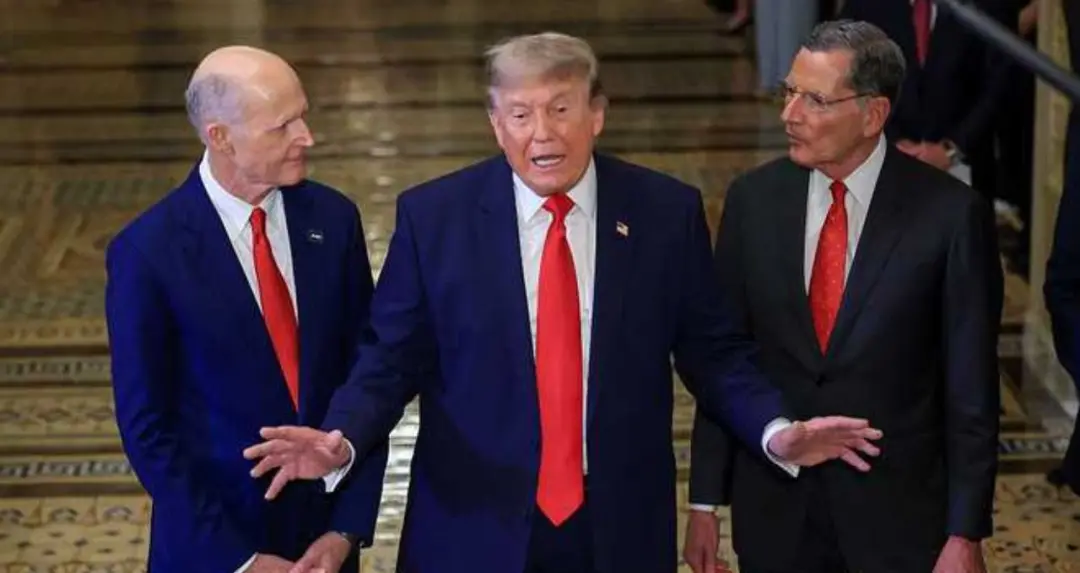
The administration of U.S. President Donald Trump has requested an additional $87.6 billion (approximately ₹8.3 lakh crore) in funding from the U.S. Congress to cover expenses related to the recent military conflict with Iran and strengthen defence preparedness. The White House said the funds are required to support national security, military readiness, and replenish weapons stockpiles. However, the proposal is facing growing opposition in Congress, placing the administration's Iran policy under renewed political scrutiny.
According to the White House, the requested $87.6 billion is separate from the already approved defence budget. The United States approved a defence budget of nearly $1 trillion last year, while the Trump administration has already sought a defence budget of around $1.5 trillion for the next fiscal year.
The administration said military operations against Iran, troop deployments, weapons consumption, and broader security preparations have placed additional pressure on defence resources. It said the extra funding is necessary to maintain military capability and prepare for future security challenges.
According to the administration, a significant portion of the requested funding will be used for military operations related to Iran, including operational costs, replenishment of missile and weapons stockpiles, upgrades to defence systems, and certain classified defence programmes.
The Trump administration said defence preparedness must be maintained in light of rising tensions in West Asia and U.S. global security interests. Officials stated that failure to provide additional resources could affect national security.
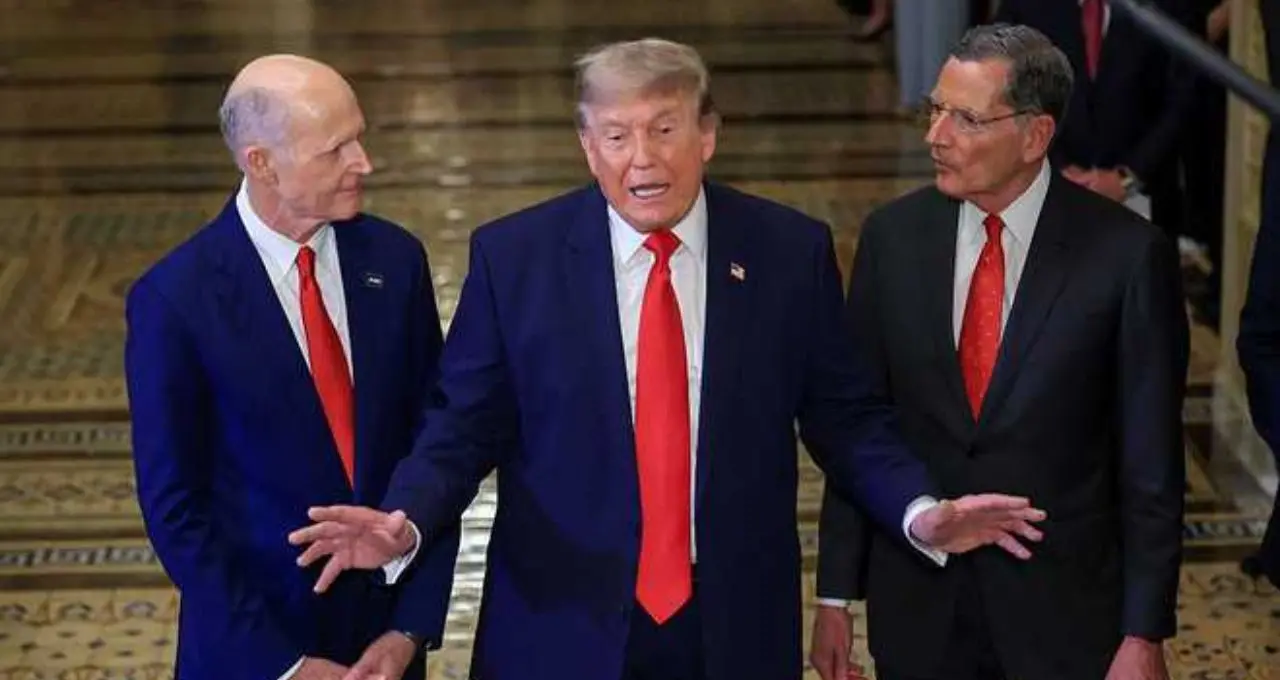
The funding request is facing increasing opposition in Congress. The U.S. Senate recently passed a resolution urging the President to limit military action against Iran. Earlier, the House of Representatives passed a similar resolution.

Four Republican lawmakers joined Democratic lawmakers in voting for the resolution, indicating differences within the President's own party over Iran policy.
Political analysts said the growing opposition in Congress could pose a challenge for the administration, as broad political support will be required to secure approval for the additional funding.
Global energy markets saw some relief during the Iran crisis. U.S. benchmark West Texas Intermediate (WTI) crude fell below $70 per barrel, while Brent crude declined to around $73.50 per barrel.
According to energy experts, lower oil prices could provide relief to the global economy by reducing transportation costs and lowering expenses for several industries, potentially helping contain inflation. Market experts, however, said developments in West Asia remain sensitive and any new escalation could quickly affect oil prices.
Despite the decline in crude oil prices, the Trump administration has taken a stricter stance against oil companies, saying consumers have not received adequate price relief. President Trump has directed the U.S. Department of Justice to investigate major oil companies.
The President alleged that several companies have not reduced petrol and other fuel prices as expected despite lower international crude prices. The administration said the benefits of falling oil prices should be passed directly to consumers. Industry experts, however, said retail fuel prices are influenced by several other factors.
Iranian President Masoud Pezeshkian has invited Indian Prime Minister Narendra Modi to attend the state funeral of Iran's Supreme Leader Ayatollah Ali Khamenei. The invitation has attracted international attention as India has sought to maintain balanced relations with both the United States and Iran.
Analysts said such diplomatic developments could influence future regional politics and that India's role may also be significant.
U.S. Secretary of State Marco Rubio indicated that technical-level talks between the United States and Iran could resume in Switzerland on June 29 or 30. The talks are intended to strengthen the recent ceasefire arrangement and reduce tensions between the two countries.
Rubio said the United States currently supports a diplomatic solution but sanctions could be reimposed if Iran fails to honour its commitments. He said the present relief is not permanent and depends entirely on Iran's conduct.
Differences between the International Atomic Energy Agency (IAEA) and Iran over monitoring of Iran's nuclear programme remain unresolved. The IAEA has said it should be granted access to inspect Iran's nuclear facilities to ensure the programme remains limited to peaceful purposes.
Iran has maintained that any final decision on inspection arrangements will be taken only after a broader agreement is reached and economic sanctions are eased. The issue is expected to remain one of the most sensitive subjects in the upcoming negotiations.
According to a new report by the Pew Research Center, Pakistan was the only major Muslim-majority country where public opinion of the United States improved during the Iran crisis. The report said Pakistan's mediating role in the dialogue process between the United States and Iran contributed to the shift.
The survey also found that most people in Pakistan still do not fully trust U.S. leadership, with many respondents saying the United States interferes in Pakistan's internal affairs.
Experts said the Trump administration's request for additional funding, the possibility of renewed U.S.-Iran talks, developments in the oil market, and the continuing dispute over Iran's nuclear programme are likely to remain significant issues in global politics in the coming weeks. They said successful diplomatic efforts could contribute to greater stability in West Asia, while failure could lead to renewed regional tensions.
Growing opposition in the U.S. Congress also indicates that President Trump faces challenges not only in international diplomacy but also in domestic politics as the developments continue.