A 1992 disappearance involving two Belgian mountaineers in Switzerland has been resolved after their remains were recovered from the Trift Glacier 34 years later. DNA analysis confirmed the identities of the two men, who disappeared near the Weissmies mountain.
According to Swiss authorities, a hiker spotted human remains on the Trift Glacier on July 26, south of the city of Lucerne. Authorities reached the site and recovered the remains before transferring them to a hospital in the city of Sion for identification.
DNA analysis confirmed that the remains belonged to the two Belgian mountaineers who disappeared near Weissmies in 1992. Authorities said they were 39 and 41 years old respectively at the time of their disappearance. No conclusive trace of them had been found for decades.
The recovery occurred as glaciers in the Swiss Alps continue to melt and retreat. Human remains and other objects buried beneath ice can become exposed as the ice melts.
Swiss police said the remains were recovered from the Trift Glacier during a special recovery operation. The remains were transported safely to a hospital, where records and DNA samples were used to establish the identities.




The two men disappeared near Weissmies in 1992. The mountain is more than 4,000 metres high and is a popular area for mountaineering. Weather conditions can change rapidly in the area, while altitude, snow and difficult terrain make mountaineering hazardous.
Authorities in Switzerland's Valais region maintain records of missing people dating back to 1925. Police said many of the cases involve people who disappeared in mountains, rivers or other bodies of water.
Search operations in mountainous areas can be difficult because of poor weather, snowfall, avalanches and challenging terrain. In some cases, remains cannot be located despite extensive search operations.
Bodies trapped inside glaciers can remain hidden for many years. As temperatures rise and glaciers retreat, remains can become exposed again.
Swiss authorities said this is not the first case in which human remains from decades-old disappearances have emerged as glaciers melt. In 2023, human remains were found on a glacier near Switzerland's Matterhorn.
DNA testing later confirmed that the remains belonged to a German mountaineer who had been missing since 1986. The recovery demonstrated how retreating glaciers can expose remains linked to earlier mountaineering accidents and disappearances.
Experts said identifying human remains trapped in glaciers can be difficult because extreme cold and prolonged burial beneath ice can significantly alter their condition. DNA testing can play an important role in such cases.
The recovery of the two mountaineers' remains comes as Swiss glaciers continue to shrink. Scientists say rising global temperatures and climate change are among the main factors contributing to the rapid melting of glaciers.
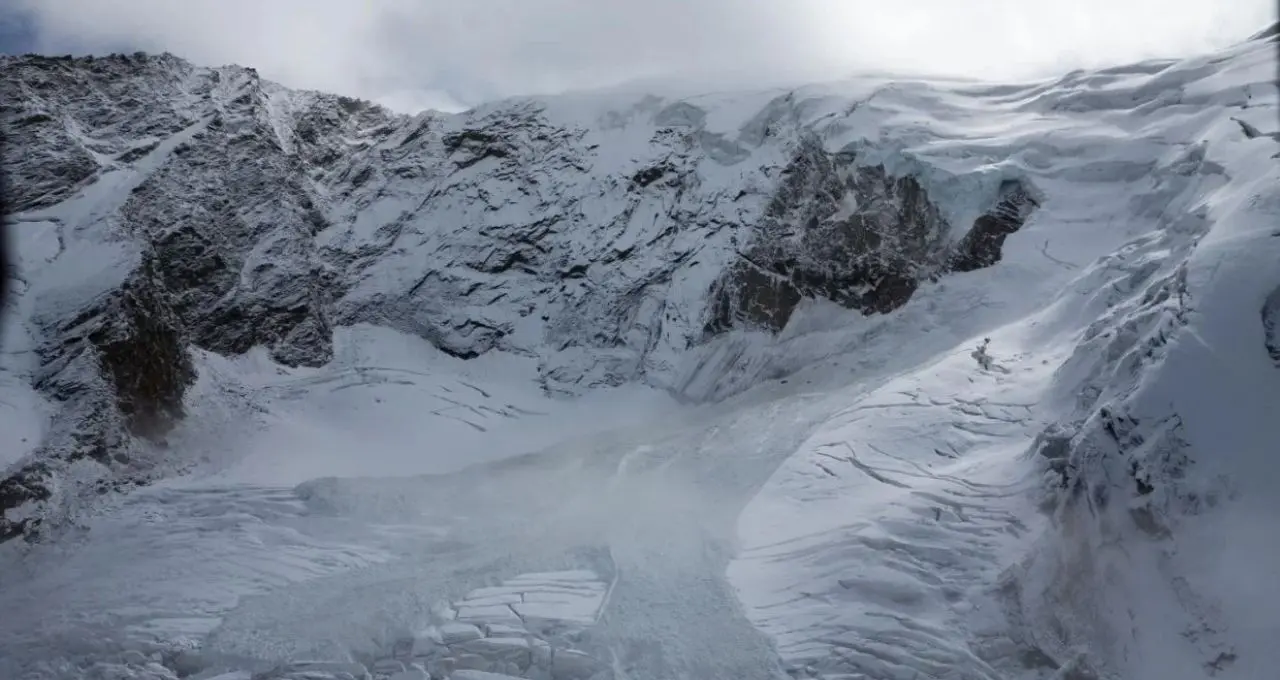
According to data from Glacier Monitoring in Switzerland (GLAMOS), the country's glaciers lost about one-quarter of their total size during the decade through 2025. Glaciers also recorded a decline of about 3 percent in 2025.
The decline continued after record ice losses recorded in 2022 and 2023.
The increase in global average temperatures is also affecting high-altitude regions. In Switzerland's high mountain areas, unusually warm weather and reduced snowfall have increased pressure on glaciers.
Rapid glacier melting is also affecting mountain tourism and ski resorts. Reduced snow availability has created challenges for activities in several ski areas.
According to the European Commission's Copernicus monitoring service, the rate at which glaciers worldwide are shrinking has increased since the 1990s, with further acceleration recorded after 2000.
The discovery provides the families of the two Belgian citizens who disappeared in 1992 with confirmation of their identities after 34 years. However, based on the available information, the precise circumstances of their disappearance remain unknown.
It is also unclear how the accident occurred or where exactly on the glacier the two mountaineers became trapped.
Police and local authorities are reviewing records related to the case.