
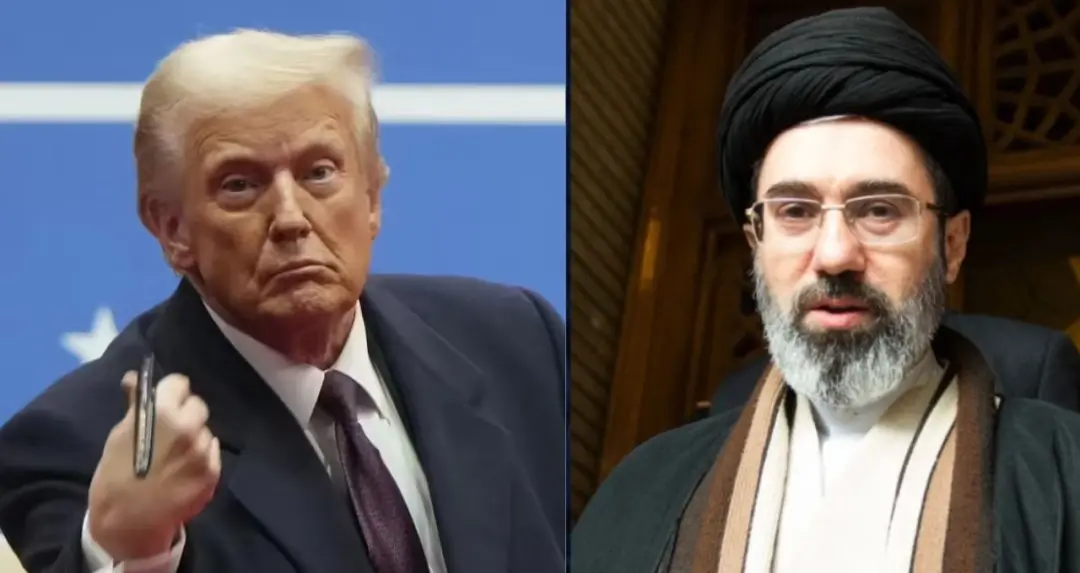
Reports indicate that the United States and Iran have reached a preliminary peace agreement amid longstanding tensions between the two countries. According to the reports, the initial agreement has already been digitally signed, with a formal signing ceremony expected to take place in Geneva, Switzerland, on June 19.
US President Donald Trump has stated that the agreement is nearly complete and will be made public soon. US Vice President JD Vance has also indicated that the document is a limited-scope preliminary memorandum of understanding (MoU), with further technical negotiations expected to continue.
According to reports, including those cited by The New York Times, initial digital signatures have already been completed. The agreement is reported to involve US and Iranian representatives as well as several senior political figures.
The full text of the agreement has not yet been released. The Trump administration has stated that the document will be published only after all details have been finalized.




The formal signing ceremony scheduled for June 19 in Geneva is being viewed as a key stage in the process, where the agreement could receive international recognition.
Reports indicate that the United States and Iran have prepared a preliminary 14-point framework covering issues related to security, nuclear controls and economic relief.
The framework remains an initial draft, and technical-level discussions between the two countries are expected to continue. These talks will address issues including Iran’s nuclear program, sanctions relief and inspection mechanisms.
One of the most debated aspects of the proposed agreement concerns economic assistance and frozen funds. Media reports have claimed that Iran could receive a package worth approximately $24 billion.
US officials have rejected those claims. According to the US side, any economic relief would be provided only if Iran complies with all conditions of the agreement. Iranian media have reported that a portion of frozen funds could be released immediately, while US officials have described such reports as inaccurate and misleading.
International nuclear inspections are among the central elements of the agreement. Reports indicate that the parties have agreed to the return of inspectors from the International Atomic Energy Agency (IAEA) to Iran.
The inspectors would be responsible for verifying that Iran’s nuclear program is used solely for peaceful purposes and is not directed toward weapons development. The role of the IAEA is reported to be a key component of the agreement.
The proposed agreement has drawn mixed international reactions. French President Emmanuel Macron has said that Iran’s stockpile of enriched uranium should remain under strict international monitoring to prevent its use in weapons development.
Israel has distanced itself from the agreement. Israeli leaders have stated that the deal does not fully address the country's national security concerns. In contrast, several Gulf countries, including the UAE, Qatar and Kuwait, have welcomed the agreement and described it as a positive step toward regional stability.
Iranian President Masoud Pezeshkian has described the agreement as a “document of victory.” He said it demonstrates that Iran maintained a b position during negotiations.
Iran has also stated that the agreement would reduce the impact of Western sanctions and provide relief to its economy.
Reports indicate that differences of opinion have emerged within the US administration regarding the agreement. Some senior security officials have expressed doubts about whether Iran will comply with all conditions. Other officials have argued that the agreement presents an opportunity to prevent conflict in the region. Despite these differences, the White House has continued to support the negotiation process.
The potential agreement has also affected global energy markets. Crude oil prices have declined, prompting reactions across international markets.
The agreement is considered particularly significant for countries such as India that rely heavily on imported energy. Lower oil prices could reduce import costs, ease inflationary pressures and support economic stability.
Activity has also been reported in currency markets, with several currencies strengthening against the US dollar.


