The United States Senate has approved a proposal seeking to limit President Donald Trump’s military powers in relation to Iran, with four Republican lawmakers voting alongside Democrats in support of the measure. The proposal passed by a 50–47 vote and, if enacted into law, would require the Trump administration to obtain approval from the United States Congress for any prolonged military campaign against Iran.
The proposal must still undergo additional legislative stages before becoming law. President Trump also retains the authority to veto the measure.
The proposal concerns war powers defined under the United States Constitution and reflects a longstanding debate over whether the authority to initiate military action in a foreign conflict should rest primarily with the president or Congress. Under United States law, the president may undertake military action for a limited period without congressional approval, but extended military engagement requires authorization from Congress. The proposal introduced in the Senate seeks to ensure that any war or military campaign against Iran cannot continue without explicit congressional approval.


The Senate vote also highlighted divisions within the Republican Party, as four Republican lawmakers supported the proposal while three Republican senators did not participate in the vote. Political analysts said the measure represents an effort to increase pressure on the Trump administration to consult Congress before major military decisions.
The proposal was introduced by Democratic Senator Tim Kaine, who said during debate that the authority to begin war should not rest solely with the president. He stated that as tensions in the Middle East continue and discussions over a ceasefire proceed, the Trump administration should clarify its strategy before Congress. Kaine also said the United States Constitution clearly grants Congress the authority to approve war and argued that major military decisions in a democratic system should be made through collective political consensus.
The White House opposed the proposal, stating that the president acted within constitutional authority to protect United States security and national interests. The Trump administration argued that Iran’s activities pose a threat to the United States and its allies, requiring rapid military decision-making. Critics, however, said the president should not involve the country in prolonged military conflict without parliamentary authorization.
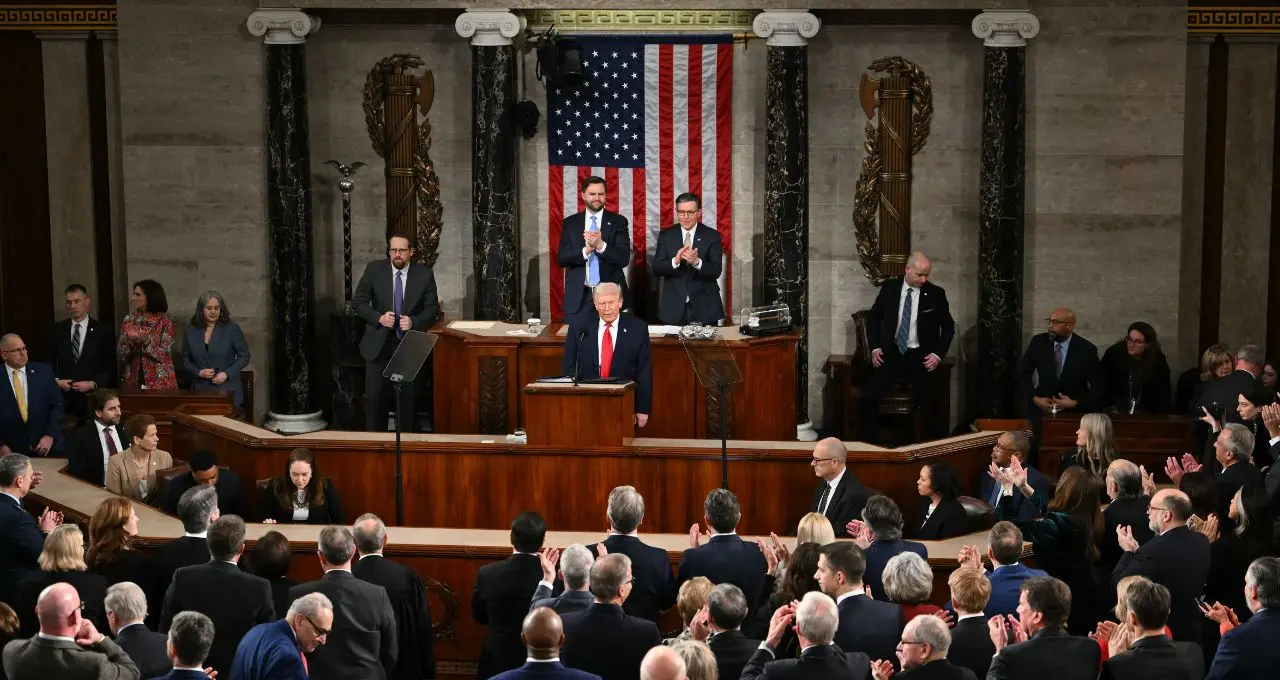
Although the Senate has approved the proposal, it must next be passed by the United States House of Representatives, where Republicans hold a majority. If approved by the House, President Trump would still retain veto authority. Should a veto occur, Congress would need a two-thirds majority in both chambers to override it. According to the source content, the current political situation makes such an outcome difficult.
Tensions between the United States and Iran have increased in recent months over Iran’s nuclear programme, the security of the Strait of Hormuz and regional military activity. President Trump recently said the United States had prepared for a major attack on Iran but had halted it to allow space for negotiations. He also said countries including Qatar, Saudi Arabia and the United Arab Emirates appealed for military action to be delayed in the interest of regional stability.
The Strait of Hormuz has again become a focal point of global politics and energy security. According to the source content, Iran recently implemented a new control system for vessels transiting the strait, requiring prior permission. A South Korean oil tanker was reportedly allowed passage only after approval from Iranian authorities, with reports stating the vessel carried approximately two million barrels of crude oil.
Reports cited in the source content stated that Israel has been closely monitoring developments. Prime Minister Benjamin Netanyahu reportedly held an extended meeting with security officials to review preparations in the event of possible United States military action. Israeli media reports cited in the source content claimed that the United States could pursue military action if Iran does not present a new agreement proposal, while Iran stated that it would not retreat from its right to uranium enrichment.
According to a report by the United States congressional research agency CRS cited in the source content, several United States aircraft were destroyed or damaged during the Iran conflict. The report mentioned damage to platforms including F-15E Strike Eagle aircraft, F-35A Lightning II aircraft and MQ-9 Reaper drones. The United States Department of Defense had not issued detailed official comment on those claims, according to the source content.
The source content stated that tensions in the Middle East have also affected the global economy. Israel’s national airline El Al said the conflict resulted in financial losses worth millions of dollars, citing airspace closures, rising fuel prices and reduced flights. Experts cited in the source content said that escalating tensions between the United States and Iran could affect global oil prices, maritime trade and international markets.
Experts cited in the source content said the proposal passed by the United States Senate represents both a political message and a sign of diplomatic pressure. Several members of Congress reportedly support resolving the Iran crisis through negotiations and international agreements rather than military action. The Trump administration, according to the source content, has maintained a firm position while attention remains focused on Washington and Tehran regarding future developments.