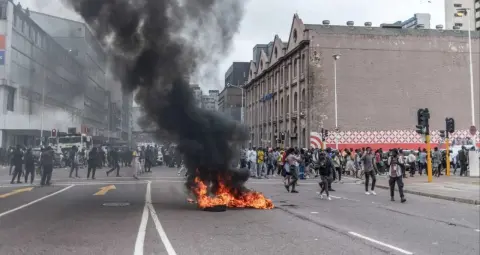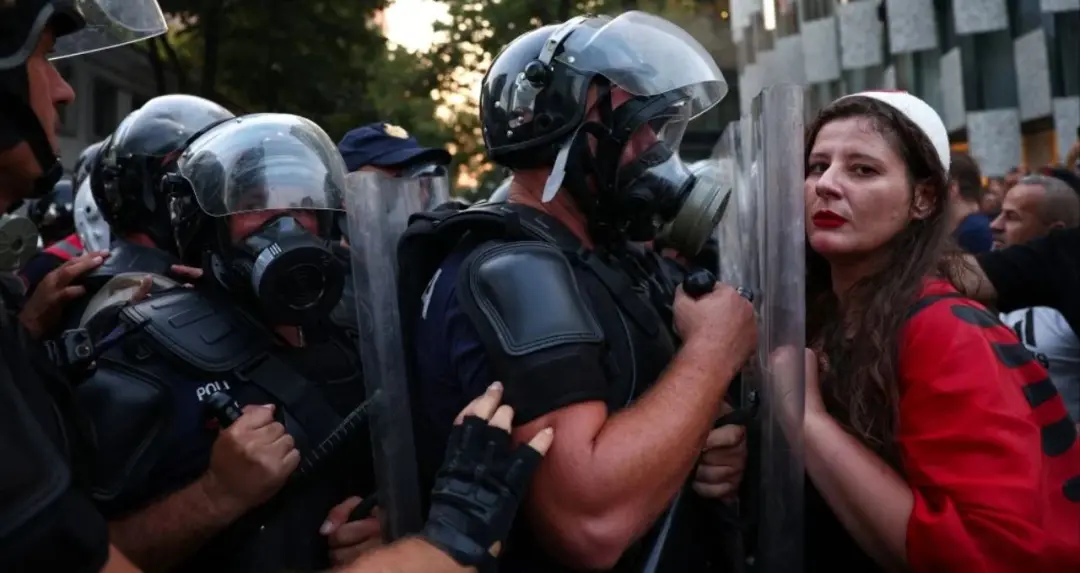
The protest against a major luxury coastal development project in Tirana, Albania, turned violent on its 100th day on Tuesday as demonstrators attempted to march toward parliament. Police blocked their path in central Tirana, and several protesters were taken into custody.
The demonstration took place as Albania’s parliament resumed work after its summer recess. Protesters challenged police barricades and threw eggs and tomatoes at officers equipped with riot-control gear. Police then moved to keep the crowd away from the parliament building.
Cars carrying lawmakers to parliament also encountered the crowd during the demonstration. Protesters threw plastic water bottles at vehicles transporting lawmakers. Police intervened and cleared a path for the vehicles to proceed.
Several protesters were detained as tensions between police and demonstrators escalated. However, according to the available information, it was not immediately clear how many people had been formally arrested.
The demonstrations are also known as the “Flamingo Revolution”. Protesters have carried posters and signs shaped like flamingos, saying the proposed coastal development could harm the bird.

The flamingo has therefore become a key symbol of the movement. During repeated demonstrations in Tirana, protesters have used the symbol to highlight their environmental concerns. In August, demonstrators were also seen carrying flamingo-shaped placards outside the Albanian prime minister’s office.
The protests are focused on a major luxury coastal development project linked to Jared Kushner, the son-in-law of US President Donald Trump. Demonstrators are demanding that the project be stopped.
Albanian authorities have not publicly provided detailed information about Kushner’s role in the project. However, Trump’s daughter Ivanka Trump has spoken about her family’s involvement in the project and described it as an “incredible project”.
The main objection raised by protesters concerns the potential environmental impact of the project. They say a development of this scale could damage the area’s environment. Critics have also expressed concerns that it could limit public access to the coast.
The issue was the initial focus of the protests. Night-time demonstrations in Tirana initially centered on the development project. Over time, however, the movement expanded beyond opposition to the project and became a broader political challenge for Albania’s long-ruling Socialist government.
Prime Minister Edi Rama has also become a target of the movement. Rama is a b supporter of the investment project and argues that it will help modernise Albania.
Albania experienced decades of communist isolation. Rama believes investments of this kind can play an important role in the country’s modernisation. Protesters, however, continue to raise concerns about the project’s environmental impact and public access to the coast.
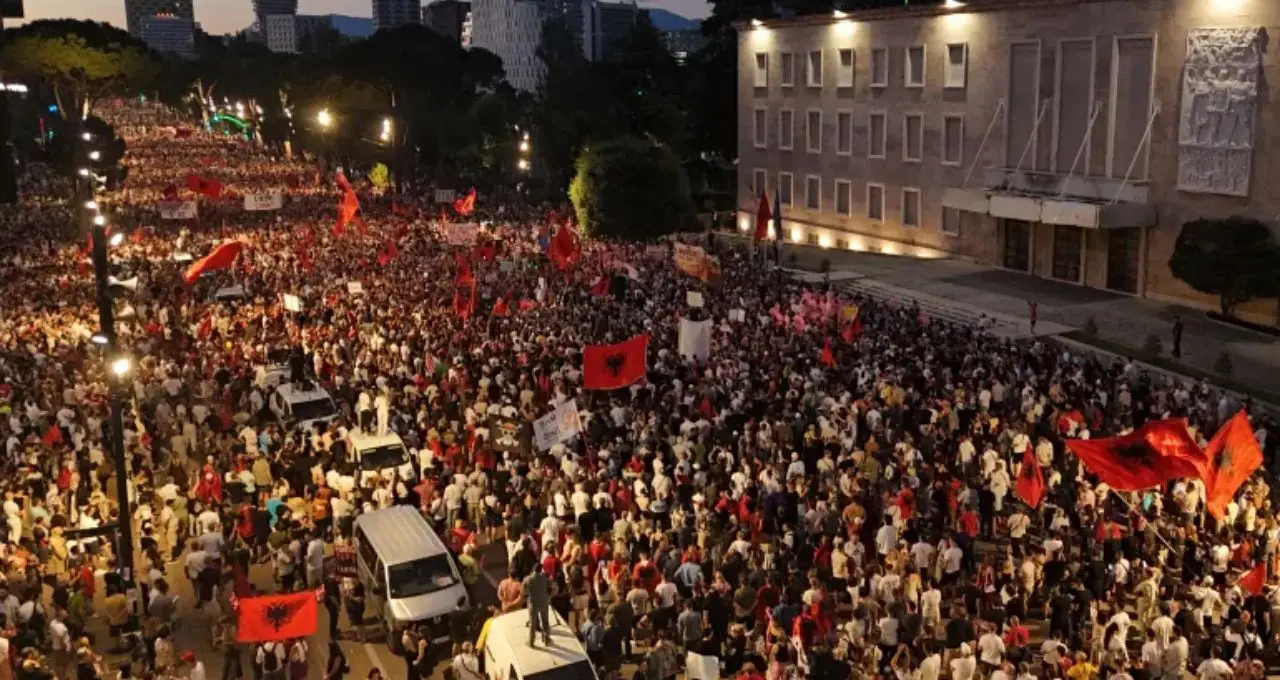
The movement is no longer focused solely on the coastal development project. Participants have also raised demands for change, concerns affecting young people and growing difficulties in the country.
Protester Elidon Mehmetaj said young people are struggling, life is becoming increasingly difficult and the government is not listening to them. He said protesters are demanding a better future and believe Albania can reach a better position.
He also said protesters are not asking for too much, but want better conditions for Albanian citizens, the country and its future. The comments reflect the movement’s broader social and political grievances alongside opposition to the development project.
Amid tensions outside parliament on Tuesday, protesters chanted “Arrest Rama!” The chants came as police managed security arrangements for lawmakers travelling to and from the parliament building.
Tensions remained high amid the police presence and clashes with protesters. After demonstrators threw eggs and tomatoes at police and water bottles at lawmakers’ vehicles, police intervened to prevent the crowd from advancing toward parliament.
After continuing for 100 days, the movement has developed into a significant challenge in Albanian politics. It began with opposition to a major coastal development project but has expanded to include broader dissatisfaction over government policies, environmental protection, public access to beaches and the country’s future.
Rama links the investment to Albania’s modernisation, while protesters continue to question the project’s environmental impact and its implications for the public interest. The flamingo symbol represents the environmental concerns at the centre of the movement.
Following Tuesday’s clashes and the detention of protesters, the next phase of the movement remains significant. According to the available information, protesters are continuing to demand that the project be stopped and are seeking to maintain pressure on the government, while the government continues to support the investment project.