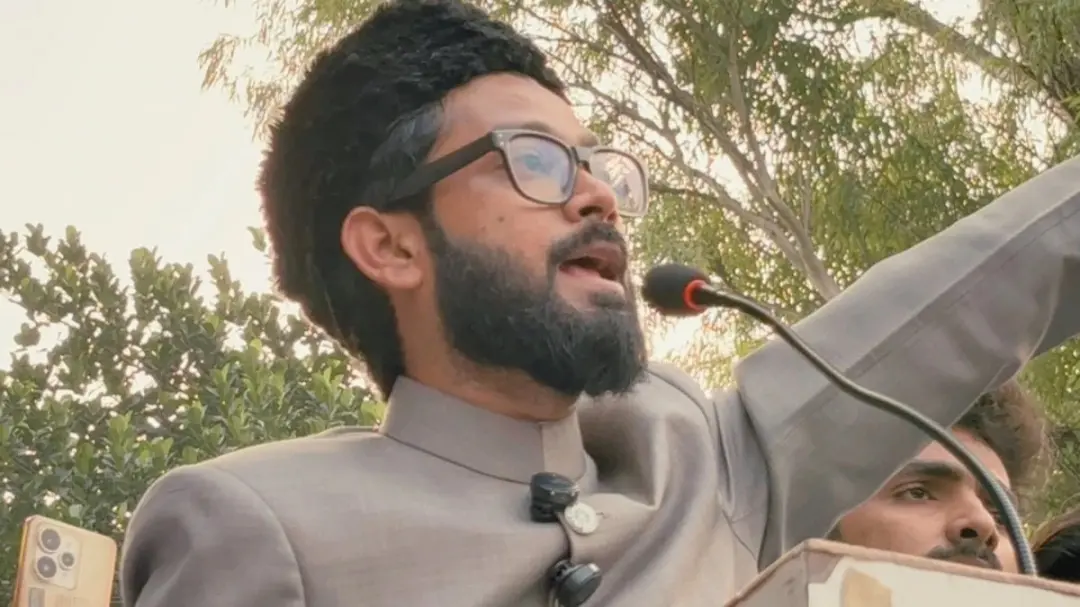
The Aligarh Muslim University (AMU) Students' Union has questioned the Bharatiya Janata Party (BJP) and its leaders over the Bilkis Bano gang rape case. Students' Union president Noman Ashraf raised questions about the role of leaders who welcomed and felicitated the convicts after their release from prison. He questioned what message the leaders intended to send to society by publicly honouring individuals convicted of serious crimes.
Ashraf said that society and political leadership must demonstrate a clear position on serious crimes against women. He stressed the importance of ensuring justice and security for survivors. Questioning the public reception given to the convicts after their release, he asked why individuals sentenced by a court should be welcomed and honoured publicly. According to him, the conduct of political leaders and other public representatives has an impact on society, making their role in such cases a legitimate subject of scrutiny.
The Bilkis Bano case is linked to the 2002 Gujarat riots. During the violence, Bilkis Bano was gang-raped and several members of her family were killed.




Following an investigation and trial, a special Central Bureau of Investigation (CBI) court in Mumbai convicted 11 accused in 2008 and sentenced them to life imprisonment. The Bombay High Court subsequently upheld their convictions and sentences.
After spending more than 14 years in prison, the 11 convicts were released on August 15, 2022, after the Gujarat government granted them remission of their sentences.
Following their release, photographs and reports emerged showing some local residents and political leaders welcoming them. The public reception triggered questions and criticism at political and social levels across the country. Bilkis Bano also challenged the decision to grant early release to the convicts before the Supreme Court.
On January 8, 2024, the Supreme Court quashed the Gujarat government's order granting remission to the 11 convicts.
The apex court held that the Gujarat government did not have the authority to grant remission because the trial had been conducted and the sentences had been pronounced in Mumbai. The court ruled that the remission order was issued without jurisdiction and directed the convicts to surrender before the prison authorities within two weeks.
Following the Supreme Court's decision, the convicts had to return to prison. The ruling also clarified that the government's power to grant remission must be exercised in accordance with the prescribed legal procedure. State governments cannot disregard jurisdictional requirements and applicable rules while granting remission.
Referring to the developments in the Bilkis Bano case, Ashraf questioned the role of BJP leaders who welcomed the convicts following their release.
He asked what message such public gestures conveyed to society and what responsibilities political parties should uphold in cases involving crimes against women. His remarks have brought renewed attention to questions surrounding women's safety, the justice system and political accountability.
Noman Ashraf was recently elected president of the AMU Students' Union in an election held after an eight-year gap. He won the presidential post in the election conducted on November 5.
Since his election, Ashraf has been expressing his views on university-related issues as well as national and social matters. Judicial processes, civil rights and political accountability have also featured in discussions surrounding his election speeches.
His remarks on the Bilkis Bano case have once again brought the conduct of political parties and public representatives under scrutiny, particularly regarding remission granted to individuals convicted of serious crimes and the public recognition they received following their release. The Supreme Court's ruling and the reactions that followed the convicts' release continue to remain part of the public debate.