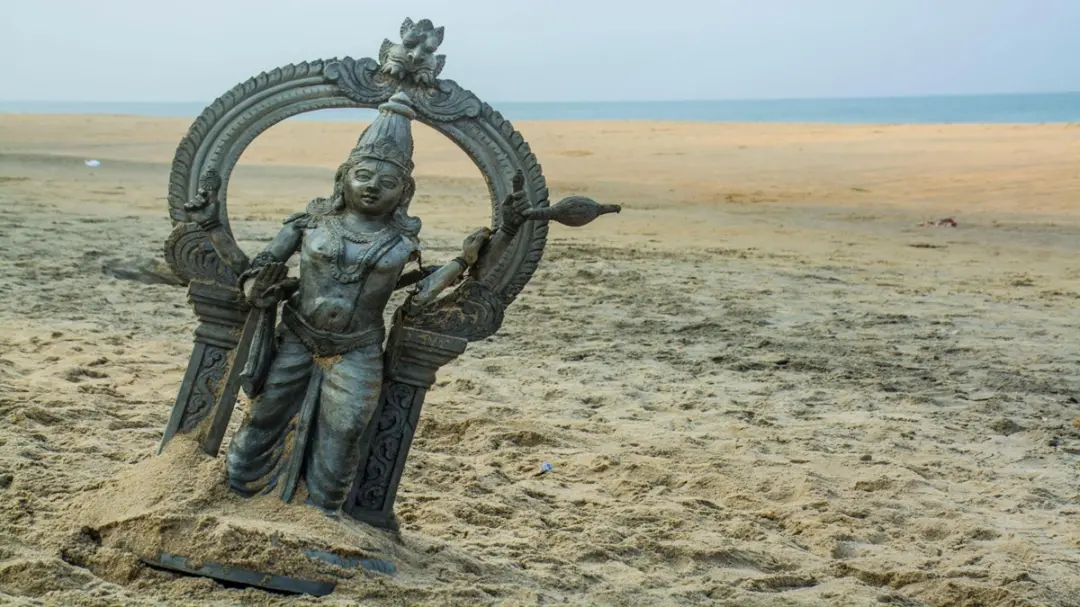
During sand extraction from the Niranjana River near Amba village in Bodh Gaya, Bihar, workers discovered a stone idol identified as Lord Vishnu. The discovery drew large numbers of local residents, who retrieved the idol from the river and began offering prayers.




Workers extracting sand from the river noticed a stone structure in the sand. On closer inspection, it was identified as an idol of Lord Vishnu, after which local residents were informed of the discovery.
News of the idol spread rapidly across the village, prompting many residents to gather at the riverbank. The villagers respectfully removed the idol from the river and began performing religious rituals.
By mutual agreement, the villagers installed the idol at the nearby Manokamna Shiv Mandir. The installation was carried out in the temple following prescribed religious rituals and worship.
Local residents believe the idol to be ancient and possibly connected to an old temple or historical site. Based on its structure and stone carvings, many villagers consider it to have historical importance.
Following the discovery, religious activity in the area has increased, with people from nearby villages visiting the temple to offer prayers to Lord Vishnu. Arrangements have been made within the temple premises to ensure the idol is kept safely.