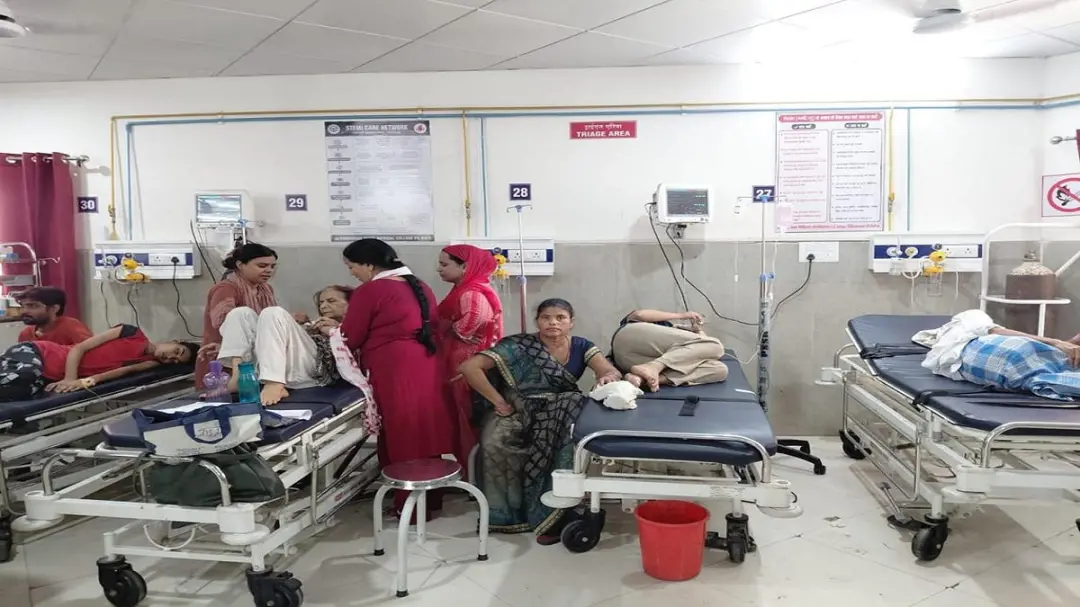
Anti-rabies vaccine has run out at Darbhanga Medical College and Hospital (DMCH), leaving patients and their families facing difficulties in obtaining treatment after animal bites. Around 22 patients who reached the hospital for treatment after being bitten by dogs or other animals could not receive the vaccine from the hospital and were advised to purchase it from outside medical stores.
Patients and their relatives said they are spending up to around ₹2,000 for a single dose of the vaccine from outside stores. The additional expense is creating difficulties for economically weaker families who had approached the government hospital expecting treatment at a lower cost.
Patients who arrived at DMCH to obtain anti-rabies vaccine were informed that the medicine was unavailable and were advised to purchase it externally. For several patients, the situation has added to the difficulty of obtaining timely treatment following an animal bite. Relatives said they had approached the government hospital expecting treatment there but were forced to visit private medical stores because the vaccine was unavailable.
Patients said they are having to pay a significantly higher amount to purchase the vaccine outside. Some reported paying up to around ₹2,000 for a single dose. If a patient requires more than one dose as advised by a doctor, the overall treatment cost increases further. The additional expense is particularly difficult for families with limited financial resources who had chosen the government hospital to reduce treatment costs.

DMCH is among the major government medical institutions in north Bihar. Patients from Darbhanga as well as several nearby districts and rural areas travel to the hospital for treatment. The unavailability of an essential vaccine can therefore create difficulties for a large number of patients. Timely administration of anti-rabies vaccine is important for patients requiring protection against rabies following an animal bite.
Patients who are bitten by animals often go directly to government hospitals for treatment. Many come from rural areas and may not be able to afford private hospitals or expensive treatment. When such patients have to purchase the vaccine from outside despite arriving at a government hospital, they face an additional financial burden.
Patients said that providing treatment and medicines at the hospital is part of the healthcare system's responsibility. They have sought an early alternative arrangement if the required vaccine is unavailable in stock so that patients do not have to move between the hospital and outside medical stores. Relatives have requested the hospital administration to make anti-rabies vaccine available as soon as possible.
The shortage also creates uncertainty for patients about when and where they can obtain the required dose. Many patients travel to DMCH from distant areas. After reaching the hospital, having to return to the market to purchase the vaccine and then bring it back to the hospital for administration creates additional inconvenience. A further hospital visit can also increase travel expenses.
Patients said that if the vaccine were available at the government hospital, they would not have to purchase it at a higher price outside. A cost of around ₹2,000 per dose represents a significant expense, particularly for daily-wage workers, small farmers and families with limited incomes.
Rabies is a serious disease, and negligence following a bite from an infected animal can have dangerous consequences. Patients therefore generally seek medical attention as soon as possible after an incident. Vaccination and other necessary treatment are provided according to medical advice, making regular availability of anti-rabies vaccine at government hospitals important.
Some patients arriving at the hospital may not know how many doses they will require after a dog bite or another animal bite. Doctors determine the treatment process after examining the patient. Availability of the vaccine at the hospital allows patients to receive treatment at a single location. When stocks are exhausted, however, they first have to purchase the vaccine from the market.
Patients and their relatives have requested the hospital administration to restore the supply of anti-rabies vaccine at the earliest. They have also sought arrangements for a new consignment before stocks are exhausted in the future so that patients are not suddenly required to purchase the medicine outside. They said the primary purpose of visiting a government hospital is to obtain treatment at a lower cost.
The situation involving around 22 patients being asked to purchase the vaccine outside has also raised questions about the hospital's medicine supply arrangements. Patients want to know how long the shortage has continued, when a new consignment is expected to arrive and what alternative arrangements have been made for patients until then. They have sought resolution of these issues from the hospital administration and the concerned health department.
A large number of patients visit Darbhanga Medical College Hospital every day for treatment. Maintaining stocks of essential medicines and vaccines is therefore a responsibility of hospital management. A shortage of an essential medicine such as anti-rabies vaccine creates direct difficulties for patients and affects the treatment process.
For now, patients are facing a situation in which they have to purchase the vaccine from outside and bring it to the hospital. Patients said that if a single dose costs around ₹2,000, the total treatment expense can become considerably higher when multiple doses are required. This can have a direct financial impact on poor and middle-class families.
Patients have expressed hope that the hospital administration and health department will address the issue and ensure the supply of anti-rabies vaccine at the earliest. Until the vaccine becomes available at the hospital, patients are having to purchase it from outside. The next point of concern for patients is when the hospital will receive fresh stock and when the vaccine will again be available through the government hospital.