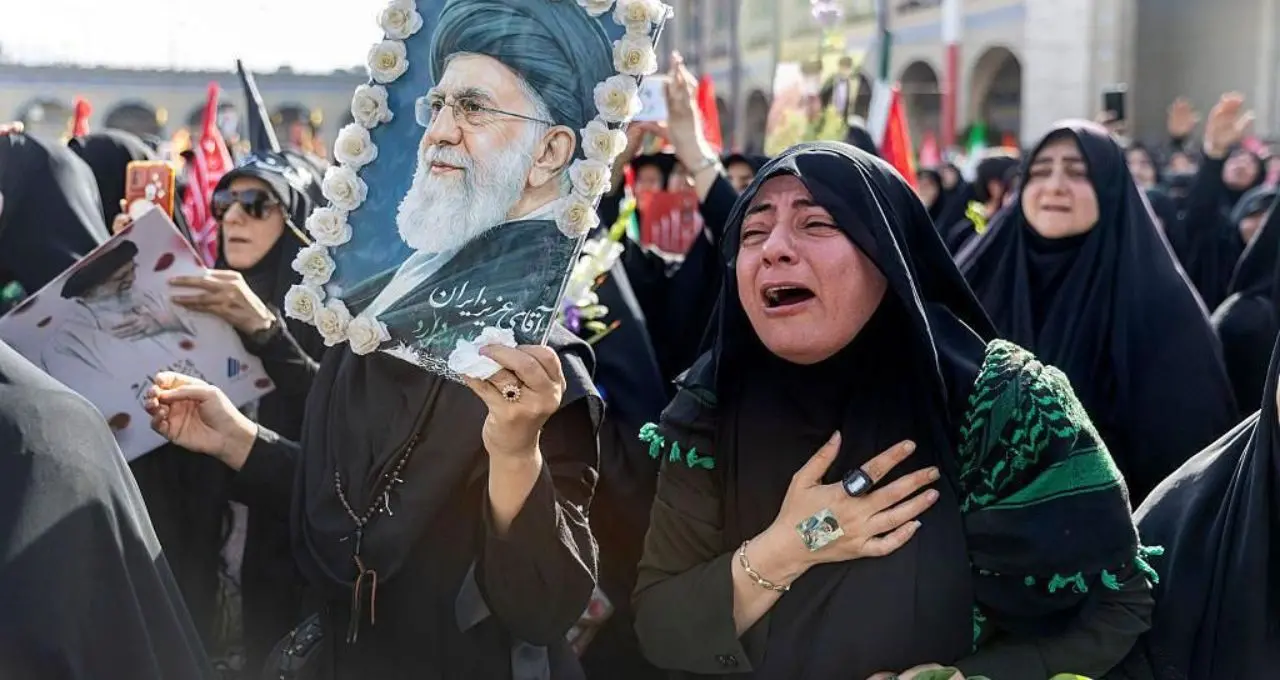
Ayatollah Ali Khamenei's funeral and funeral procession drew large crowds in Tehran, with millions of people from across Iran paying their final respects. The procession held on Monday was attended by religious leaders, senior government officials, military commanders and foreign delegations. The funeral took place amid recent tensions involving Iran, Israel and the United States, drawing international attention.
At the funeral prayers held on Sunday, Khamenei's three sons—Masoud Khamenei, Meysam Khamenei and Mostafa Khamenei—were present. However, his son Mojtaba Khamenei, who has long been viewed as a potential successor, did not appear publicly at the ceremony. According to media reports, he stayed away from the public event because of security concerns and the risk of a possible attack. There was no official confirmation from the Iranian authorities regarding his absence.
On Monday morning, Khamenei's funeral procession moved through major streets of Tehran. His coffin was carried along key routes, where millions gathered for a final farewell. Long queues of mourners were seen from the Imam Khomeini Mosalla Grand Mosque to other prominent areas of the city. Security arrangements were tightened throughout the event, with large numbers of security personnel deployed.
During the funeral, some participants raised slogans against the United States and Israel. According to media reports, a section of the crowd also chanted slogans against US President Donald Trump and Israeli Prime Minister Benjamin Netanyahu and called for a response to recent military action against Iran. It remained unclear whether the slogans reflected the entire gathering or only a section of those present.

Large numbers of people attended the procession despite temperatures exceeding 30 degrees Celsius in Tehran. Authorities sprayed water at several locations to provide relief from the heat. Cold drinking water, soft drinks and watermelon were also distributed to attendees.
Iranian President Masoud Pezeshkian said the ceremony was not only a farewell but also a commitment to continue Khamenei's ideas and mission. He said the turnout reflected the people's respect for their leader and added that no political appeal alone could bring together such a large gathering.
Iranian Parliament Speaker Mohammad Ghalibaf described recent developments as a strategic success for Iran and its allied groups. During a meeting with Yemen's Vice President Mohammad Al-Nuaimi, he said the United States and Israel had been compelled to acknowledge the strength of Iran-backed organisations in the region. He described it as an important political achievement for Iran.
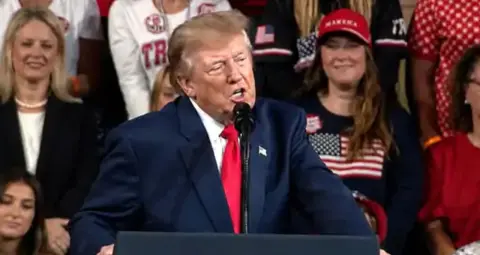
US President Donald Trump claimed that Iran's top leadership had gathered at one location during the funeral and said the United States could have carried out military action if it had chosen to do so. He added that such action was not taken because of the possibility of future negotiations. Iran responded critically to Trump's remarks.
The Iranian Embassy in Armenia criticised Trump's statement, saying ideas cannot be eliminated through military force. It said a nation's identity is defined not only by its military capability but also by its history, culture and the determination of its people.
Brigadier General Mohammad Akraminia said Iran was using the ceasefire period to strengthen its defence capabilities. He warned that if the United States or Israel launched future military action, Iran would deliver a "decisive and effective response." His remarks came while regional tensions remained unresolved.
Former Russian President Dmitry Medvedev said the Strait of Hormuz is Iran's most important strategic asset. He noted that a substantial share of global oil exports passes through the waterway and said any escalation in the area could have broad consequences for global energy markets.
Meanwhile, OPEC+ decided to increase oil production from August, leading to a decline in international crude oil prices. Analysts said the additional production would increase global oil supply and place downward pressure on prices. They also noted that any renewed military tensions in West Asia could again affect the oil market.
OPEC (Organization of the Petroleum Exporting Countries) was established in 1960 to coordinate oil production policies among member countries and help maintain balance in global oil markets. OPEC+ is an alliance of OPEC members and major oil-producing countries outside the organisation, formed in 2016 to address volatility in global oil markets.
OPEC+ currently accounts for around 40 percent of global crude oil production, while its member countries hold a substantial share of global oil reserves. Its production decisions have a direct impact on international oil prices, inflation and energy markets.
Khamenei's funeral became more than a religious or national ceremony, reflecting evolving political developments in West Asia. The large turnout, statements by Iranian leaders, responses from the United States and Israel, and developments in oil markets kept international attention focused on the region.
According to experts, if tensions among Iran, the United States and Israel escalate again, the impact could extend beyond the Middle East to global energy supplies, international trade and the world economy.