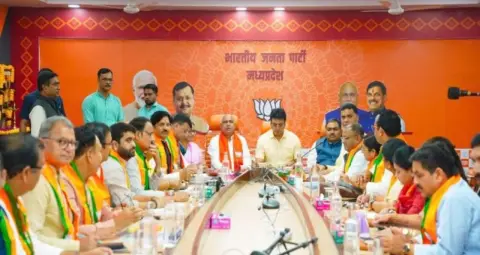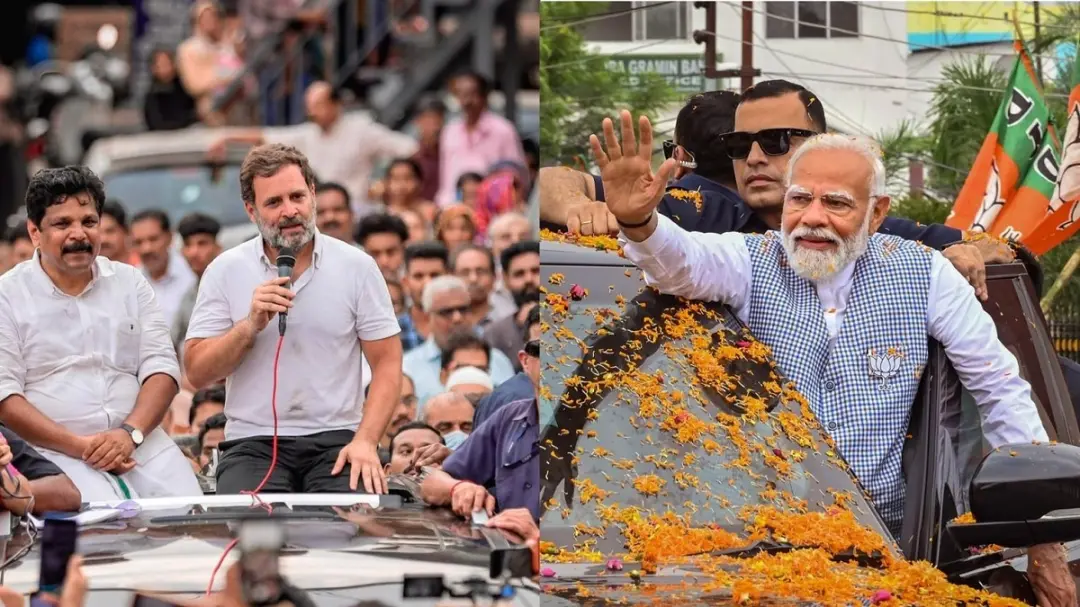
Organisation unity is crucial for any political party in electoral politics. Strong coordination between leaders and workers can help a party compete more effectively, while growing factionalism can affect candidate selection, campaigning and booth-level management. In this context, internal factionalism is being viewed as a challenge for both the BJP and Congress.
Political analysts believe that if a party fails to achieve the expected success in an election, dissatisfaction within the organisation could increase. Some leaders may also decide to switch sides while considering their future political prospects.
The electoral contest is also being discussed as more than a battle between two parties over vote share. Several factors, including candidates’ individual influence, local equations, support from caste and social groups, organisational activity and changes in electoral rolls, can affect the final outcome.
SIR, or Special Intensive Revision, is also being considered an important factor. There has been an ongoing debate among political parties over the special intensive revision of electoral rolls. The opposition has raised concerns that voters’ names could be affected, while supporters have described it as a process to make electoral rolls more accurate.
The discussion over SIR is important because a difference of a few thousand votes in any assembly constituency can change the result. If there are large-scale changes in the electoral roll in a constituency, political parties may have to reassess the actual size of their traditional vote banks. This is why the status of electoral rolls becomes an important part of political parties’ strategies before an election.
Political allegations regarding SIR need to be assessed on the basis of the concerned Election Commission’s process and official data rather than treated as facts. SIR also became a subject of political controversy in Bihar before the 2025 assembly elections. Opposition parties raised questions over the removal of voters’ names, while supporters described it as a process to update the roll by removing the names of dead, shifted or ineligible voters.




Leaders’ differences have surfaced from time to time in different states in both national parties, the BJP and Congress. In a recent development in the Haryana Congress, senior leader Sampat Singh left the party and raised several questions about internal factionalism and leadership. His resignation also cited examples of several senior leaders leaving the party.
For the Congress, factionalism could become an issue particularly when the party is attempting to return to power in a state. When different leaders have their own support groups, disputes can arise during ticket distribution. If a leader does not receive a ticket or believes that the organisation is ignoring them, this can also affect their supporters.
In the BJP, dissatisfaction can also emerge during elections over ticket distribution and local leadership. Although the BJP’s organisational structure is generally considered b, differences among local leaders have surfaced in different states. In the event of an electoral defeat or weak performance, the possibility of such dissatisfaction becoming more visible could increase.
According to experts, after an electoral defeat, one of the biggest questions is who will be held responsible within the party. If leaders begin blaming one another for the defeat, organisational tensions could increase. Some leaders may then look towards other parties to secure their political future. However, a leader’s decision to leave a party depends on several individual and political circumstances.
Party switching is not new in Indian electoral politics. Leaders sometimes join another party even before an election because they see better political opportunities there. In some cases, defections are also seen after election results. Therefore, if factionalism intensifies within a party before an election, retaining dissatisfied leaders can become a challenge for the leadership.
Candidates’ roles can also influence this entire equation. In several constituencies, the party’s name is important, but at the local level, a candidate’s personal image and network of supporters can change the outcome. If a b local leader does not receive the party ticket and contests as a rebel, the party’s vote can be divided.
Factionalism can similarly affect election campaigning. If different leaders of the same party actively support different candidates, confusion can arise among workers. A decline in the enthusiasm of booth-level workers can also have an impact on polling day.
On the other hand, if the party leadership resolves differences in time, factionalism can be prevented from turning into electoral losses. Joint rallies by senior leaders, coordination among local leaders and a united campaign in support of candidates can send a message of organisational unity.
The SIR issue can also have implications for political parties. If changes in electoral rolls alter the actual number of voters and the social structure of a constituency, parties may have to change their strategies. At booths where a party has traditionally had b voter support, changes in the electoral roll would require booth management to be based on the new figures.
For opposition parties, complaints regarding deleted or changed voter names would need to be presented through evidence and the official process. For parties in government or those supporting the electoral process, transparency and providing voters with correct information would be important. Confidence in the electoral process would be strengthened when voters feel that changes to the roll have been made clearly and according to the rules.
Political analysts also believe that SIR alone does not determine the outcome of an election. Issues such as unemployment, inflation, law and order, development, local issues, the candidate’s image, caste equations and public dissatisfaction or satisfaction with the government can also play important roles. SIR can therefore be considered one factor in electoral calculations, but it cannot alone be regarded as decisive.
In several constituencies, the contest is so close that a change of a few thousand votes can determine the difference between victory and defeat. Political parties therefore monitor booth-level electoral roll data. Party organisations seek to determine the booths where they have more supportive voters and where additional efforts are required.
Another challenge for both the BJP and Congress is to retain their traditional supporters while also attracting new voters. Issues among young people, women, first-time voters and urban voters may differ. If there is factionalism within the organisation, delivering a consistent message to these new voters can become difficult.
Coordination between the central strategy of a party and its local organisation is important in electoral politics. If the national leadership raises one issue while local leaders make statements on different issues, confusion can arise among voters about the party’s priorities. Consistency of messaging is therefore also important for electoral success.
Recent political developments show that factionalism is not limited to one party. Internal differences among senior leaders and instances of leaders leaving the party have emerged in the Haryana Congress. Questions over coordination among local leadership have also surfaced during election preparations in other states.
In upcoming elections, keeping the organisation united will be important for both the BJP and Congress because contests in several areas could be close. If party leaders remain active against one another, opposition candidates could benefit. Conversely, if all factions work together during the election, the organisation’s collective strength could increase.
Political statements over SIR are also expected to continue. The Election Commission’s official process and data will be the most important basis for assessing claims by the opposition and the ruling side over changes in electoral rolls. Voters will also need to check their information in the electoral roll in time and file corrections or objections through the prescribed process if there is an error.
Overall, organisational unity is a challenge for both the BJP and Congress in the electoral field. According to political experts, factionalism can affect ticket distribution, booth management and election campaigning. The possibility of dissatisfied leaders leaving their parties or switching sides could also increase in the event of defeat. Changes in electoral rolls through SIR could affect vote equations in some constituencies, but the final election result will depend on multiple factors, including local issues, candidates, organisation and voters’ preferences.