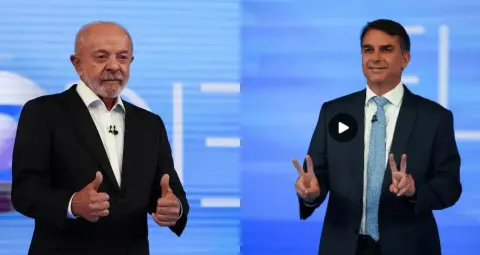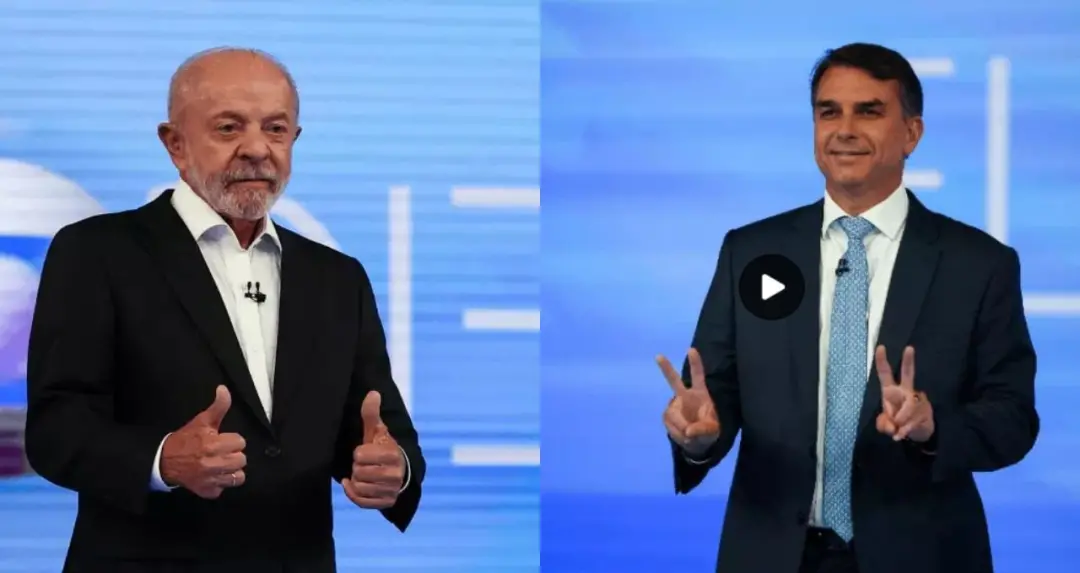
Brazil will vote on Sunday, October 25, in the second round of its presidential election, with incumbent President Luiz Inacio Lula da Silva facing Flavio Bolsonaro, the son of former President Jair Bolsonaro. Flavio Bolsonaro led Lula in the first round, but final opinion polls show a close contest between the two candidates.
Flavio Bolsonaro Led Lula in the First Round
Brazil held the first round of its presidential election on October 4. Flavio Bolsonaro received 47.04 percent of the vote, while Lula da Silva secured 45.15 percent. The difference between the two candidates was about 2.25 million votes. Bolsonaro received more than 56 million votes, compared with about 53.8 million for Lula.
A candidate must secure more than half of the valid votes to become president. Neither candidate crossed that threshold in the first round, leading to Sunday's runoff. Only two candidates are competing in the second round, and the candidate who receives more valid votes will become Brazil's next president.
Final Polls Show Narrow Bolsonaro Lead
Several new polls were released on Saturday, one day before the election. They showed Bolsonaro with a slight lead over Lula, although the margins were narrow enough that the result could not be determined in advance.
The CNT/MDA poll put Bolsonaro at 46.3 percent and Lula at 45 percent. In the Datafolha poll, Bolsonaro stood at 48 percent and Lula at 47 percent. Considering the margins of error in both polls, the race was effectively considered tied.
Lula has narrowed the gap with his rival in recent days. Both candidates are now seeking support from voters who backed other candidates in the first round or did not vote.


Voting to Begin at 4:30 PM in India
Voting in Brazil will begin at 8 a.m. on Sunday and continue until 5 p.m., according to Brasilia time. In Indian Standard Time, voting will begin at 4:30 p.m. on Sunday and end at 1:30 a.m. on Monday, October 26.
Brazil uses electronic voting machines. Vote counting will begin after polling closes, with initial trends expected to emerge in India in the early hours of Monday.
The official election commission portal will provide vote-counting data. In previous Brazilian elections, the result had become largely clear within a few hours of the end of voting.
Lula and Bolsonaro Clash Over Inflation and Crime
In the final days of the campaign, Lula and Bolsonaro focused on the economy, inflation, crime and corruption. The two candidates faced each other in their final televised debate on Friday, October 23, where they argued over their respective policies as well as personal allegations.
Lula said his government had worked to increase the minimum wage, support poor families and reduce hunger. Referring to his government's social programmes, he said improving the economic conditions of poorer people had remained a priority.
Flavio Bolsonaro, meanwhile, questioned the government over rising food prices, household debt and crime. He claimed that the current government had failed to control people's security concerns and everyday living costs.
Lula Seeks a Fourth Presidential Term at 80
Luiz Inacio Lula da Silva is one of Brazil's longstanding and experienced political leaders. He first took office as president in 2003 and completed two consecutive terms through 2010. After winning the 2022 election, he returned to office for a third term in January 2023.
Now 80, Lula is seeking to become president for a fourth time. He is the leader of the Workers' Party and has continued to receive b support from workers and lower-income families.
His government has pursued financial assistance for poor families, wage increases and social welfare programmes. However, disputes and concerns related to inflation, crime and corruption have made his electoral campaign more difficult. His objective is to secure a fourth presidential term in his political career.
Flavio Bolsonaro Makes First Presidential Bid
Flavio Bolsonaro is the eldest son of former Brazilian President Jair Bolsonaro. He is a senator from Rio de Janeiro and is also a lawyer by profession. This is his first presidential election. Flavio is seeking to carry forward his father's right-wing political agenda.
His father, Jair Bolsonaro, was president from 2019 to 2022. In September 2025, Brazil's Supreme Court convicted him in a case involving an alleged plot to stage a coup to remain in power after losing the 2022 election. He was sentenced to 27 years and three months in prison.
Jair Bolsonaro is unable to run in the election. His supporters have therefore placed their hopes in Flavio. Flavio has promised tougher measures against crime, lower inflation and changes to economic policies.
33.4 Million Voters Did Not Vote in the First Round
Voters who did not participate in the October 4 first round could play an important role in the election. According to the election commission, 21.08 percent of eligible voters did not cast ballots in the first round, representing about 33.4 million people.
Voting is compulsory in Brazil for most literate citizens between the ages of 18 and 70. Despite this requirement, a large number of people did not vote. Some stayed away from the polls, while others were unable to vote because of personal or other circumstances.
Both candidates are seeking to attract these voters. With a gap of about 2.2 million votes in the first round, even a small change in turnout could affect the final result.
United States and China Watching Brazil Election
Brazil is the largest country in South America and the largest economy in Latin America. It is also a founding member of the BRICS group. The presidential election could therefore affect the country's foreign policy and trade relations.
During his term, Lula has emphasised expanding economic cooperation with China and BRICS countries. His government has also supported maintaining relations with the United States, while criticising the administration of President Donald Trump over its trade policies and its position on Brazil's internal affairs.
Flavio Bolsonaro is regarded as one of Trump's close political allies. He has called for ber trade and investment agreements with the United States, with particular emphasis on increasing cooperation in the rare-minerals sector.
Election to Determine Brazil's Political Direction
The contest in Brazil extends beyond the two candidates themselves, with significant differences between their economic, social and foreign-policy positions. Lula has emphasised social assistance and government programmes, while Flavio Bolsonaro has focused on security, market-oriented economic policies and closer relations with the United States.