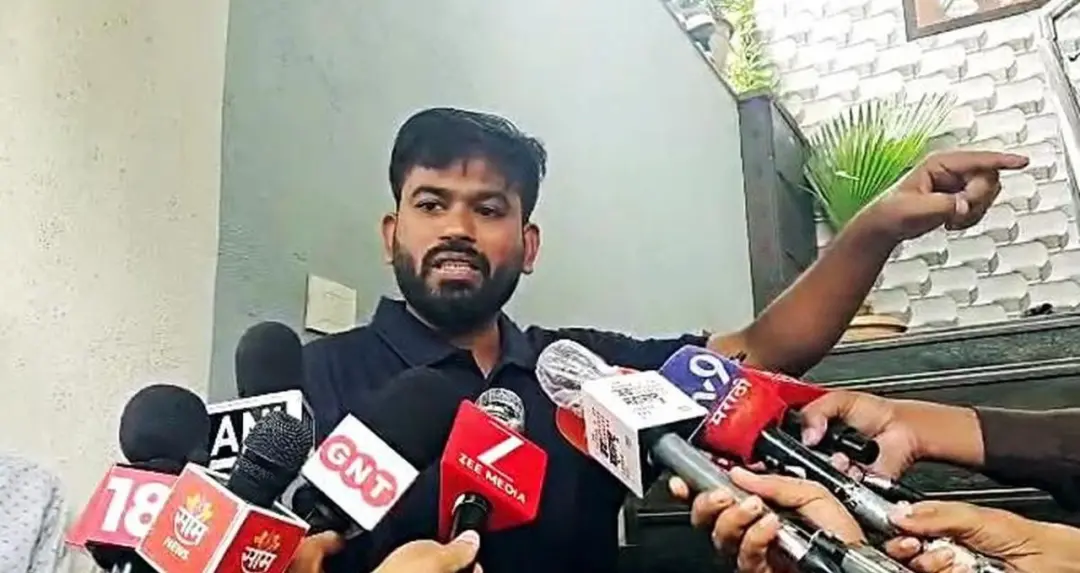
Abhijit Deepke, founder of Cockroach Janta Party (CJP), said the organisation has no immediate plan to become a political party. From September, CJP will launch the ‘Kya Bolti Public’ campaign to travel across different states, listen directly to people’s problems and compile the issues into a model agenda.
Deepke said the core committee has discussed the possibility of converting CJP into a political party, but entering electoral politics at this stage would be premature. He said several major political parties already face challenges in maintaining their existence and political influence.
According to Deepke, democracy should not be viewed only as a process of contesting elections and forming governments. He said active public participation, civil society organisations, the media, the judiciary and various pressure groups also play an important role in strengthening democracy. CJP therefore intends to focus for now on public movements and direct engagement with citizens.
Asked whether any political party had approached CJP to join or support it, Deepke denied receiving any formal proposal. He said people associated with different political parties had congratulated him on the success of the movement, but no party had formally offered to join the organisation.
Deepke said he respects the fact that people from different political parties have recognised the independent identity of CJP’s movement. He said maintaining the organisation’s independence from political parties is necessary to preserve its credibility.
On contact with the Congress, Deepke said Congress leader Pawan Khera had met him. According to Deepke, Khera said he had come on behalf of the Congress and Rahul Gandhi to understand the issues raised by the movement and express support.
Deepke said he has not spoken to Rahul Gandhi so far. He said he would be willing to meet Gandhi if an opportunity arises in the future. He also said he would be willing to speak with people associated with the BJP if they wanted to meet him.
Deepke said meeting a political leader should not be interpreted as a political alliance or support. He said CJP intends to maintain the independence of its issues and movement.
Deepke said different comparisons were being made about him in political circles, with some people linking him to the early phase of the Aam Aadmi Party and others viewing his movement from an RSS or BJP perspective.



Responding to the comparisons, Deepke said some people associate him with the Aam Aadmi Party while others associate him with the RSS-BJP. He said critics should first decide whose B-team they want to describe him as.
Deepke said his organisation does not operate under the ideology or strategy of any political party. He said its focus is on raising public issues and seeking accountability from the government.
Questions have also been raised over the inclusion of some people in CJP’s core committee, with allegations that Deepke had given important responsibilities to people close to him or his friends.
Rejecting the allegations, Deepke said the core committee includes people who have worked in their respective fields. He said the team includes people associated with legal affairs and journalism, people who have worked on the paper leak issue, people involved with policy and budgets, and people who were active in the farmers’ movement.
Deepke said he did not even personally know several of these people beforehand. He argued that if his intention had been only to give positions to friends, he could have included his school and childhood friends in the team.
Deepke also rejected allegations that his behaviour had become arrogant after the movement. He said his team had spoken with people who were protesting against him.
According to Deepke, team members held discussions with the protesters for several hours. The protesters wanted to be included in the core committee, but he said it was not possible to make every person part of the top team.
Deepke said more people could be given responsibilities as the organisation expands in the future. He said, however, that no person would be included in the core committee under pressure or compulsion.
On the election process and electronic voting machines, Deepke said he believes questions related to voter lists became serious after the 2024 general election. He said that earlier the voter chose the government, but he now believes the government is reaching a position where it can determine who the voters will be.
He referred to an alleged dispute related to the voter list in West Bengal and claimed that questions had been raised over a large number of genuine voters. According to Deepke, the issue for democracy is not limited to electronic voting machines and any irregularity in the voter list can also pose a serious threat.
Such claims concerning the election process and voter lists need to be considered in the context of relevant official records and explanations from electoral institutions.
One of CJP’s main future initiatives is the ‘Kya Bolti Public’ programme. Deepke said the organisation will begin travelling to different states from September to speak directly with people.
The campaign will seek to understand local problems, priorities and expectations from the government. Deepke said the issues emerging from these interactions will be collected and used to prepare a model agenda.
According to him, the agenda will be based on people’s real problems and could prioritise employment, education, healthcare, public infrastructure and other socio-economic issues
On the politics of religious polarisation, Deepke said the focus of the country’s political discourse needs to change. He said political parties should be questioned about clear plans for education, employment, healthcare and public infrastructure instead of religion-based rhetoric during elections.
He said leaders should explain what they would do for the country after coming to power. Referring to artificial intelligence and technological changes, Deepke said AI could affect some jobs but could also create new opportunities.
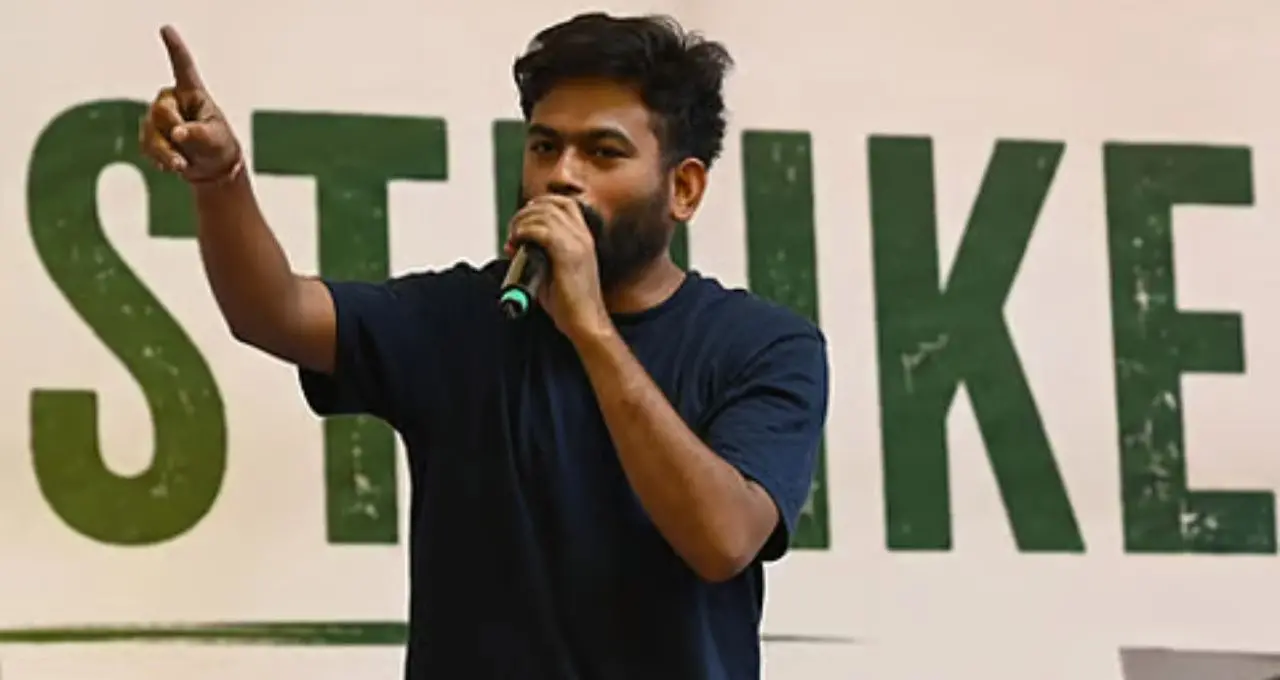
Asked whether he would return to the United States in the future, Deepke said he would remain in India. He said he would devote his full time to advancing the work of CJP while staying in India for now.
He also described the role of the youth movement as important. According to Deepke, the biggest success of the movement is not the resignation of any individual but the removal of fear among young people. He said citizens in a democracy should not be afraid to question the government and demand accountability.
Deepke told his supporters that public participation was the most important factor in making the movement successful. He thanked people for their support but said no individual should be made a hero overnight.
According to Deepke, no single individual can be placed above the country, the Constitution or democratic institutions in a democracy. He said the real strength of a movement lies not in an individual but in public participation and institutional accountability.
Asked about the organisation’s next steps if the government allegedly backs away from its promises, Deepke said CJP could return to the path of protest.
He said governments should not assume that the anger of students and young people has disappeared. According to him, if the underlying problems are not resolved, young people could return to the streets. For now, the organisation aims to expand dialogue with people across the country alongside its movement.
On the proposal to reduce the voting age from 18 to 16, Deepke said there is currently no such proposal on CJP’s agenda. He said the organisation is not considering the issue at present.
On foreign policy, he said India should take decisions while keeping its national interests in mind. Referring to trade and tariff discussions with the United States and the issue of oil purchases from Russia, he claimed that the United States had continued to pressure India in pursuit of its own interests.
Deepke also questioned the functioning of a large section of the Indian media. He alleged that most media organisations had established their own propaganda. According to him, independent journalism and impartial information are essential for democracy.
CJP is preparing to develop itself as a platform for public movements and citizen participation rather than as a political party. Through the proposed ‘Kya Bolti Public’ campaign from September, the organisation will seek to directly hear people’s problems and convert them into a broader agenda.