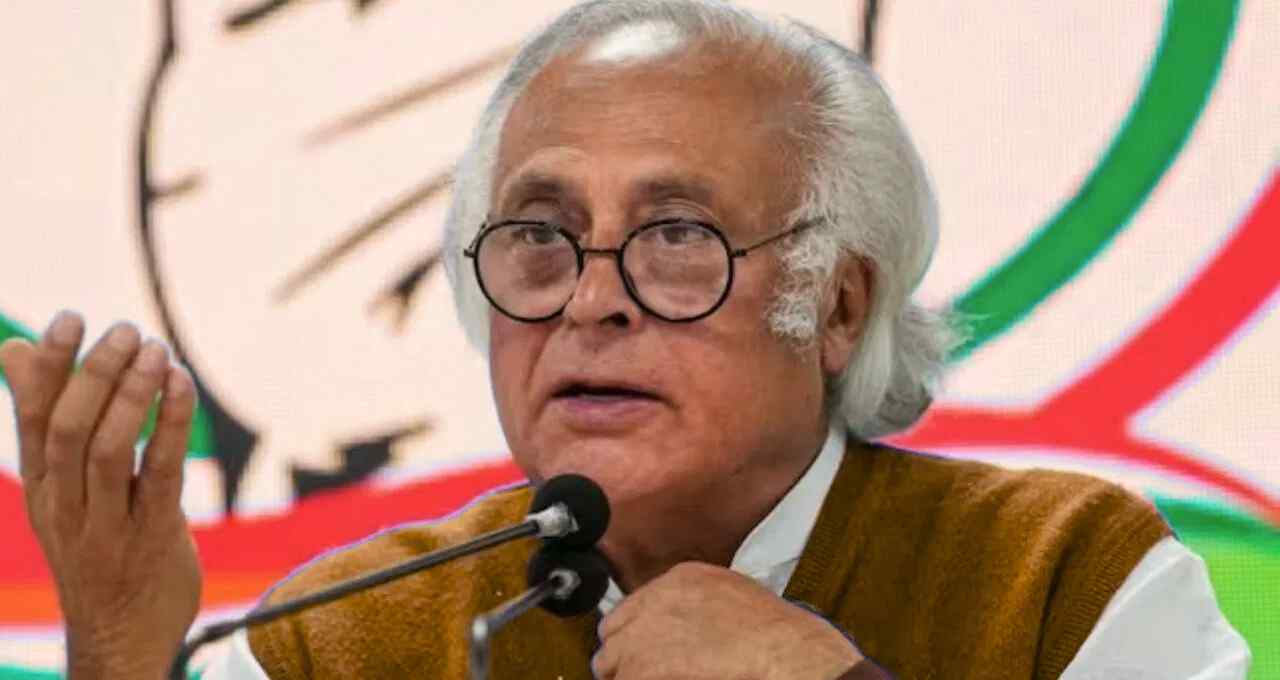
Congress General Secretary Jairam Ramesh has criticized the government's response to deaths linked to air pollution, calling it insensitive. He questioned the government's reply in Parliament, citing studies from The Lancet and NFHS.
New Delhi: Air pollution continues to be a severe challenge in the country. From the capital Delhi to major metropolitan cities and industrial areas, poor air quality is directly impacting people's health. Now, a political clash has also intensified over this issue. Congress General Secretary Jairam Ramesh has bly questioned the central government's stance on deaths and illnesses related to air pollution, describing it as not only concerning but also raising questions about the government's sensitivity.
Objection to Government Response in Rajya Sabha
Jairam Ramesh stated that on December 9th, the government claimed in the Rajya Sabha that no conclusive data is available in the country to prove a direct link between deaths or illnesses and air pollution. He pointed out that the government had made a similar statement in Parliament on July 29, 2024. According to Ramesh, this statement is not only surprising but also disregards scientific facts.




Government's Stance Described as Insensitive
The Congress leader termed the BJP-led government's attitude towards deaths caused by air pollution as "shockingly insensitive." He said that when millions of people in the country are falling ill and losing their lives due to polluted air, the government's claim of lacking conclusive data is deeply unfortunate. Ramesh demanded immediate and concrete improvements in air quality management.
Reference to The Lancet Study
Jairam Ramesh mentioned the latest scientific evidence in his statement. He explained that a study published in the prestigious medical journal The Lancet in early July 2024 revealed that 7.2 percent of all deaths in India are linked to air pollution. This means that approximately 34,000 people die each year in just 10 major cities due to polluted air.
Serious Indications from NFHS Data
He also cited a study by the International Institute of Population Sciences in Mumbai, conducted in August 2024. This study utilized government data from the National Family Health Survey (NFHS-5). According to the report, districts where air pollution exceeds the National Ambient Air Quality Standards (NAAQS) experienced a 13 percent increase in premature mortality among adults. The figures are even more alarming for children, with a nearly 100 percent increase in mortality rates.
Long-Term Effects and Millions of Additional Deaths
Jairam Ramesh said that the effects of polluted air are not only immediate but also long-term. According to a study published in The Lancet Planetary Health in December 2024, if India does not adhere to the safe limits suggested by the World Health Organization (WHO), approximately 1.5 million additional deaths could occur each year due to prolonged exposure to polluted air. This figure alone demonstrates the severity of the situation.
International Report Increases Concern
He also mentioned a report by the Institute of Health Metrics and Evaluation at the University of Washington in November 2025. This report stated that approximately 2 million deaths in India are linked to air pollution, a 43 percent increase compared to the year 2000. According to the report, air pollution is a major cause of approximately 70 percent of deaths from Chronic Obstructive Pulmonary Disease (COPD).
Questions Raised on Air Quality Standards
Jairam Ramesh said that the National Ambient Air Quality Standards need to be updated immediately. He recalled that these standards were last revised in November 2009. According to Ramesh, the current PM2.5 standards are 8 times higher than the WHO's annual exposure guidelines and 4 times higher than the 24-hour exposure guidelines. This means that the standards set in India are themselves a threat to people's health.
Criticism of NCAP and GRAP
The Congress leader also criticized the National Clean Air Programme (NCAP) and Graded Response Action Plans (GRAPs). He said that these plans are based on a reactive approach. The need of the hour is to implement proactive measures throughout the year. According to Ramesh, despite the launch of NCAP in 2017, PM2.5 levels continue to rise. Today, every citizen of the country lives in areas where pollution levels are far higher than WHO guidelines.