The initial public offering of the National Stock Exchange of India has entered a renewed phase of uncertainty following a petition filed before the Delhi High Court challenging the no-objection certificate issued by the Securities and Exchange Board of India.
The listing process of India’s largest stock exchange encountered a fresh obstacle after the petition questioned the validity of the no-objection certificate granted by the Securities and Exchange Board of India, placing the proposed public issue under renewed scrutiny.
The public offering of the National Stock Exchange of India has been under discussion since 2016, when it was estimated that the issue could become the largest initial public offering in the history of India’s capital markets. Over the years, the process has been repeatedly deferred due to regulatory investigations, internal disputes and legacy matters.




Recent indications that the exchange had received approval to proceed with the initial public offering had raised expectations among market participants and investors that the prolonged process was nearing conclusion. The petition now filed before the court has introduced fresh uncertainty into the timeline.
The Securities and Exchange Board of India issued the no-objection certificate on 30 January, permitting the exchange to move forward with its initial public offering. Based on this certificate, the National Stock Exchange of India began preparations to expedite its listing process.
The petition challenges the validity of the certificate on the grounds that the Securities and Exchange Board of India granted approval without conducting an independent examination of a disputed action by the exchange. It states that the approval is contrary to the spirit of the applicable laws and regulations.
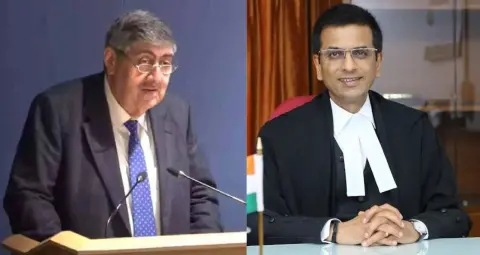
The petition has been filed by KC Agarwal, a 72-year-old resident of New Delhi and a former judicial officer who has also been associated with derivatives trading. The petition was filed before the Delhi High Court on 10 February. He has sought quashing of the no-objection certificate issued by the Securities and Exchange Board of India and has requested a fair investigation into the alleged violation of rules by the National Stock Exchange of India.
The central issue raised in the petition relates to the corporate action adjustment framework prescribed by the Securities and Exchange Board of India. The framework was introduced to maintain balance in derivatives trading in cases involving bonus issues, stock splits and special dividends. Its stated principle is that the economic position of derivatives traders should remain unchanged before and after any corporate action, a concept referred to as price neutrality.
According to the petitioner, the National Stock Exchange of India did not properly implement this adjustment framework. The petition states that the rules require adjustment in both price and quantity in such cases. It alleges that the exchange adjusted only the price and did not make any corresponding adjustment in quantity. It further alleges that the exchange directly deducted from derivatives traders’ accounts an amount equivalent to the dividend.
The petition states that under the Securities Contracts Regulation Act, dividend is the right of shareholders. It asserts that derivatives traders neither receive dividends nor can any amount be deducted from them on account of dividends.
On this basis, the petitioner has described the deduction as unlawful and contrary to the law, and has stated that the action constitutes a violation of rules and affects investor rights.
KC Agarwal has further stated that he submitted multiple complaints to the National Stock Exchange of India in this matter, but that these complaints were closed without hearing. He has also alleged that the Securities and Exchange Board of India did not undertake any independent review and accepted the explanation provided by the exchange.
The petition also states that several applications were filed under the Right to Information Act seeking details of the amounts deducted from derivatives traders, but these applications were rejected.
The petitioner has stated that this resulted in a lack of information regarding the matter. He has further stated that letters and emails sent to the Chairperson of the Securities and Exchange Board of India up to January 2026 did not receive any response.