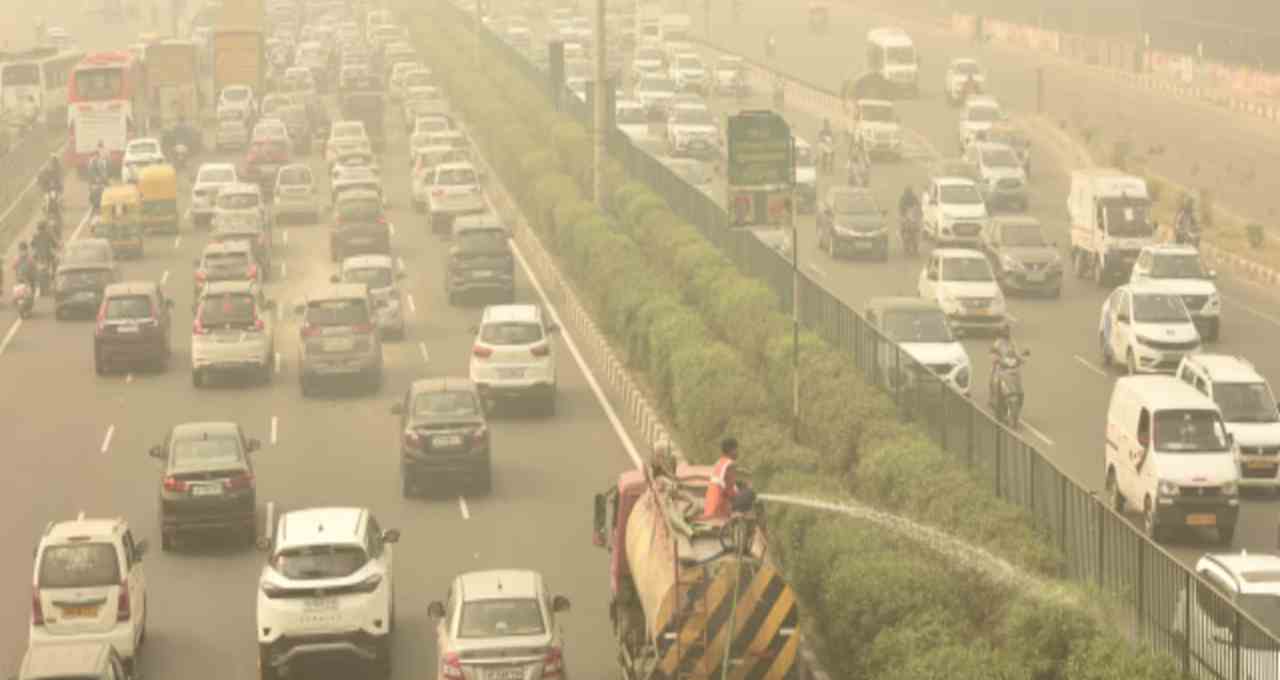
Air quality in Delhi-NCR has seen a slight improvement, but a thick layer of toxic smog still persists over the capital and surrounding areas. Despite the implementation of strict restrictions under GRAP Stage-IV, air pollution remains at dangerous levels.
GRAP-4: Delhi-NCR is once again grappling with severe air pollution. Despite the enforcement of stringent measures under Stage-IV of the Graded Response Action Plan (GRAP), air quality in the capital and surrounding regions remains hazardous. While the Air Quality Index (AQI) has shown a slight improvement in the last 24 hours, experts say this improvement is insufficient and the situation remains critical.




According to the latest data from the Central Pollution Control Board (CPCB), Delhi’s average AQI was recorded in the ‘Severe’ category on Tuesday morning. While the AQI reached 427 by 4 pm on Monday, a slight decrease was observed on Tuesday morning. Nevertheless, the AQI in most parts of Delhi remains around or above 300, which is considered extremely harmful to health.
Air Pollution Levels in Key Areas of Delhi
The air quality in many parts of the capital remains very poor. AQI levels of 316 were recorded in Rohini, 312 in Narela, 312 in ITI Shahdara, 310 in Jahangirpuri, and 301 in the Delhi Technological University (DTU) area. All these areas fall into the ‘Severe’ category. Additionally, AQI levels ranged from ‘Very Poor’ to ‘Severe’ in areas like Srinivaspuri (294), Satyawati College (289), Sonia Vihar (282), Pusa (280), and Delhi University North Campus (277). Experts say that prolonged exposure to air at this level can increase the risk of diseases related to the lungs, heart, and eyes.
The cities adjoining Delhi in the NCR have also not found relief from pollution. AQI levels of 288 were recorded in Sector-1 and 255 in Sector-125 in Noida, while Knowledge Park-5 recorded an AQI of 241. In Ghaziabad, Sanjay Nagar recorded an AQI of 230 and Loni recorded 202, both falling into the ‘Poor’ category. These figures clearly indicate that the entire NCR region is struggling with a serious pollution problem.
Impact on Air Traffic
Along with the poor air quality, dense fog and low visibility have also affected air traffic. Flight operations were disrupted at Indira Gandhi International Airport on Tuesday. Reports indicate that approximately 131 flights were cancelled, while around 400 flights were delayed. This caused significant inconvenience to passengers.
Under GRAP-4, strict measures such as a ban on construction activities, restrictions on the use of diesel generators, online classes in schools, and restrictions on non-essential vehicles have been implemented. Despite these measures, the expected reduction in pollution has not been achieved. Experts believe that until there is a major change in the weather, such as b winds or rain, pollutant particles will remain trapped in the atmosphere.