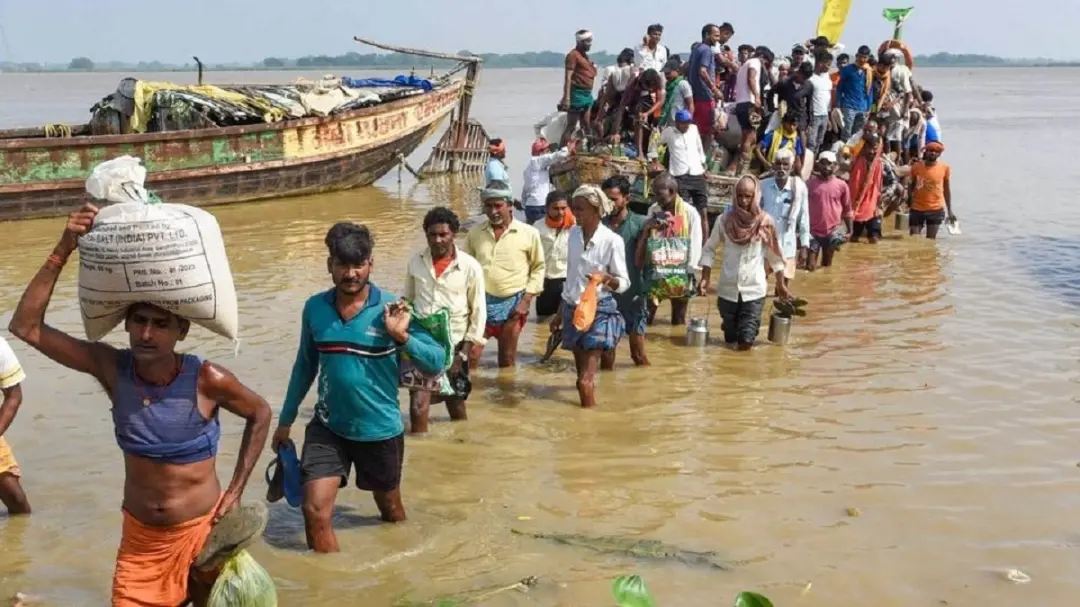
The Ganga water level in Bhagalpur has started rising rapidly again, with floodwater returning to diara and riverside areas as the river swells. The rising water level has increased concerns among villagers, while rescue work continued overnight at vulnerable points of the Raghopur embankment.
The rise in the Ganga water level has directly affected the diara areas. Water has started spreading again in low-lying areas near the river. Places where floodwater had receded earlier are once again seeing water accumulation, increasing difficulties for residents. Waterlogging in fields, roads and low-lying areas has affected normal movement.
The Raghopur embankment remains a priority for the administration. In view of the increasing pressure from the river, rescue work was carried out overnight at vulnerable points of the embankment. Necessary materials and resources were used to control the potential impact of erosion and water pressure. Teams remained at the site, monitored the situation and worked to secure vulnerable sections.
Embankment protection is a key challenge during floods. As the river level rises, pressure on embankments increases. The risk can become greater at locations where erosion or structural weakness already exists. Rescue work was therefore continued overnight at the Raghopur embankment.
The return of the Ganga water has created difficulties for people living in the diara areas. Many families in these areas depend on agriculture and livestock. The return of floodwater has increased the possibility of damage to standing crops. Arranging fodder and moving livestock to safer locations have also become challenges for villagers.
The rise in the Ganga water level is not limited to Raghopur. The spread of water is being monitored in several riverside and low-lying areas of Bhagalpur district. Even a minor rise in the water level can increase difficulties for people living along the river, as several locations are already affected by erosion and waterlogging.

The Ganga water level in Bhagalpur has fluctuated continuously in recent days. A fall in the water level had provided some relief, but the subsequent rise in the river has brought the flood threat back. With water returning to the diara areas, residents are concerned that the situation could become more serious if the river level continues to rise.
During floods, monitoring nearby villages along with the embankments is necessary. If the water level rises suddenly at any location, moving villagers to safer places becomes an administrative priority. Local residents in vulnerable areas are advised to remain alert.
The overnight rescue operation at Raghopur indicates that the administration is closely monitoring the condition of the embankment. Keeping the embankment secure amid rising river pressure is necessary because any damage could cause water to spread rapidly across surrounding areas.
Transportation becomes one of the main problems in flood-affected areas. Rising water can make movement on rural roads and connecting routes difficult. Boats may have to be used at several locations. Delivering essential goods, medicines and food supplies can also become a challenge for the administration.
Flooding is not a new problem for families living in the diara areas, but the repeated return of water increases their difficulties. Villagers remain concerned about their homes, fields and livestock. After the water recedes and residents begin preparing to return to normal conditions, another rise in the river level forces them to remain alert again.
The risk of erosion also increases during floods. Fast-flowing water weakens riverbanks and causes land to erode at several locations. Bhagalpur has previously been among the areas affected by Ganga erosion. In recent days, incidents of damage to houses, temples and other structures due to erosion have also been reported from different parts of the district.
Teams involved in the rescue operation at the Raghopur embankment remained present during the night. Monitoring vulnerable sections and carrying out rescue work in darkness is difficult. Despite this, the operation continued in view of the potential risk.
The coming hours are important for the administration. If the Ganga water level continues to rise, pressure on the embankment will also increase. Continuous monitoring of vulnerable locations and immediate rescue work when required will therefore remain necessary.
Local residents need to remain cautious as the river water rises. Children should be kept away from the river and floodwater. Entering fast-flowing water can be highly risky. During floods, people also need to maintain distance from electric wires and submerged areas.
The situation is also challenging for livestock owners. As the water rises, animals have to be moved to higher ground. Limited availability of fodder can further increase difficulties for villagers. Relief arrangements will also need to take into account fodder and necessary facilities for livestock.
Flooding can also affect health. Prolonged waterlogging can increase the risk of infection due to dirt and contaminated water. Ensuring safe drinking water and maintaining cleanliness in waterlogged areas are therefore necessary.
How much the Ganga water level will rise further will depend on the weather and the amount of water entering the river. Continued rainfall or increased water inflow from upstream areas could make the flood situation in Bhagalpur more serious. A decline in the water level could gradually provide relief to people in the diara areas.
The security of the Raghopur embankment remains the immediate priority. After the overnight rescue operation, the condition of the embankment continues to be monitored. The administration faces the challenge of keeping the embankment secure amid rising water and controlling the spread of water into surrounding villages.
People living in areas already affected by the Ganga should remain prepared as the water level rises. Essential documents, medicines, drinking water, dry rations and mobile phones can be kept in safe places so that difficulties are reduced if the situation deteriorates suddenly.
The return of floodwater to the diara areas is a concern for villagers. Waterlogging in fields could affect crops. If water remains for a prolonged period, agricultural activities could stop and the rural economy could also be affected.
The biggest challenge in Bhagalpur's Ganga-linked flood situation is the rapid change in the river's water level. After several hours of relief, another rise can force villagers to repeatedly move their belongings and livestock to safer locations.
Continuous monitoring of embankments, timely repairs at vulnerable points and providing local residents with information at the appropriate time remain necessary. Administrative preparedness can help reduce potential damage.
The Ganga is once again in spate in Bhagalpur, and floodwater has returned to the diara areas. Rescue work continued overnight at the Raghopur embankment amid increasing water pressure. The direction of the situation will depend on further changes in the river's water level, while the administration and villagers remain alert and continue to monitor the embankment and flood-affected areas.