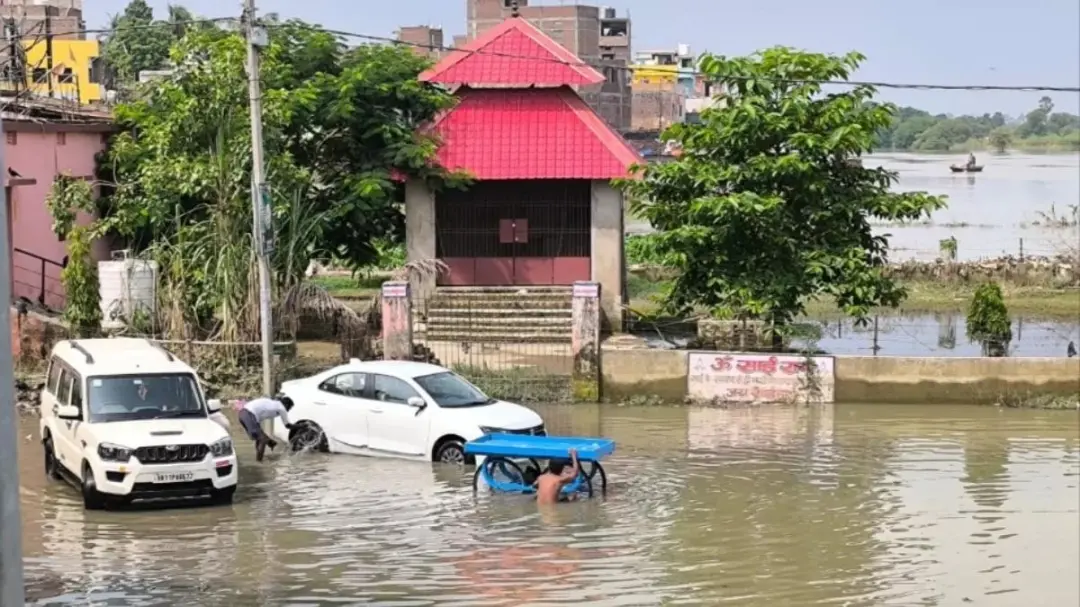
Bhagalpur is facing a renewed flood threat as the Ganga continues to rise and heavy rainfall persists across the city and surrounding areas. The river’s water level is now only 26 centimetres below the danger mark, while water has started spreading into low-lying areas and has accumulated to nearly three feet on some roads.
The danger mark for the Ganga in Bhagalpur is 33.68 metres. With the river level approaching this mark, the administration and flood control department are closely monitoring the situation. The Ganga had also recorded a sustained rise in water level during August, when water began reaching several low-lying areas.
The combined impact of rainfall and the rising river level is visible across several parts of the city. Waterlogging on lower roads is creating difficulties for commuters, while in some areas, residents are having to move through water because roads and surrounding areas have been inundated.
The rising river level is also affecting water drainage from low-lying areas. When the Ganga remains at a high level, drainage from several low-lying locations can be affected. Continued rainfall can therefore result in waterlogging remaining for an extended period.
The impact of the rising Ganga is not limited to the city. Water has also spread across riverside rural areas, affecting agricultural fields and roads. In several places, boats have become the main means of transport for villagers. Reports during the August rise in the Ganga water level had also indicated the presence of water in Adampur, Nathnagar, Champanagar and other riverside areas.

The rise in the river level is also increasing the risk of erosion. The b current is continuously eroding land along the riverbank. Several riverside areas of Bhagalpur are facing increased risks to roads, buildings and other structures because of erosion. Recent reports also indicated damage to a retaining wall in the Manik Sarkar Ghat area and cracks in the main road.
For people facing the combined impact of flooding and erosion, continued rainfall has added to the difficulties. In areas already experiencing waterlogging, additional rainwater can further increase water levels. Local residents are facing difficulties leaving their homes, going to markets and bringing essential supplies.
The administration has increased monitoring in view of the rising Ganga water level. Vulnerable embankments and riverside areas are being monitored. During the earlier flood situation, Aapda Mitras and engineers had been instructed to monitor embankments and immediately report any problems.
The Ganga water level in Bhagalpur has experienced continuous fluctuations over the past few weeks. After an increase towards the end of August, there were indications of some relief for a period, but concerns continued to rise again because of rainfall and water coming from upstream areas.
The population living in low-lying areas faces the greatest risk as the river level rises. Water can reach homes and roads suddenly in such locations. Increased monitoring of such areas and shifting people to safe locations when necessary remain important during the situation.
Riverside areas of Bhagalpur have already faced erosion-related problems. Changes in the river’s course and erosion of riverbank land caused by b currents have affected homes and religious sites at several locations. Recently, the incident involving a nearly 100-year-old Durga temple being submerged in the Ganga in the Raghopur area highlighted the extent of the erosion problem.
Waterlogging in some parts of the city could also affect traffic. Nearly three feet of water on roads can make movement difficult for small vehicles. If water levels rise further, the risk to two-wheelers can increase and pedestrians may also have to change their routes.
Continued rainfall has provided relief from humidity and heat in the city, but the same rainfall is causing difficulties in flood-affected and low-lying areas. The India Meteorological Department’s available forecast for Bhagalpur had also recorded the possibility of clouds and rain.
People also need to exercise caution in the event of lightning and b winds accompanying rainfall. Unnecessary movement into river and waterlogged areas should be avoided. Children and elderly people, in particular, need to be kept away from routes where water currents are b.
Drinking water and daily necessities become among the biggest concerns during floods. If water remains stagnant for a prolonged period, local shops, schools and small businesses may also be affected. Food items that have come into contact with water should be avoided, while drinking water needs to be kept safe.
Waterlogging in rural agricultural areas can pose a risk of crop damage. For families living in diara areas, keeping livestock in safe locations can also become a challenge. If the water level continues to rise, residents may need to move to higher and safer locations in time.
The administration currently faces a dual challenge: monitoring the rising Ganga water level while managing waterlogging in the city and rising water levels in rural areas caused by continued rainfall. Along with monitoring embankments, the drainage system will also need to remain operational.
If the Ganga reaches the danger mark in Bhagalpur, the impact of flooding could become more widespread. The extent of any further rise in the water level, however, will depend on rainfall in upstream areas, the volume of water entering the river and local weather conditions.
For now, attention remains focused on the Ganga water level. The river is only 26 centimetres below the danger mark, while rainfall continues. Residents of areas already affected by waterlogging need to follow administrative instructions and remain prepared to move to safe locations if required.
The situation in Bhagalpur remains sensitive, with the rising Ganga and continued heavy rainfall increasing the flood threat. The river is 26 centimetres below the danger mark, while waterlogging on several roads is affecting daily life. The administration has increased monitoring, and the situation will depend on rainfall and changes in the Ganga’s water level in the coming period.