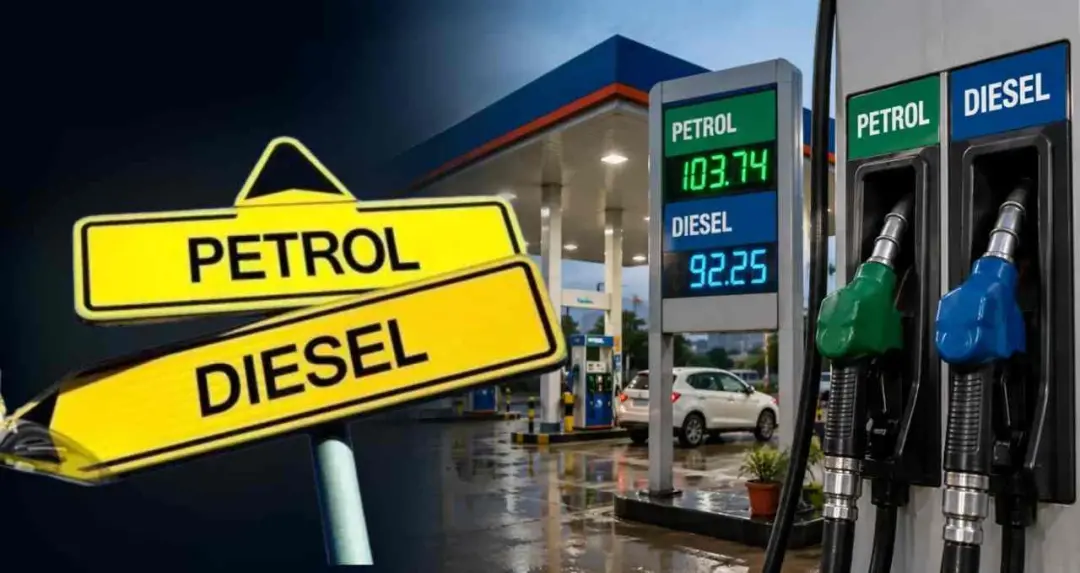
India’s retail petrol and diesel prices remained largely unchanged despite continued volatility in global crude oil markets and rising geopolitical tensions in West Asia, which have increased pressure on global energy supply chains.
Amid the uncertainty in international energy markets, the Indian government maintains that the current elevated oil and gas prices are unlikely to persist for an extended period.
At the same time, India has officially launched E85 fuel as part of its ethanol blending programme, marking a significant step toward reducing dependence on imported crude oil and promoting cleaner energy sources.




Fuel prices across major Indian cities remained broadly stable, with only minor variations reported in some locations and no significant nationwide increase or reduction.
In Delhi, petrol is priced at Rs 102.12 per litre and diesel at Rs 95.20 per litre. In Mumbai, petrol costs Rs 111.21 per litre and diesel Rs 97.83 per litre. Kolkata recorded petrol prices of Rs 113.51 per litre and diesel prices of Rs 99.82 per litre.
In Noida, petrol is priced at Rs 102.12 per litre and diesel at Rs 95.56 per litre. Gurugram reported petrol prices of Rs 103.32 per litre and diesel prices of Rs 95.51 per litre. In Patna, petrol costs Rs 113.35 per litre and diesel Rs 99.36 per litre. Pune recorded petrol prices of Rs 111.52 per litre and diesel prices of Rs 98.15 per litre.
Hyderabad and Thiruvananthapuram continue to be among the cities with the highest petrol prices in the country, with fuel rates remaining significantly above the national average.
Petroleum and Natural Gas Minister Hardeep Singh Puri recently said that the current high prices of oil and gas in international markets are unlikely to remain at elevated levels for a prolonged period. According to the minister, prices could ease in the coming months, potentially providing relief to Indian consumers.
The minister’s remarks come at a time when ongoing tensions in West Asia have affected global energy supplies and increased pressure on crude oil prices.
The situation in West Asia continues to be the primary factor influencing global energy markets, with growing concerns over potential disruptions to oil and gas supplies from the region.