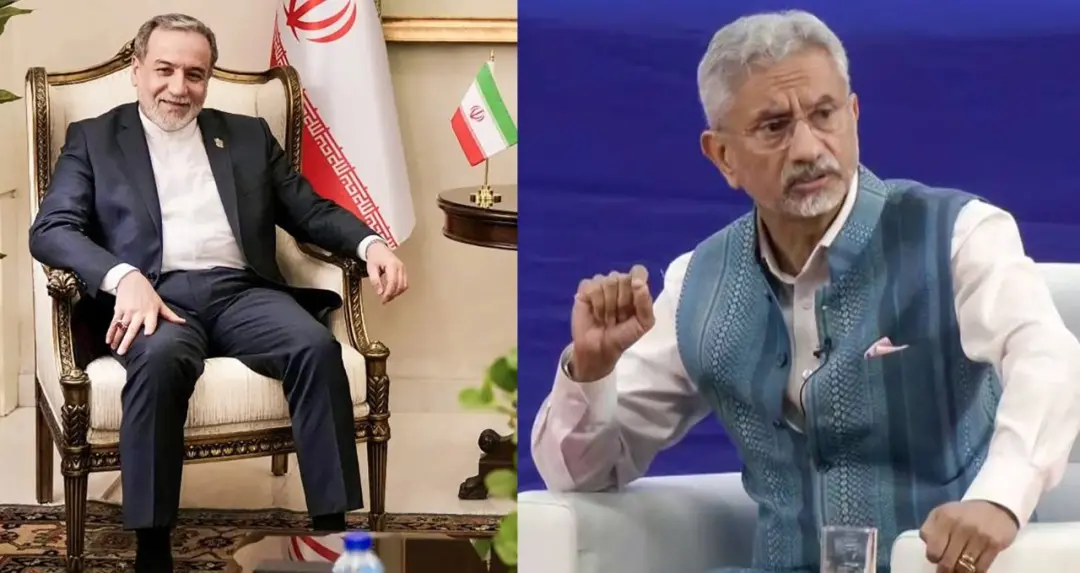
Iran’s Foreign Minister Saeed Abbas Araghchi held a telephone conversation with India’s External Affairs Minister S. Jaishankar, during which the two leaders discussed the situation in West Asia, prospects for a ceasefire, regional security, and bilateral relations. Both sides agreed to remain in contact.
According to information shared by S. Jaishankar on social media, the Iranian Foreign Minister initiated the call and the two discussed the current international situation in detail.
Sources indicated that the discussion covered the ongoing tensions and security situation in West Asia, efforts to reduce regional conflict, possibilities for a ceasefire and diplomatic resolution, strengthening India-Iran bilateral relations, and continuing cooperation and dialogue in international diplomacy.


Both leaders emphasized the importance of maintaining continuous communication under the current circumstances to prevent further deterioration of the situation.
The Iranian Embassy in New Delhi also issued an official statement on the conversation, stating that the foreign ministers of the two countries exchanged views on regional and global issues.
According to the embassy, the discussion included the status of a possible ceasefire, new opportunities for bilateral cooperation, changing dynamics in international politics, and the need for regional stability.
The conversation is also reported to have included issues related to maritime trade routes and energy supply, with concerns expressed about the situation around the Strait of Hormuz.
The call took place amid ongoing instability in West Asia. In recent months, tensions between Iran and the United States, along with sanctions and military activities, have contributed to a complex situation in the region.
Reports indicate that Iran has been engaging in diplomatic outreach with multiple countries in an effort to reduce tensions. As part of these efforts, the Iranian Foreign Minister recently visited Oman, Pakistan, and Russia.
The call following the Moscow visit indicates continued engagement by Iran at regional and global levels.
At the international level, the status of ongoing peace talks between the United States and Iran remains uncertain. Reports suggest that an initial round of talks held in Islamabad did not result in an end to the conflict. The United States has reportedly attempted to extend a temporary ceasefire and indicated that Iran may be given time to prepare a new diplomatic proposal.
Amid these developments, political and military tensions in the region continue.
Some media reports have claimed significant losses during recent military actions, although these claims have not been independently verified. Reports have also referred to possible impacts on senior leadership and military officials during the conflict, but these accounts have received varied responses internationally.
India continues to play a diplomatic role in the region, maintaining longstanding ties with Iran in energy, trade, and strategic cooperation.
The recent conversation between S. Jaishankar and Saeed Abbas Araghchi indicates India’s continued engagement in efforts supporting regional stability and peace. India has maintained a consistent position of seeking solutions through dialogue and diplomacy, particularly during periods of heightened tensions in West Asia.