The number of Kanwariyas travelling through Bhagalpur during the Shravan fair has declined by around 47.8 percent this year. The traffic and movement-related problems associated with Bhagalpur’s Vikramshila Setu are being considered one of the key reasons for the decline.
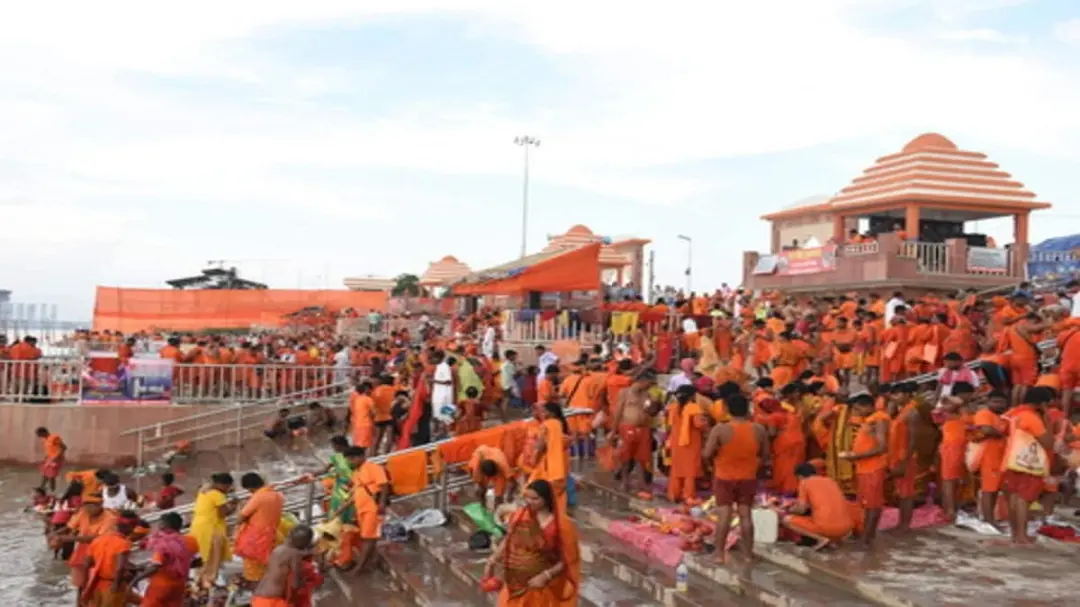
During the Shravan fair, large numbers of devotees collect Ganga water from Sultanganj and travel on foot to Baba Baidyanath Dham in Deoghar. Bhagalpur is an important stop on this route, which is also used by devotees from Bihar, Jharkhand, West Bengal and other states.
According to available figures, the number of Kanwariyas passing through the area this year has fallen by approximately 47.8 percent.
Vikramshila Setu is an important bridge connecting Bhagalpur with several parts of north Bihar. Traffic pressure on the bridge already remains high. During the Shravan fair, the movement of thousands of devotees and vehicles puts additional pressure on the traffic system.
Problems related to the condition of the bridge and associated arrangements have also been reported among Kanwariyas travelling through the area.
The decline of approximately half in the number of Kanwariyas is a concern for the local administration and those involved in organising the fair. The 47.8 percent reduction is being viewed as considerably higher than normal fluctuations. Along with the bridge-related problems, the condition of the travel route, traffic arrangements and devotees choosing alternative routes are also being considered among the possible factors.




The decline in the number of Kanwariyas may also be linked to weather and other circumstances. Rain, heat and road conditions during Shravan can affect devotees’ travel plans. Devotees arriving from different areas may also use alternative routes according to their convenience.
Therefore, it would not be appropriate to attribute the 47.8 percent decline to a single factor. However, the problems associated with Vikramshila Setu are being included among the key reasons.
Kanwariyas leave Sultanganj with Ganga water for Baba Baidyanath Dham. The religious journey covers several kilometres, with devotees stopping at different points along the route. Safe and smooth movement is particularly important for those travelling through the Bhagalpur area.
Maintaining vehicle movement on the bridge while making separate arrangements for Kanwariyas remains a challenge for the administration. During the Shravan fair, large numbers of police personnel and administrative officials are deployed to keep traffic moving and prevent difficulties for devotees.
Despite these arrangements, the problems associated with the bridge appear to have affected the number of devotees travelling through the area this year.
The Kanwariya journey is also important to the local economy of Bhagalpur and Sultanganj. During the fair, hotels, eateries, fruit and vegetable sellers, shops selling पूजा सामग्री, medical stalls, transport operators and other small businesses receive employment and business from the large number of devotees.
A decline in the number of Kanwariyas could affect these businesses.
In Sultanganj, special arrangements are made at the Ganga ghats during the Shravan fair. Devotees take a bath in the Ganga, collect water and then leave with their Kanwars for Bab Dham. Roads around Bhagalpur play an important role in this journey.
The problem associated with Vikramshila Setu is therefore being viewed not only as a traffic issue but also as a matter connected with the organisation of the fair. Ensuring the safety of devotees remains a priority for the administration.
If traffic congestion develops on or around the bridge, Kanwariyas may have to remain stopped for extended periods. Such conditions can create difficulties for devotees travelling on foot.
The Vikramshila Setu issue has been an important traffic-related matter in Bhagalpur for a long time. A large number of vehicles cross the bridge every day, and vehicle movement increases further during the Shravan fair. Managing traffic on the bridge while safely handling the movement of Kanwariyas becomes a challenge for the administration.
The decline in Kanwariya numbers could also require the fair administration to reconsider some arrangements. Facilities for food, drinking water, medical care, security and resting places are planned according to the number of devotees.
If the lower footfall continues, the use of these arrangements could also be affected.
At the same time, ensuring a safe and smooth journey for devotees remains necessary. Kanwariyas travel on foot for several days and require adequate medical facilities, drinking water and rest along the route. Traffic congestion and disorder on a major bridge or road can make the journey more difficult.
The decline in the number of Kanwariyas is also a concern for traders in Bhagalpur. During Shravan, many shopkeepers stock goods specifically for Kanwariyas. Sales of पूजा सामग्री, Kanwars, containers for Ganga water, clothing, food items and other essential goods increase during the period.
Lower devotee numbers could affect sales for these businesses.
Shravani Mela is among Bihar’s major religious journeys, with Bhagalpur and Sultanganj forming an important part of the route. The situation has again raised the issue of the capacity of major bridges and routes and the strength of alternative arrangements during a large religious journey.
The number of Kanwariyas could increase in the coming days. The crowd can rise sharply on different Mondays of Shravan and on special dates.
The administration will therefore need to keep traffic plans and alternative routes ready in advance so that pressure on the bridge and surrounding areas can be reduced if the crowd increases.
Administrative responsibility on the Kanwariya route extends beyond traffic management. Safe pedestrian routes, lighting, medical camps, drinking water, toilets and resting places are also required for devotees.
The 47.8 percent decline in the number of Kanwariyas travelling through Bhagalpur during this year’s Shravan fair is being attributed in part to problems associated with Vikramshila Setu. Weather, travel-route conditions and changing preferences among devotees may also have contributed. With the possibility of an increase in footfall in the coming days, maintaining smooth traffic on Vikramshila Setu and surrounding routes remains a key challenge for the administration.