

In the Delhi excise policy case, legal and political proceedings have intensified after Delhi Chief Minister Arvind Kejriwal reiterated his demand before the Delhi High Court seeking the recusal of Justice Swarna Kanta Sharma from hearing the matter.
In a fresh affidavit filed before the court, Kejriwal has questioned the judge’s impartiality, alleging that both children of Justice Sharma are professionally associated with Solicitor General Tushar Mehta. Mehta represents the Central Bureau of Investigation (CBI) in the case. Kejriwal stated that such an association raises concerns regarding a potential conflict of interest and questioned whether the court could deliver an impartial order under these circumstances.
In the affidavit, Kejriwal submitted that Justice Sharma’s children receive professional work and case references from Tushar Mehta. He argued that this relationship creates an apprehension of conflict of interest. He further stated that justice must not only be impartial but must also be seen to be impartial, and that any doubt regarding judicial neutrality raised by a litigant should be considered seriously by the court.
During the hearing on April 13, Kejriwal had also raised concerns about the judge’s alleged ideological proximity, stating that Justice Sharma had attended events organised by the Akhil Bharatiya Adhivakta Parishad, which is associated with the Rashtriya Swayamsevak Sangh. He submitted that his party openly opposes this ideology and that such participation created apprehension regarding impartiality. He clarified that the issue was not an attack on the judge’s integrity but related to maintaining confidence in the judicial process.
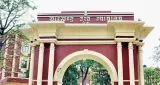


The legal dispute originated on February 27, 2026, when a trial court acquitted Kejriwal and 22 other accused in the Delhi excise policy case. The trial court, in its judgment, raised questions on the CBI’s investigation and recommended departmental action against the investigating officer.

The CBI challenged this decision in the Delhi High Court, where the matter came up before Justice Swarna Kanta Sharma. On March 9, the High Court issued notice and stayed the portion of the trial court’s order that recommended action against the investigating officer. The court also observed at the preliminary stage that certain remarks of the trial court did not appear correct at first glance.
Kejriwal and the other accused objected to these observations, stating that the High Court made critical remarks on the detailed trial court judgment without hearing the defence and within a limited duration of proceedings. In his affidavit, Kejriwal noted that the trial court had delivered its decision after a full day of hearing, whereas the High Court made preliminary observations at an early stage, leading to apprehensions of bias.
During the April 13 hearing, Kejriwal stated that the defence was not present during the March 9 proceedings, yet the High Court made b observations on the trial court’s decision. He argued that this raised questions about judicial balance. He also pointed out that the High Court stayed the recommendation for action against the investigating officer even though the officer had not sought any relief, which, according to him, indicated a favourable approach towards investigating agencies.
Kejriwal further alleged that multiple related cases, including petitions filed by Manish Sisodia, Sanjay Singh, and other accused, were heard with unusual speed. He claimed that in this court, arguments presented by the CBI and the Enforcement Directorate (ED) were consistently given weight and that the agencies’ requests were frequently accepted, raising concerns about impartiality.
He requested that the case be assigned to another bench to maintain confidence in the judicial process.
The Delhi government had implemented a new excise policy in 2021 with the stated objective of reforming the liquor sales system and increasing revenue. Subsequently, allegations of irregularities, undue benefits to private entities, and corruption were raised. Following directions from the Lieutenant Governor of Delhi, the CBI initiated an investigation, while the ED began probing alleged money laundering aspects.
Investigating agencies have alleged that the policy provided undue benefits to private players, while the Aam Aadmi Party has described the allegations as politically motivated.
Kejriwal was arrested in this case during the 2024 Lok Sabha elections and was granted bail by the Supreme Court after spending 156 days in custody. Manish Sisodia remained in jail for 530 days in connection with the case.
The Delhi High Court is now required to decide how to address Kejriwal’s fresh objections. If the request for recusal is rejected, the current bench will continue hearing the matter. If the court considers the request, it may affect the course and timeline of the proceedings.


