A missile attack on two oil tankers near the Strait of Hormuz killed one Indian crew member and injured several others, while the United States carried out airstrikes on Iranian military sites for a third consecutive night. The developments have intensified concerns over regional security, international trade, and global energy supplies.
According to the UAE Ministry of Defence, two oil tankers, Mombasa and Al Bahiya, were struck by cruise missiles in the Strait of Hormuz near Omani waters. One Indian crew member was killed and eight others were injured in the attack.
Preliminary information indicated that efforts were made to move both vessels to a safe area following the attack. Maritime security agencies are investigating the incident and have increased monitoring across the region.
The United States Central Command (CENTCOM) confirmed that US forces targeted multiple Iranian military sites for the third consecutive night.
According to CENTCOM, the operation was intended to reduce Iran's military capability and lower threats to commercial shipping and civilian navigation in the Strait of Hormuz. Precision strikes targeted military installations in Bushehr, Chabahar, Jask, Konarak, Abu Musa and Bandar Abbas. The operation lasted approximately five hours.
The United States announced that its navy will resume monitoring and enforcing a blockade of maritime traffic entering and leaving Iranian ports.


US officials stated that vessels complying with prescribed regulations will be permitted to transit regional sea routes. They said the measure is intended to prevent the movement of weapons and military resources.
US President Donald Trump claimed that the United States would ensure security in the Strait of Hormuz and proposed imposing a 20 percent fee on every cargo passing through the route.
He also stated that new economic sanctions had been imposed on Iranian vessels and customers associated with them. However, the practical and legal aspects of the proposal remain under international discussion.
According to CENTCOM, the Iranian naval base and submarine maintenance facility in Bandar Abbas were also targeted.
The United States said the operation was aimed at reducing Iran's maritime military capability to lower the likelihood of future attacks on ships.
Mohammad Mokhber, an adviser to Iran's top leadership, said Iran would maintain its influence and control over the Strait of Hormuz.
He stated that Iran would not retreat under US pressure or military action and reiterated that decisions relating to its maritime interests and regional security would be made independently.
Iran's Islamic Revolutionary Guard Corps (IRGC) claimed it carried out a missile and drone attack on the Al Jufair military base in Bahrain.
According to the organisation, the attack targeted weapons depots, a communications centre and a building associated with US military personnel. Iran named the operation "Nasr-2" and described it as a response to US military action.

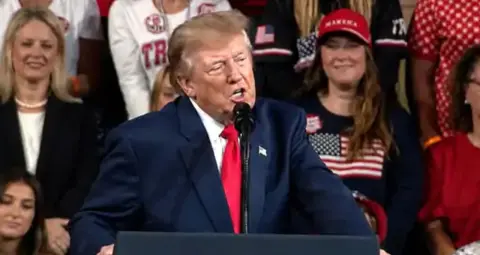
In an interview with Newsmax, President Donald Trump claimed that recent US strikes had caused substantial damage to Iran's military capability.
Regional media reports also claimed that Russia's Tu-214PU special command aircraft had arrived in Tehran. The aircraft is used as a command centre during emergency situations and major military operations. However, there has been no official confirmation from Russia regarding the reports.
According to ship-tracking firms, the number of oil and gas tankers transiting the Strait of Hormuz during the past 24 hours was the lowest recorded in approximately the past two months.
Experts said that if tensions continue, global oil supplies could be affected and additional pressure could be placed on international energy markets.
Amid the US-Iran tensions, international crude oil prices increased by more than 3 percent, with Brent crude reaching approximately $78 per barrel.
Energy experts said that prolonged disruption to navigation through the Strait of Hormuz could lead to further increases in oil prices and affect economies worldwide.
The Strait of Hormuz is one of the world's most important maritime trade routes, carrying a substantial share of global oil exports.
Experts said that rising military tensions in the region could affect energy security, the shipping industry and global trade across Asia, Europe and other regions. They added that developments in US-Iran tensions in the coming days will be important for international markets and regional stability.