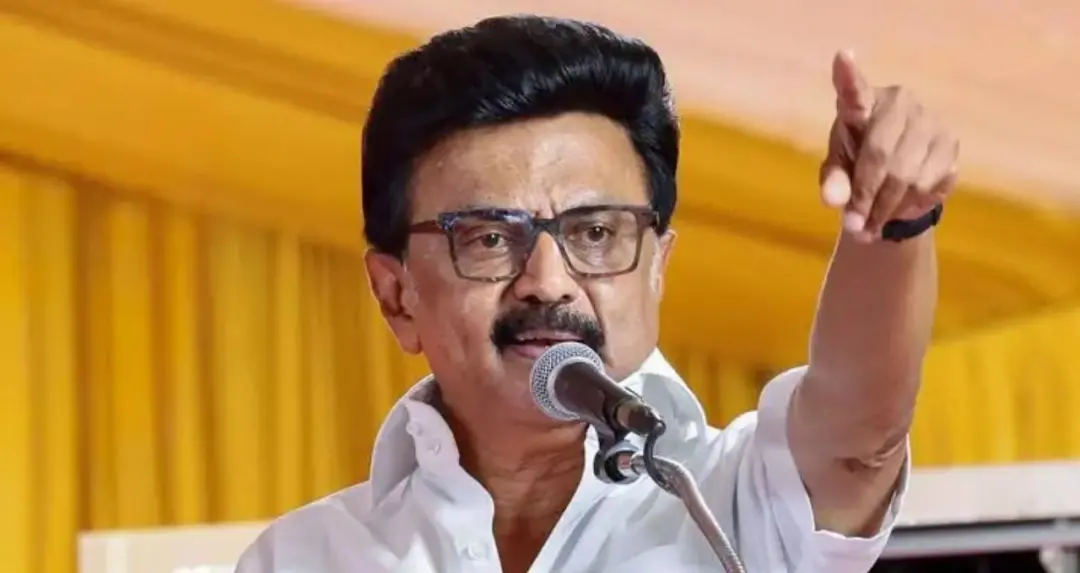
DMK president M.K. Stalin has demanded the resignation of Chief Election Commissioner (CEC) Gyanesh Kumar, calling for the Special Intensive Revision (SIR) of electoral rolls to be stopped and for an impartial inquiry into events within the Election Commission of India (ECI). His remarks came amid a political dispute over the SIR process and reports of differences within the poll panel.
In a statement on September 23, M.K. Stalin said Chief Election Commissioner Gyanesh Kumar should step down and had no right to continue in office. His remarks followed a media report claiming that the two other Election Commissioners, Sukhbir Singh Sandhu and Vivek Joshi, had formally recorded objections to several decisions and procedures over the previous 10 months.
Stalin alleged that the DMK and other Opposition parties had already raised objections to the deletion of large numbers of names from electoral rolls under the SIR process. He said several questions had been raised over the process and that it had also led to a broad political and social response in West Bengal.
These allegations are political claims made by Stalin and Opposition parties. The Election Commission has presented a different position on reports of internal differences and the decision-making process, saying that differences of view can form part of an institutional process. Sources associated with the Commission have said that decisions, including those related to SIR, were taken unanimously.
Special Intensive Revision, or SIR, is a process for reviewing and verifying electoral rolls. Opposition parties have questioned the deletion of voters’ names and the manner in which the process has been conducted in several states.


Stalin said the DMK had consistently opposed the removal of large numbers of names from electoral rolls under SIR. He said developments related to the process and reports that had emerged had raised questions about the functioning of the Election Commission.
Stalin also called for an inquiry into alleged political interference within the Commission. He demanded that the SIR process be stopped and that an impartial inquiry be conducted into events within the Election Commission. He said that if responsibility was established against any individual, that person should be held accountable.
The dispute intensified following a report claiming that Election Commissioners Sukhbir Singh Sandhu and Vivek Joshi had formally recorded objections at least 14 times over certain decisions and procedures during a 10-month period. The report said the objections included issues related to SIR.
The report prompted Opposition leaders to question the functioning and independence of the Election Commission.
The Election Commission, however, has presented the matter differently. It has said that written comments, suggestions or disagreements recorded during decision-making are part of institutional decision-making. Sources associated with the Commission have also said that decisions, including those concerning SIR, were taken unanimously.
Amid the dispute, the Supreme Court heard petitions challenging the 2023 law governing the appointment of the Chief Election Commissioner and other Election Commissioners. The matter was heard by a bench comprising Justices Dipankar Datta and Satish Chandra Sharma. The two judges differed on whether the petitions should be referred to a larger Constitution Bench.
The 2023 law changed the composition of the selection panel for appointing the CEC and Election Commissioners. Under the law, the panel comprises the Prime Minister, the Leader of the Opposition in the Lok Sabha and a Union Cabinet Minister nominated by the Prime Minister. The earlier 2023 Constitution Bench judgment had directed that, until Parliament enacted a law, the selection panel would comprise the Prime Minister, the Leader of the Opposition and the Chief Justice of India.
During the hearing, Justice Dipankar Datta referred to the example of a cricket umpire while discussing independence and the perception of impartiality in the appointment process. He said that it was not enough for the Election Commission to be independent; it must also appear to be independent.
Justice Datta also questioned the role of the Union Cabinet Minister nominated by the Prime Minister in the selection committee and raised questions about the independence of the selection process.
The two-judge bench differed on whether the petitions challenging the 2023 law should be referred to a five-judge Constitution Bench. Justice Datta declined the request for reference, while Justice Sharma held that a case had been made out for referring the matter to a larger bench.
Following the split view, the matter was placed before the Chief Justice of India for the constitution of an appropriate larger bench. The Supreme Court subsequently referred the challenges to the Chief Justice of India for setting up a Constitution Bench.
According to official Election Commission of India information, Gyanesh Kumar took charge as the 26th Chief Election Commissioner of India on February 19, 2025. He is a 1988-batch Kerala-cadre Indian Administrative Service officer. He has previously served in various positions in the governments of Kerala and India.
The political dispute concerns the SIR process, the Election Commission’s internal decision-making and the legal framework governing the appointment of the CEC and Election Commissioners.
Stalin has demanded Gyanesh Kumar’s resignation, a halt to SIR and an impartial inquiry into events within the Election Commission. The Commission has said that comments and differences during decision-making are part of its institutional process and that its decisions, including those concerning SIR, were unanimous.
At the same time, challenges to the 2023 law governing the appointment of the CEC and Election Commissioners have moved forward before the Supreme Court following the split view of the two-judge bench and the subsequent move to constitute a larger Constitution Bench.