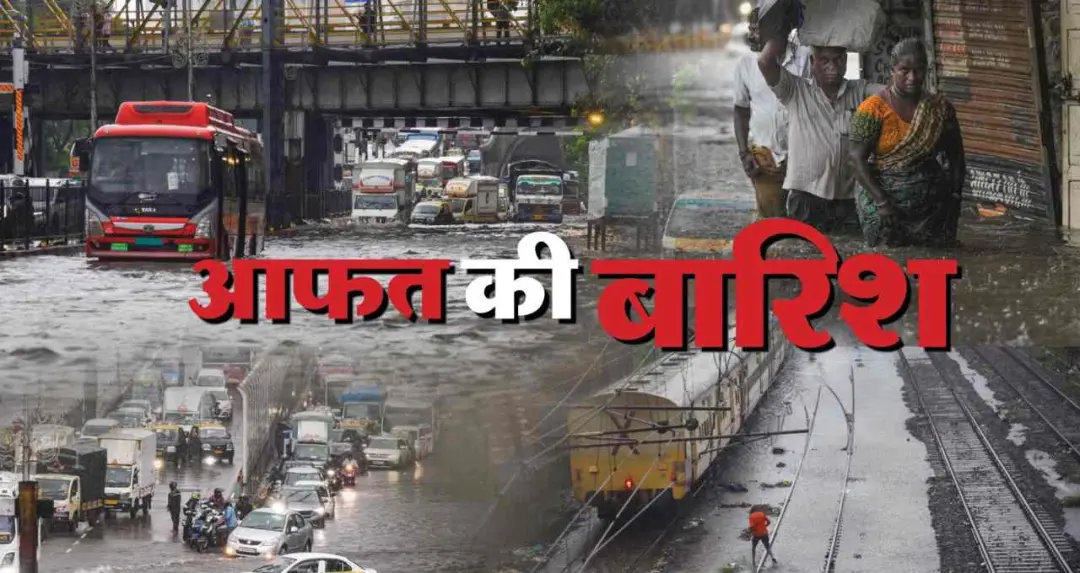
Mumbai’s first spell of intense monsoon rainfall caused widespread disruption across the city on Tuesday, leading to waterlogging in several areas and affecting road traffic, local commuting and daily life. Continuous heavy rainfall resulted in flooding across multiple parts of the city, causing difficulties for residents as major roads, subways and low-lying areas became inundated.
The India Meteorological Department (IMD) has forecast heavy rainfall for Mumbai and adjoining areas on Wednesday and has issued a Yellow Alert. The weather department has also issued Yellow and Orange Alerts for various parts of Maharashtra.




Following continuous rainfall, roads in several parts of Mumbai were submerged. Waterlogging in low-lying areas affected both pedestrian movement and vehicular traffic. Authorities imposed traffic restrictions in some vulnerable locations, leading to long delays and traffic congestion. Among the worst-affected areas were Andheri, Saki Naka, Malad, Kandivali and several suburban localities. Photographs and videos shared on social media showed roads resembling water bodies, while several vehicles were seen stranded in flooded stretches.
Heavy waterlogging forced the temporary closure of the Andheri underpass (subway), one of Mumbai’s busiest traffic corridors. The closure compelled commuters to use alternative routes. According to officials of the Brihanmumbai Municipal Corporation (BMC), flooding in the underpass has remained a recurring challenge for years. Authorities suspended vehicular movement through the route as a safety measure, although some motorists attempted to cross despite the conditions.
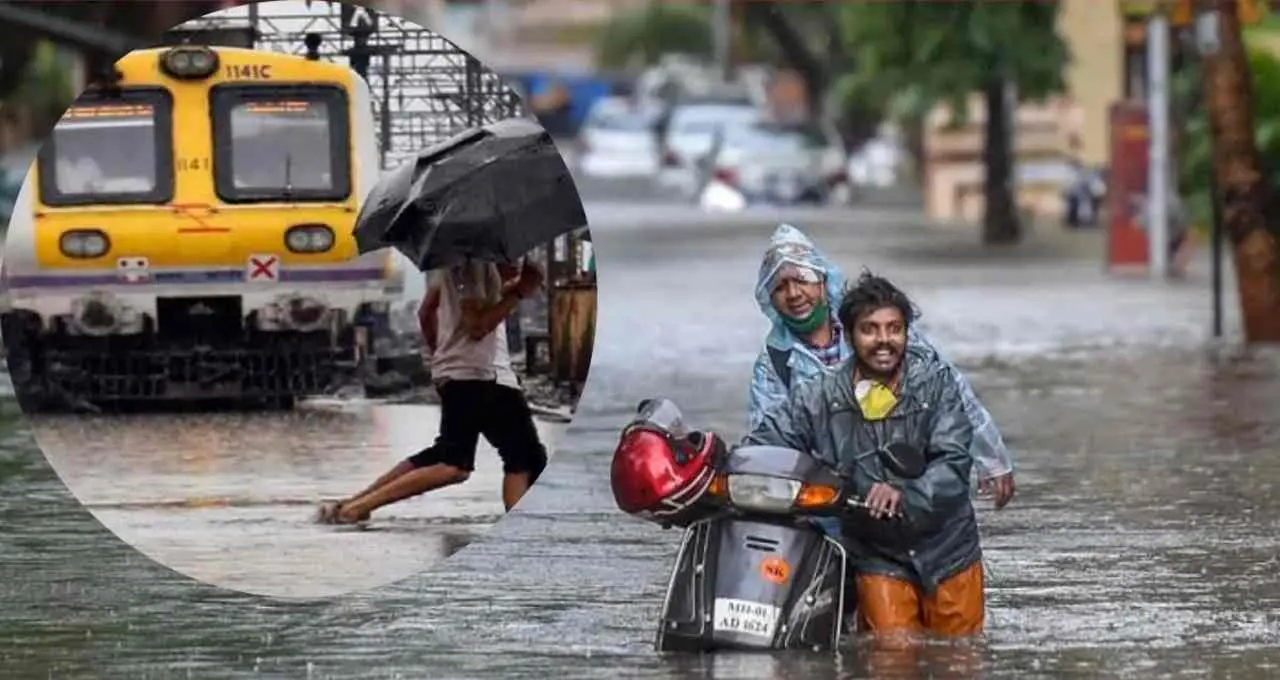
In one incident, an auto-rickshaw became stranded in floodwaters, after which municipal workers assisted the driver to safety. Officials have appealed to residents to avoid unnecessary travel in waterlogged areas.
Despite the heavy rainfall, Mumbai’s suburban railway network functioned relatively smoothly. Western Railway and other railway authorities confirmed that train services continued to operate normally on major routes. No major disruption was reported during peak morning hours on the Churchgate–Dahanu corridor and the Harbour Line. However, waterlogging was observed around some stations and railway tracks, prompting railway authorities to remain on alert.
Urban experts said the continued operation of rail services was beneficial for millions of commuters, as Mumbai’s daily life depends heavily on its suburban train network.
According to data released by the municipal corporation, Mumbai recorded an average rainfall of 56 millimetres between 8 a.m. and 11 p.m. on 23 June. Rainfall intensity was higher in the western suburbs and some low-lying areas. Localities including Kandivali, Malad, Juhu and Santacruz recorded notable rainfall within a one-hour period, worsening waterlogging conditions in affected areas.
Meteorologists said that extremely heavy rainfall within a short duration during the early phase of the monsoon increases pressure on urban drainage systems, which can result in flood-like conditions.