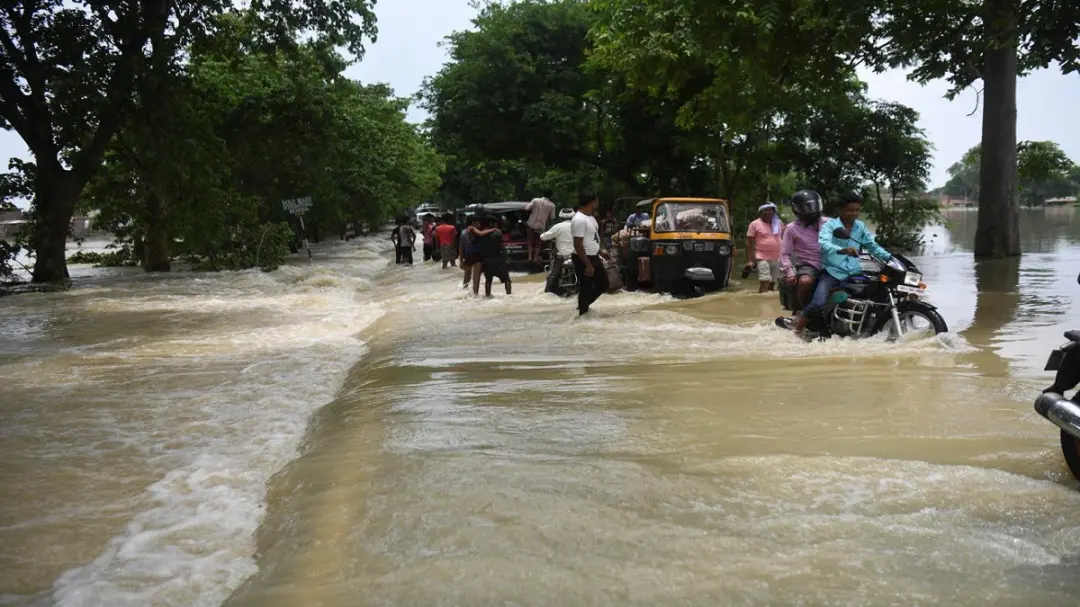
Muzaffarpur is facing a renewed flood threat as rainfall in Nepal’s Terai and catchment areas has begun affecting rivers in the district. The water level of the Bagmati River has risen rapidly, raising concern in villages along the river, while a decline in the Gandak River’s water level has provided some relief. In view of the rising Bagmati level and continued rainfall in Nepal, the district administration has intensified preparations and activated the flood control room.
The rising water level of the Bagmati River is directly affecting low-lying areas along its course. As the river level increases, the risk of water reaching agricultural fields and rural roads also rises. Several areas of Muzaffarpur district are already vulnerable to flooding, requiring the administration to accelerate relief and rescue preparations when river levels rise suddenly.
Rainfall in Nepal frequently affects rivers in Bihar. Heavy rainfall in Nepal’s hilly and Terai regions increases water in river catchment areas, with the flow moving towards Bihar. Several rivers, including the Bagmati, originate in Nepal and enter Bihar, making the rainfall situation in Nepal an important factor for Bihar’s river conditions.
Following the rise in the Bagmati’s water level in Muzaffarpur, the administration has increased surveillance. Officials have been instructed to continuously monitor the river level, while information about water conditions is being collected from vulnerable areas. The flood control room has been activated to enable immediate action if the water level rises suddenly or water reaches any area.
The flood control room is being used to collect information on river levels, embankment conditions and potentially affected areas. Officials and employees from different departments have also been instructed to remain alert. Arrangements are being kept ready to activate relief and rescue teams immediately in the event of an emergency.
The decline in the Gandak River’s water level has provided some relief to the administration. Falling water levels have temporarily reduced flood pressure in areas connected with the river. However, the threat cannot be considered completely over because continued rainfall in Nepal and surrounding catchment areas could cause river levels to rise again.

The Bagmati and Gandak rivers are important to Muzaffarpur, with several parts of the district affected by changes in their water levels. River levels continue to fluctuate during the monsoon, requiring the administration to monitor not only current levels but also possible changes over the coming hours and days.
Alertness has also increased in rural areas following the rise in the Bagmati’s water level. Residents living along the river are monitoring the water situation. Farmers are concerned because a further rise in the water level could submerge crops. Several areas are already experiencing waterlogging, and an increase in river water could worsen the situation.
The administration is monitoring vulnerable embankments and areas along the river. Officials have been instructed to immediately report any erosion or damage to embankments. Monitoring embankments is a key part of flood-control arrangements because increasing water pressure can raise the risk of erosion at vulnerable points.
The safety of people living in low-lying areas is a key challenge during flooding. The administration identifies such areas and keeps preparations in place. If required, arrangements can be made to move people to safer locations, provide boats and deliver relief materials. The administration is currently working to complete all necessary preparations before the situation deteriorates.
With the Bagmati water level rising, people can be advised to exercise caution. They should avoid areas with b river currents, prevent children from going near the river and follow instructions issued by the administration. In rural areas, the local administration should also be informed immediately if water levels rise suddenly.
Changes in river levels are possible in the coming days depending on rainfall in Nepal. If rainfall decreases, water levels may stabilise or decline, while continued heavy rainfall could cause Bihar’s rivers to rise rapidly. The administration is therefore remaining on alert for different possibilities.
The activation of the flood control room will help the administration collect information from different areas at a single point and take immediate action. Monitoring river levels, embankment conditions, information about affected villages and relief arrangements can be coordinated through the control room.
The rising Bagmati water level has also increased concern among farmers. A large population in Muzaffarpur’s rural areas depends on agriculture. Waterlogging in fields could damage paddy and other crops. If water remains in fields for a prolonged period, it could affect crops, soil and agricultural activities.
A rise in the river level could also affect rural roads and connecting routes. Roads linking several villages pass through low-lying areas, and increasing water levels could make movement difficult. The administration may therefore also need to focus on alternative routes and, if required, arrangements for boats.
Maintaining an alert in Muzaffarpur is important because several areas of the district have previously experienced flooding and waterlogging. During the monsoon, the situation can change rapidly when large amounts of water arrive within a short period. The rise in the Bagmati’s water level has therefore increased the importance of continued monitoring.
The decline in the Gandak’s water level has provided temporary relief in some areas, but the administration continues to monitor both rivers. A fall in the water level of one river does not mean that the threat has ended across the district. River levels can change again depending on rainfall in Nepal and water flowing from different catchment areas.
Administrative officials are working to ensure that people receive timely information in the event of a possible flood. Coordination among local officials, the Water Resources Department and other concerned departments is necessary. Preparations range from monitoring embankments to making possible arrangements for relief camps.
If the Bagmati water level continues to rise, relief and rescue operations may become necessary in affected areas. In such a situation, boats, motorboats, relief materials, medical teams and essential medicines would be important. The administration is currently monitoring the situation and preparing to take steps as required.
For local residents, avoiding rumours and relying only on information issued by the administration is important. Incorrect information during a flood situation can create unnecessary fear, while ignoring information about an actual threat can also be harmful. Following administrative instructions remains essential.
The rising Bagmati water level has again highlighted the direct connection between rainfall in Nepal and river conditions in Bihar during the monsoon. Rainfall in Nepal can affect river areas in Bihar after some time, which is why the Bihar administration continuously monitors weather conditions and river-level information from Nepal.
The administration is currently monitoring the situation in Muzaffarpur. The rising Bagmati water level remains a concern, while the decline in the Gandak’s water level is providing some relief. With the flood control room active and officials remaining on alert, preparations are in place for rapid action in an emergency.
The rainfall situation in Nepal and the subsequent flow of water into Bihar’s rivers will remain under observation in the coming days. If the rainfall weakens, the Bagmati’s water level may stabilise or decline. If rainfall continues, the administration will need to maintain additional vigilance in affected areas.
The immediate challenge in Muzaffarpur is to monitor the rising Bagmati water level and protect potentially affected areas. The administration has strengthened its monitoring arrangements by activating the flood control room. The decline in the Gandak’s water level has provided some relief, but the threat has not completely passed in view of rainfall in Nepal. Residents living along the rivers and the administration will therefore need to maintain vigilance in the coming days.