NASA’s Voyager 1 to Reach One Light-Day From Earth on November 18, 2026
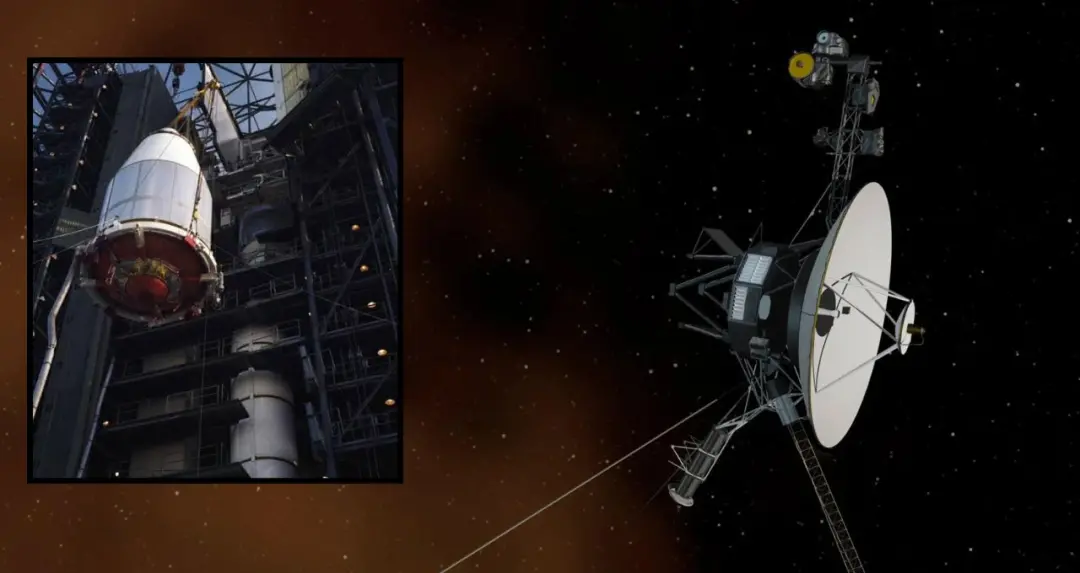
NASA’s Voyager 1 spacecraft is set to reach a distance of one light-day from Earth on November 18, 2026, marking a milestone that no other human-made object has achieved. Launched in 1977, the spacecraft will be approximately 25.9 billion kilometres from Earth. At that distance, radio signals travelling between the spacecraft and Earth will take approximately 24 hours to cover the distance in either direction.
Nearly five decades after its launch, Voyager 1 continues to transmit scientific data about the space environment beyond the Solar System.
Voyager 1 to Set a New Distance Record on November 18
According to NASA, Voyager 1 will reach a distance of one light-day from Earth on Wednesday, November 18, 2026. The milestone is expected to be recorded at approximately 3:46 p.m. Indian Standard Time (IST).
At that point, Voyager 1 will become the first human-made object to reach this distance from Earth.
The achievement comes more than 49 years after the spacecraft began its journey into space. It continues to travel away from Earth while maintaining communication with mission controllers.
Voyager 1 is travelling at approximately 61,000 kilometres per hour. However, the vast distances involved in interstellar space mean that even at this speed, communication with the spacecraft takes considerable time.




What One Light-Day Means
A light-day is a unit of distance representing how far light travels in 24 hours. This distance is approximately 25.9 billion kilometres.
Once Voyager 1 reaches the one-light-day milestone, a radio message sent from Earth will take approximately 24 hours to reach the spacecraft. Signals transmitted by Voyager 1 will require a similar amount of time to return to Earth.
Consequently, even if scientists send an instruction and the spacecraft responds immediately, receiving the response will take at least 48 hours.
According to NASA, Voyager 1 could take approximately 18,000 years to reach a distance of one light-year from Earth.
Voyager 1 Began Its Mission in 1977
NASA launched Voyager 1 on September 5, 1977. Its initial mission was to study the outer planets of the Solar System.
The spacecraft reached Jupiter in 1979 and Saturn in 1980. The images and scientific data it collected during these encounters provided astronomers with additional information about both planets.
Following its planetary observations, Voyager 1 continued travelling towards the outer regions of the Solar System.
In August 2012, it crossed the boundary of the heliosphere, the region influenced by the Sun's solar wind and magnetic field, and entered interstellar space. This is the region between stars, beyond the heliosphere.
Its twin spacecraft, Voyager 2, has also remained operational in space for decades. In addition to studying Jupiter and Saturn, Voyager 2 explored Uranus and Neptune. It entered interstellar space in 2018 and is expected to reach a distance of one light-day from Earth in November 2035.
How Voyager 1 Continues to Operate
Voyager 1 generates electricity through a plutonium-based radioisotope power system. However, its power-generation capacity has gradually declined over time.
To preserve electricity for essential systems, NASA scientists have been progressively switching off some of the spacecraft's instruments.
Communication with Voyager 1 was temporarily lost in October 2026. Scientists subsequently re-established contact, while an investigation into the cause of the communication disruption remains underway.
The team at NASA's Jet Propulsion Laboratory regularly monitors the spacecraft's condition. Voyager 1 continues to transmit scientific information about magnetic fields, particles in space and cosmic rays.
Voyager 1 Carries a Message From Earth
Voyager 1 also carries a specially designed Golden Record containing sounds from Earth, music, information represented through images and greetings in 55 languages.
Renowned astronomer Carl Sagan played an important role in preparing the record. Its purpose was to provide information about Earth and life on the planet to any potential extraterrestrial civilisation that might encounter the spacecraft.
In 1990, Voyager 1 captured a historic photograph of Earth known as the 'Pale Blue Dot'. The image shows Earth as a tiny point against the vast darkness of space.
NASA Invites Public Participation in Voyager Celebration
NASA has invited people around the world to participate in a special event after sunset on November 17, 2026, ahead of Voyager 1's one-light-day milestone.
Participants can use mobile phone lights or flashlights to transmit the letters V-G-R in Morse code. The letters represent the Voyager mission's call sign.
NASA has also made a dedicated flashing tool available on its website to enable people to participate in the event.
Voyager 1's mission continues to provide scientific data from interstellar space. NASA will continue monitoring its power-generation and communication systems to determine how long the spacecraft can remain operational.