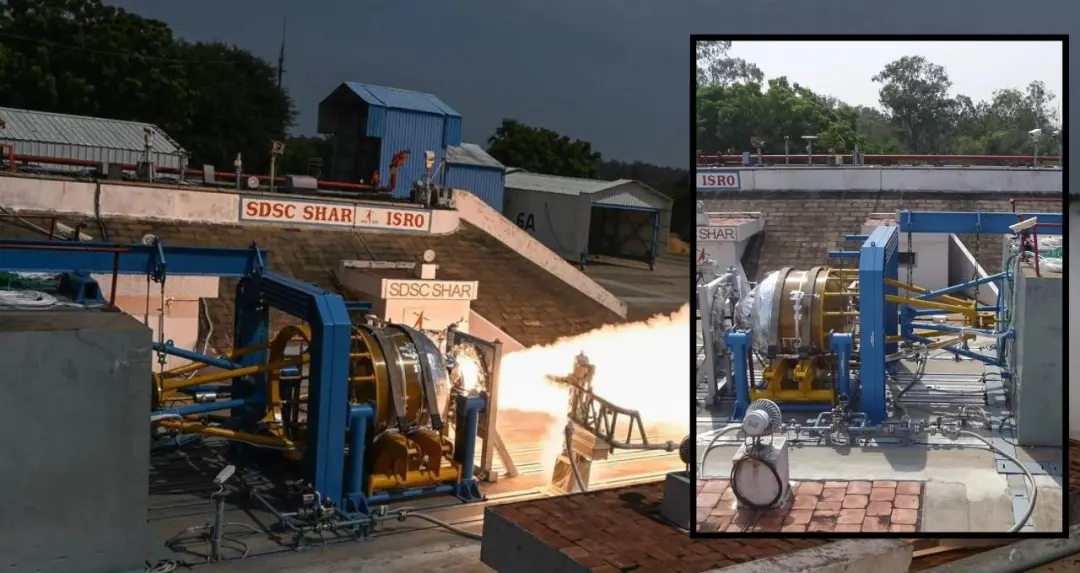
ISRO successfully tested the third-stage motor of its Polar Satellite Launch Vehicle (PSLV) at the Satish Dhawan Space Centre in Sriharikota on November 12, 2026. The test marks an important step in efforts to address technical issues reported in the same stage during the previous two missions.
Following the setbacks, scientists reviewed the rocket's design, manufacturing processes and quality inspection procedures to identify and address potential shortcomings.
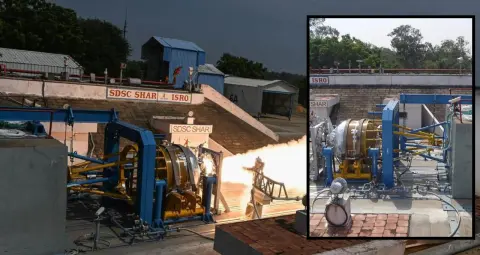
The Indian Space Research Organisation (ISRO) conducted a ground static test of the PSLV's third-stage (PS3) motor on Thursday at the Satish Dhawan Space Centre in Sriharikota. The test was successful, according to the space agency.
The third stage was the component associated with technical problems during the previous two PSLV missions. Scientists subsequently undertook a detailed review of the motor and its associated manufacturing and quality control processes.
The November 12 test is expected to support preparations for the next PSLV flight. However, further technical checks and pre-launch preparations will be required before the next mission.
The PSLV has been a key launch vehicle in India's space programme for several years. It has been used to launch Indian satellites for various purposes, as well as satellites belonging to other countries.




However, two recent missions encountered technical difficulties.
In May 2025, the PSLV-C61 mission was carrying the EOS-09 satellite when a problem occurred in the rocket's third stage during flight. A similar technical issue was reported during the PSLV-C62 mission in January 2026.
As both incidents involved the same stage, ISRO decided to re-examine its preparation and manufacturing processes. The review covered motor components, assembly procedures and the raw materials used in manufacturing to assess whether they met the prescribed specifications.
ISRO reviewed the design of the PS3 stage and its safety margins. The assessment examined the stage's ability to withstand the pressures and other technical conditions encountered during flight.
The agency also reviewed material selection requirements and the procedures used to assemble different components. Existing quality inspection methods were examined as part of the assessment.
The PSLV operates through multiple stages rather than relying on a single continuous propulsion system. The first two stages perform their respective functions before separating from the vehicle. The third stage then provides the thrust required to propel the rocket further along its flight path.
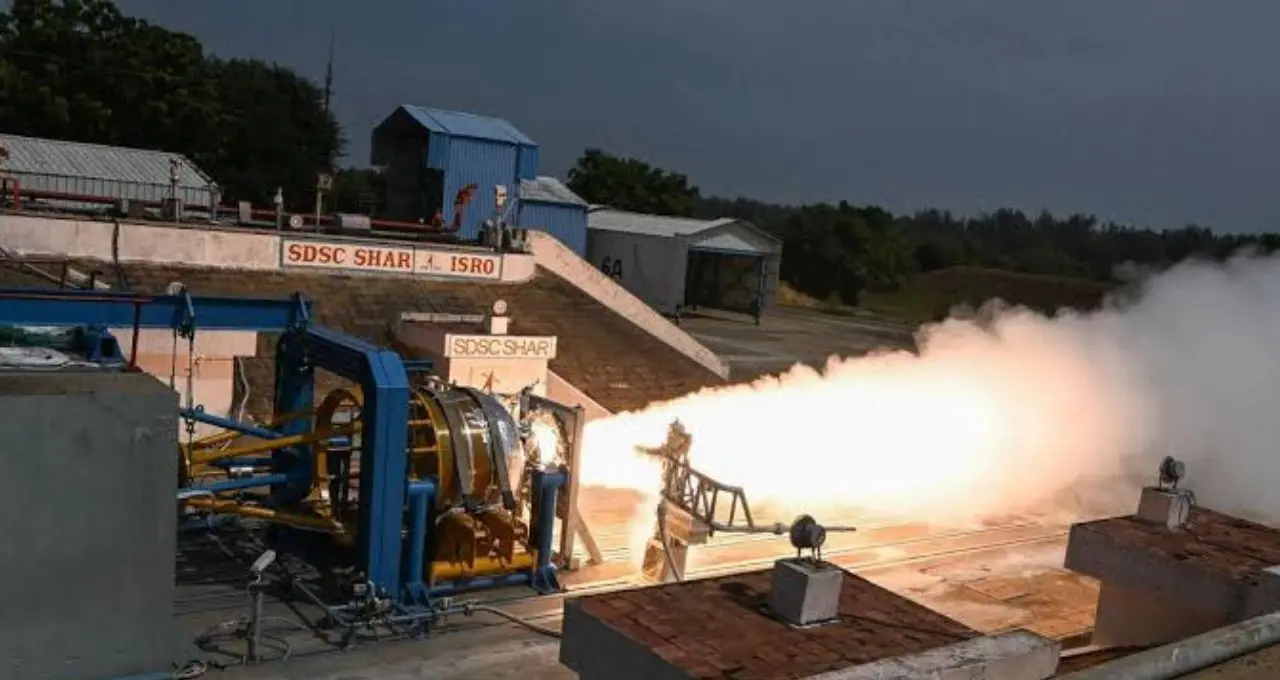
The functioning of the third-stage motor is therefore critical to the mission. A technical problem in this stage can affect the overall launch mission.
The November 12 test was not a rocket launch. Instead, the PS3 motor was installed at a dedicated testing facility at Sriharikota and operated while remaining on the ground. This procedure is known as a ground static test.
During a static test, the motor is securely mounted at a specialised testing facility and operated under controlled conditions. Scientists record technical data related to its performance to assess whether it functions according to the required specifications.
Unlike an actual flight test, the motor does not leave the ground during this process. The collected data helps engineers evaluate its performance and identify whether it meets the necessary technical requirements.
ISRO conducted the PSLV third-stage motor test using this procedure at the Satish Dhawan Space Centre and reported that the test was successful.
The result is particularly relevant because the previous two mission-related technical problems were also associated with the third stage.
The successful test represents one step in ISRO's efforts to prepare the PSLV for its next mission. However, it does not establish that all preparations for the next launch have been completed.
Before any rocket launch, different systems and components undergo technical inspections. A successful ground static test of the motor forms one part of this process, while other technical requirements and flight preparations must also be completed.
The PSLV has played an important role in India's space programme, supporting satellite launches for Earth observation, scientific studies and other purposes.
With the successful completion of the third-stage motor test, ISRO has advanced its efforts to prepare the launch vehicle for future missions. No confirmed date for the next PSLV launch has been announced so far.