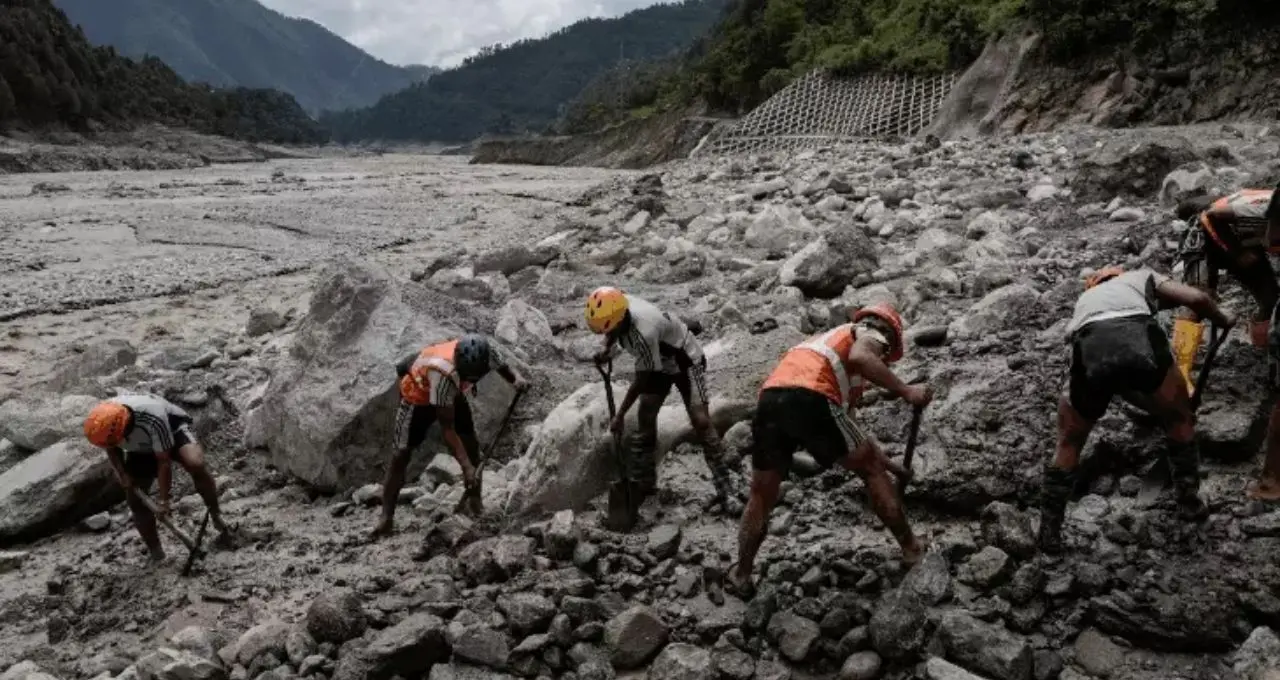
Relief and rescue operations are continuing in Nepal following the devastating floods and landslides that struck the country on August 26. According to a September 7 update from Nepal’s Ministry of Foreign Affairs, 13,396 people have been rescued so far, while around 5,000 people remain missing, including about 600 foreign nationals. A total of 1,355 bodies have been recovered from the flood-affected areas.
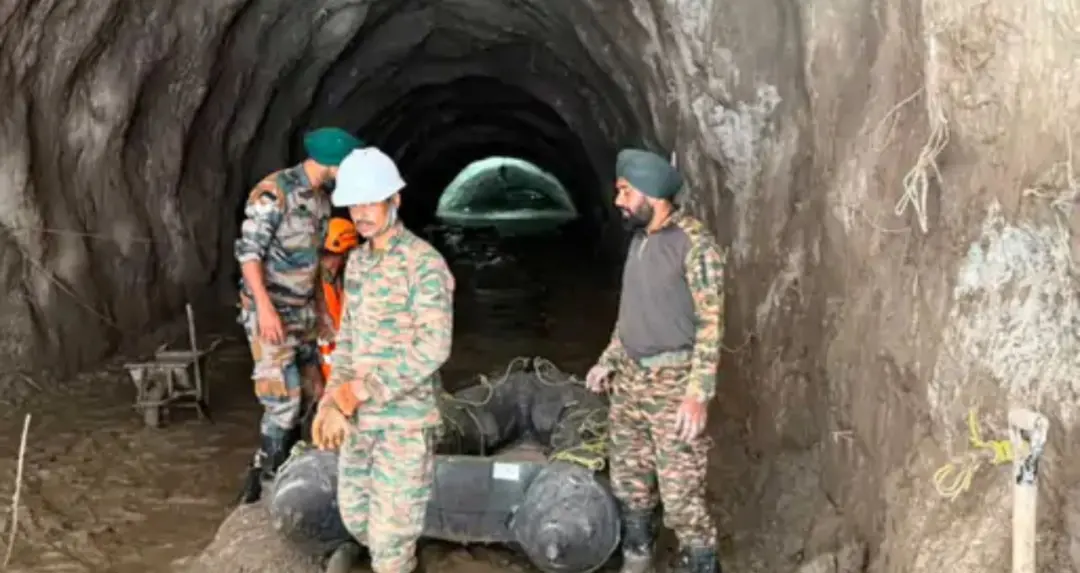
The most challenging rescue operations are underway inside tunnels of hydropower projects where large quantities of water, mud and debris have accumulated. According to the Nepalese Army, around 121 people are believed to be trapped inside tunnels of affected hydropower projects.
The army said operations will continue until searches of all tunnels are completed, unless the government decides to stop them.
According to the latest Nepal government figures, 13,396 people have been safely evacuated from areas affected by floods and landslides. More than 300 of those rescued are foreign nationals. In recent days, some people have also been rescued alive from tunnels.
Around 5,000 people are still missing, according to officials. There have been minor differences in separate updates regarding the number of missing foreign nationals because the identification and verification process is still underway.
Nepalese officials have said that being reported missing does not mean that all of these people have died. In remote areas, poor communication networks and debris have prevented contact from being established with many people.
A large number of workers and other people were initially reported missing from flood-affected hydropower projects. However, the Nepalese Army clarified that an initial report of around 900 people missing from the projects does not mean that all of them are trapped inside tunnels.



According to the army’s assessment, around 121 people are believed to be trapped in tunnels. The figure includes 50 people at Upper Trishuli-1, 40 at Upper Trishuli-3A, 7 at the Langtang Hydropower Project and 7 at the Chilime Hydropower Project. The remaining people may be in tunnels at other affected projects.
The rescue operation at the Chilime Hydropower Project is among the most challenging operations. Mud and debris are being removed from inside the tunnel, while Nepalese and Indian teams have jointly entered the tunnel to conduct searches.
An Indian team of experts has already inspected affected hydropower tunnels in Nepal. The Indian technical team included doctors, paramedics and tunnel engineers. The team also conducted an aerial survey of the Chilime and Langtang areas.
A wide-ranging search operation is also underway inside the tunnel of the Upper Trishuli-1 Hydropower Project. According to available local updates, rescue teams have reached deep inside the tunnel during their search. Thermal imaging and drones are also being used in the operation.
A Chinese national was rescued alive from the tunnel of this project in recent days. The rescue has raised hopes of finding other people trapped inside the tunnels alive.
Two Nepalese workers trapped inside a tunnel of the Trishuli-3A Hydropower Project were safely rescued on September 4. They had remained trapped inside the tunnel for several days.
Rescue teams are facing heavy debris, water and unstable conditions inside the tunnels. In several locations, transporting large equipment to the sites is also difficult.
Search and rescue operations are continuing at the Langtang Hydropower Project, where teams are looking for missing people inside the tunnel and surrounding areas.
A wide-ranging search operation is also underway at the Melung Khola Hydropower Project. Drones are being used to monitor the surrounding area because of the difficult geographical conditions.
At the Trishuli-3B project, tunnels and nearby offices and residential areas are also being examined. Drones and thermal cameras are being used there.
Floods and landslides have damaged road and communication networks in several mountainous areas of Nepal. Roads remain blocked at many locations because of debris, making it difficult to transport rescue equipment and heavy machinery to the affected sites.
The Nepal government has sought high-capacity drones, LiDAR, Bailey bridges, DNA testing kits, tunnel rescue equipment, high-capacity pumps and other technical resources from the international community.
Several foreign nationals have also gone missing in the disaster-affected area along the Nepal-Tibet border. According to Radio Nepal, 587 foreign nationals from 34 countries had been reported missing, with a large number of them being Indian nationals.
Arrangements are also being made to collect DNA samples as part of the identification and verification process.
India is already assisting Nepal’s relief and rescue operations. Indian technical and tunnel rescue experts have worked with local teams at affected projects.
Amid the disaster, Nepal has also raised the issue of climate justice internationally. Nepal has sought $20 million in compensation for the damage caused by the floods.
Foreign Minister Shishir Khanal said that mountainous countries such as Nepal, despite making a very small contribution to climate change, are facing its serious impacts.
Nepal has said that its contribution to global greenhouse gas emissions is less than 0.1 percent. Despite this, the country is increasingly affected by melting glaciers, rising temperatures and extreme weather events.
The floods and landslides have caused not only loss of life but also extensive damage to roads, electricity, communications and hydropower infrastructure.
The immediate priorities are searching for missing people and providing relief to affected families. Rebuilding damaged infrastructure will be a challenge after the rescue and relief operations.
For now, the primary focus of rescue teams is reaching tunnels where people are believed to be trapped. Recent successful rescue operations have raised hopes that more people could be found alive. The Nepalese Army has indicated that searches will continue until the tunnel operations are completed.