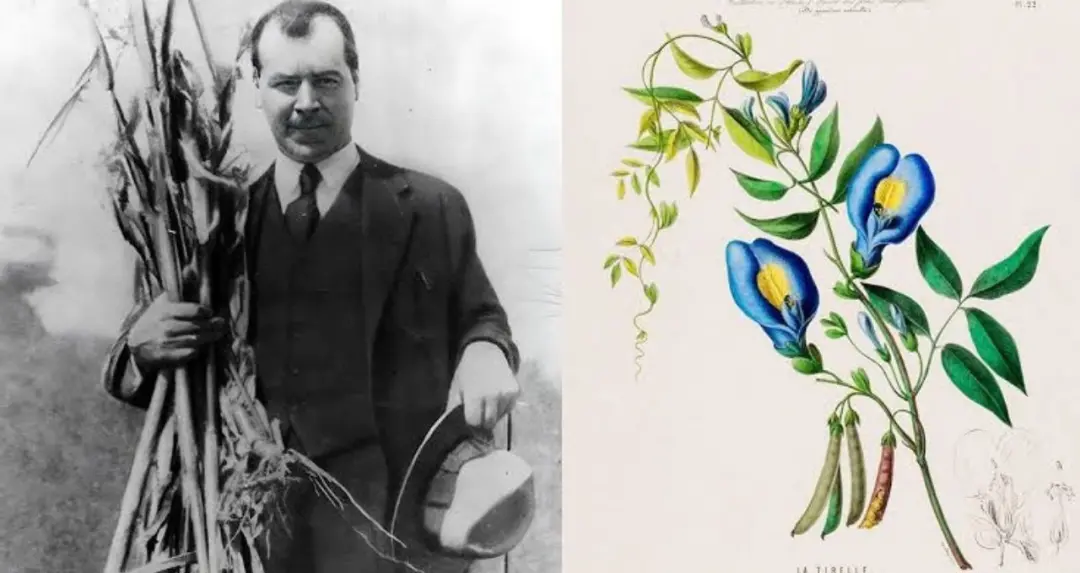
Russian scientist Nikolai Ivanovich Vavilov collected seeds, tubers and plant samples from different parts of the world and highlighted the importance of genetic diversity in crops. His scientific work played a role in shaping modern approaches to Seed Banks and Crop Conservation.
Vavilov’s Contribution to Crop Diversity Research
Vavilov is regarded as one of the leading researchers of plant genetic resources. His research focused on the idea that Genetic Diversity present among different varieties of a crop could be important for developing crops capable of adapting to new conditions in the future.




Vavilov travelled to many parts of the world and collected seeds, tubers and plant samples from different crops. He studied geographical regions where the greatest diversity of a particular crop could be observed. His research strengthened the concepts of Centers of Origin and Centers of Diversity of crops.
He believed that local varieties of crops could contain genetic traits that may be useful in helping crops withstand diseases, drought, temperature changes and other environmental challenges.
Seed Conservation and Plant Genetic Resources
One of the significant contributions of Vavilov’s work was in the conservation of Plant Genetic Resources. Preserving seeds and plant samples collected from different regions is important because the number and diversity of local crop varieties can decline over time.
Seed Banks provide an organised approach to this concept. They preserve seeds of different crop varieties under controlled conditions so that they can be used when needed for research, Plant Breeding and the development of new varieties.
Today, Genetic Diversity is considered an important resource for agriculture. The different genetic traits available within a crop can help scientists develop varieties with disease resistance or greater tolerance to changing environmental conditions.
From Vavilov’s Research to Modern Seed Banks and Gene Banks
Vavilov’s scientific legacy was not limited to the collection of seeds. His work strengthened the idea that preserving the Genetic Resources of crops serves as a form of protection for future agriculture.
Today, Gene Banks and Seed Banks in different parts of the world conserve plant genetic resources. Initiatives such as the Svalbard Global Seed Vault are also connected to this broader approach, maintaining secure backups of seeds from Seed Banks around the world.
However, preserving seeds alone is not considered sufficient. Continued cultivation of different varieties at the level of farms and local communities is also important because it allows crop diversity to remain in living conditions and enables crops to continue adapting to changing environments.
Vavilov’s research helped agricultural science understand that the strength of a crop lies not only in its existing yield but also in the genetic diversity within it. His scientific legacy remains relevant to research related to Crop Conservation, Plant Breeding and Food Security.