Indian stock markets are typically closed on Saturdays. However, trading activity was conducted on Saturday, July 11, 2026, as the National Stock Exchange (NSE) and the Bombay Stock Exchange (BSE) held a special mock trading session.
The session was not a regular market trading session but a technical simulation exercise conducted to test the exchanges' trading systems, network infrastructure, and Disaster Recovery (DR) arrangements.
During the exercise, no real funds were used and no actual purchase or sale of securities took place.


Mock trading is conducted in a controlled environment in which exchanges, trading members, brokerage firms, and technology service providers test the functionality of their systems. The primary objective is to ensure that, in the event of a future technical failure, cyber incident, or any other emergency affecting the primary trading system, the backup Business Continuity Plan (BCP) and Disaster Recovery (DR) infrastructure can support uninterrupted market operations.
The special mock trading session on July 11, 2026, covered multiple market segments, including Equity, Equity Derivatives, Futures & Options, Currency Derivatives, Commodity Derivatives, and Electronic Gold Receipts (EGR). Trading activity across these segments was conducted solely for system testing and process validation.
NSE and BSE had informed market participants about the special mock trading session through separate circulars issued on July 8 and July 9, 2026. The exchanges stated that the exercise would be conducted across their primary site and BCP/DR infrastructure.
NSE said in its circular that the exercise would also include testing procedures related to the Closing Auction Session (CAS) in the equity cash segment.
BSE advised trading members, particularly those using third-party trading platforms, to use the exercise to test various trading scenarios and system functionalities.
The special session was conducted in multiple phases, including pre-open activities, order entry, trading, system switchover, re-login, and other technical tests. The detailed schedule had been issued in advance by the respective exchanges, and trading members were instructed to conduct system testing accordingly.
During mock trading, all orders and trades are part of a testing process and have no financial impact on the actual securities market or investors' portfolios. No transfer of securities, payment, or settlement takes place during the exercise.
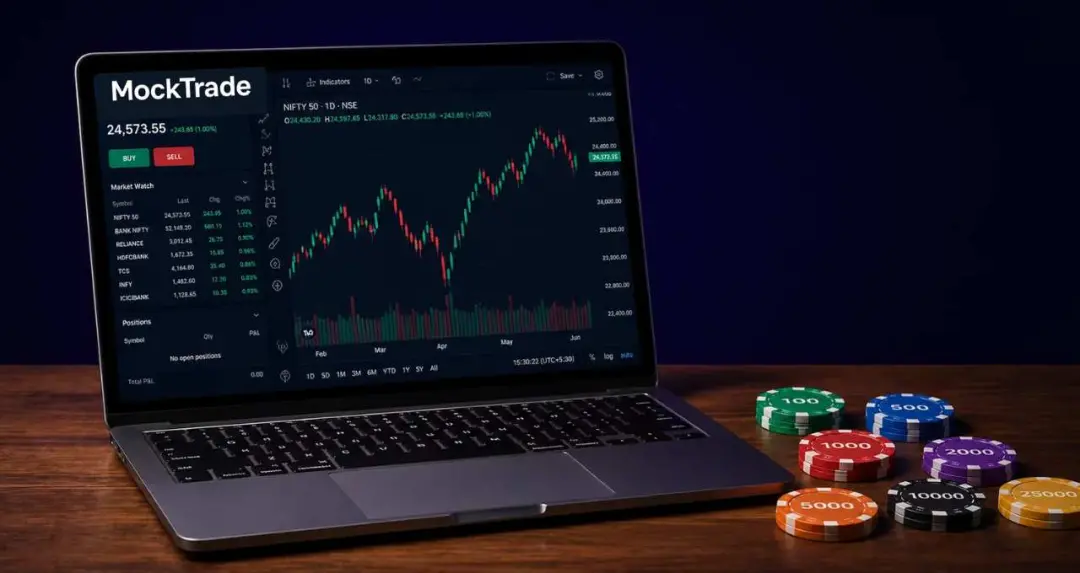
Mock trading, also referred to as paper trading or virtual trading, is a simulated trading environment in which participants use virtual funds instead of real money to practice trading processes.
The system enables new investors to understand how the stock market functions, test trading strategies, and gain experience with trading platforms. Brokerage firms, exchanges, and institutional participants also use such exercises to test the reliability of their technology systems, risk management processes, and trading infrastructure.