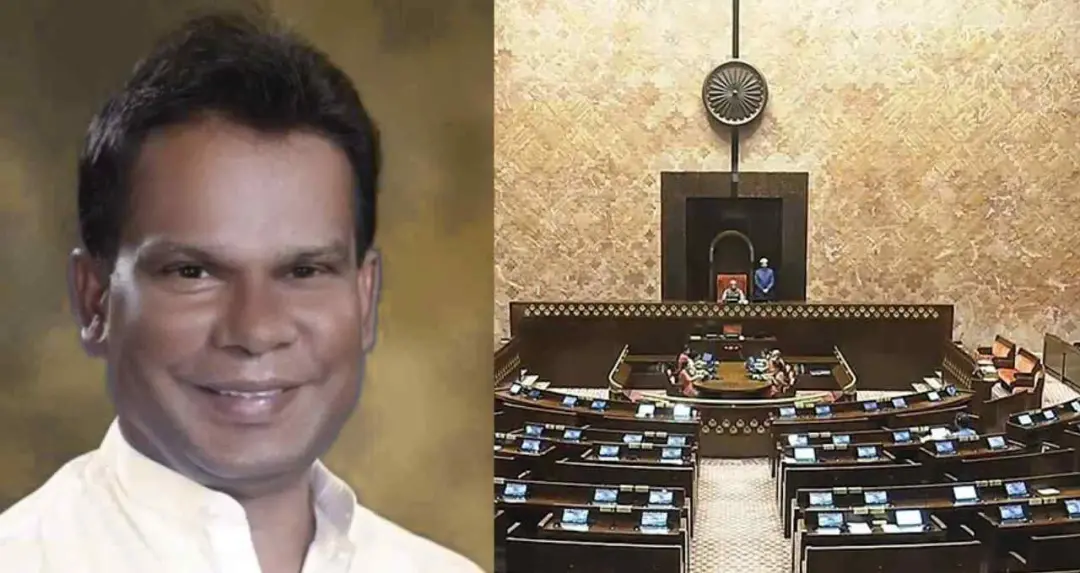
The election for the fourth Rajya Sabha seat in Odisha witnessed a reversal, with Bharatiya Janata Party-supported Independent candidate Dilip Ray securing victory through second preference votes.
In the election for four Rajya Sabha seats in Odisha, two Bharatiya Janata Party candidates and one Biju Janata Dal candidate were in a b position. However, the contest for the fourth seat became competitive. While initial calculations indicated an advantage for the opposition, the counting of second preference votes altered the outcome.
Cross voting and strategic voting changed the final result, leading to the victory of Dilip Ray, a BJP-supported Independent candidate.
At the time, the opposition—comprising the Biju Janata Dal, Congress, and CPI(M)—had a combined strength of 33 legislators in the Odisha Assembly. Based on this, the joint opposition candidate Datteshwar Hota was considered to be in a b position, as 30 votes were required to win a Rajya Sabha seat.



However, cross voting during polling changed the equation. Around 11 legislators reportedly cross-voted, directly impacting the result.
During counting, Bharatiya Janata Party candidates Manmohan Samal and Sujit Kumar received 35 first preference votes each, with a vote value of 3,500 each. Biju Janata Dal candidate Santrupt Misra secured 31 first preference votes, with a vote value of 3,100.
Joint opposition candidate Datteshwar Hota and BJP-supported Independent Dilip Ray each received 23 first preference votes, with a vote value of 2,300 each.
As no candidate reached the required vote value for victory, Returning Officer Satyabrata Rout ordered the counting of second preference votes.
With both BJP candidates securing equal first preference votes, a lottery was conducted to determine whose second preference votes would be counted first. The lottery decided that Sujit Kumar’s second preference votes would be counted first.
From Sujit Kumar’s votes, 13 valid second preference votes were transferred to Dilip Ray, raising his vote value to 2,859, still short of the required 2,941.
In the next stage, second preference votes from Manmohan Samal were counted. Dilip Ray again received 13 valid second preference votes, taking his total vote value to 3,418 and surpassing the required 2,941.
Following this, there was no need to count second preference votes of Biju Janata Dal candidate Santrupt Misra.
According to information that emerged after the election, the Bharatiya Janata Party adopted a specific strategy. Several party legislators cast first preference votes for their candidates and limited their second preference votes.
Some legislators reportedly assigned fourth or fifth preference votes to other candidates, with the aim of influencing the second preference vote count in favour of the BJP-supported candidate.