Following Pakistan's Defense Minister Khawaja Asif's 'Two-and-a-Half Front War' statement, the question arises whether Islamabad possesses the capability to wage war on three fronts simultaneously—India, Afghanistan, and Balochistan. Experts have expressed skepticism regarding the situation.
World News: Pakistan's Defense Minister Khawaja Asif recently issued a warning to both India and Afghanistan, invoking the concept of a 'Two-and-a-Half Front War'. Asif claims that if peace negotiations fail, Pakistan is prepared for open warfare. However, the crucial question remains: does Pakistan possess the military, economic, and strategic capacity to confront simultaneous crises from three directions? Let's delve into the circumstances surrounding Pakistan's statement and assess the true strength of its position.
Tensions with Afghanistan: How the Spark of Conflict Ignited
Relations between Afghanistan and Pakistan have consistently been tense, but October 2025 saw a further deterioration of the situation between the two nations. On October 9, Pakistan conducted airstrikes in Afghanistan's Kabul, Khost, Jalalabad, and Paktika regions. It claimed that these areas harbored hideouts of the Pakistani Taliban (TTP), which are responsible for terrorist activities within Pakistan.
Following these attacks, the Taliban government accused Pakistan of border violations and aggression. This led to a week of cross-border firing between the two nations. The situation remained extremely tense along the borders of Khyber Pakhtunkhwa and Balochistan.
Subsequently, talks commenced in Doha and Istanbul, facilitated by Qatar and Türkiye. A ceasefire was agreed upon on October 18-19. During the second meeting on October 28, three agreements were reached: continuing the ceasefire, establishing a border monitoring mechanism, and provisions for action in case of violations. However, discussions have since stalled.
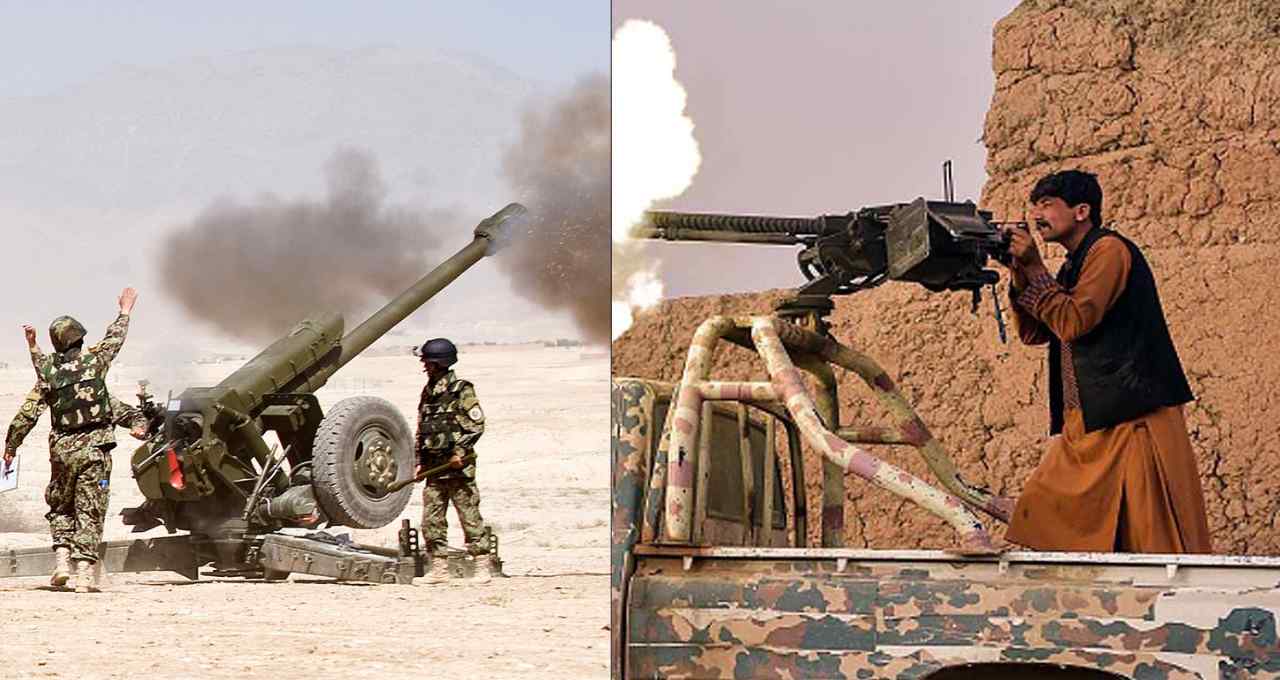




Pakistan continues to assert that its adversaries are harbored in Afghanistan, and the Taliban refuses to extradite them. Defense Minister Khawaja Asif warned on October 25 that if negotiations fail, "open warfare" is inevitable.
Accusations Against India: Taliban Labeled as 'India's Agent'
True to its established pattern, Pakistan once again implicated India in the situation. In a television interview on October 28, Asif claimed that India had infiltrated the Afghan Taliban. He stated that those in Kabul were acting at Delhi's behest. Asif went so far as to describe the Taliban as "sitting in India's lap."
He alleged that India intends to wage a proxy war against Pakistan by leveraging Afghanistan. Asif claimed that India seeks to keep Pakistan preoccupied on both the Eastern Front (India border) and the Western Front (Afghanistan border) to undermine its strength.
In an interview with Geo News on November 1, Asif reiterated his claim that India is fostering terrorism within Pakistan. He stated, "We possess evidence that India is attempting to destabilize Pakistan."
India's Response: Pakistan Cannot Evade Responsibility for Its Failures
India categorically rejected these allegations. Randhir Jaiswal, spokesperson for the Indian Ministry of External Affairs, stated on October 16 that Pakistan consistently attributes its failures to others. India reiterated its respect for Afghanistan's sovereignty and maintained that its presence there is solely for humanitarian aid.
India recently dispatched 15 tons of food as earthquake relief supplies to the Taliban government and re-opened its embassy in Kabul. According to experts, Pakistan fears the development of "practical relations" between India and the Taliban, which could potentially undermine Islamabad's strategic standing.
Balochistan: Pakistan's 'Half Front,' Weak from Within
Now, let's address the 'half' front in the 'two-and-a-half fronts' concept—Balochistan. Balochistan is Pakistan's largest province, yet it has been plagued by a separatist insurgency for decades. Organizations such as the Baloch Liberation Army (BLA) are engaged in conflict against the Pakistani government.
The Baloch people allege that the natural resources (gas, oil, minerals) of their province disproportionately benefit Punjab province, while they remain marginalized. In 2025, the Baloch insurgency intensified significantly. In March, the BLA attacked military bases, resulting in the deaths of dozens of soldiers. In August, an explosion in Quetta claimed over 20 lives.
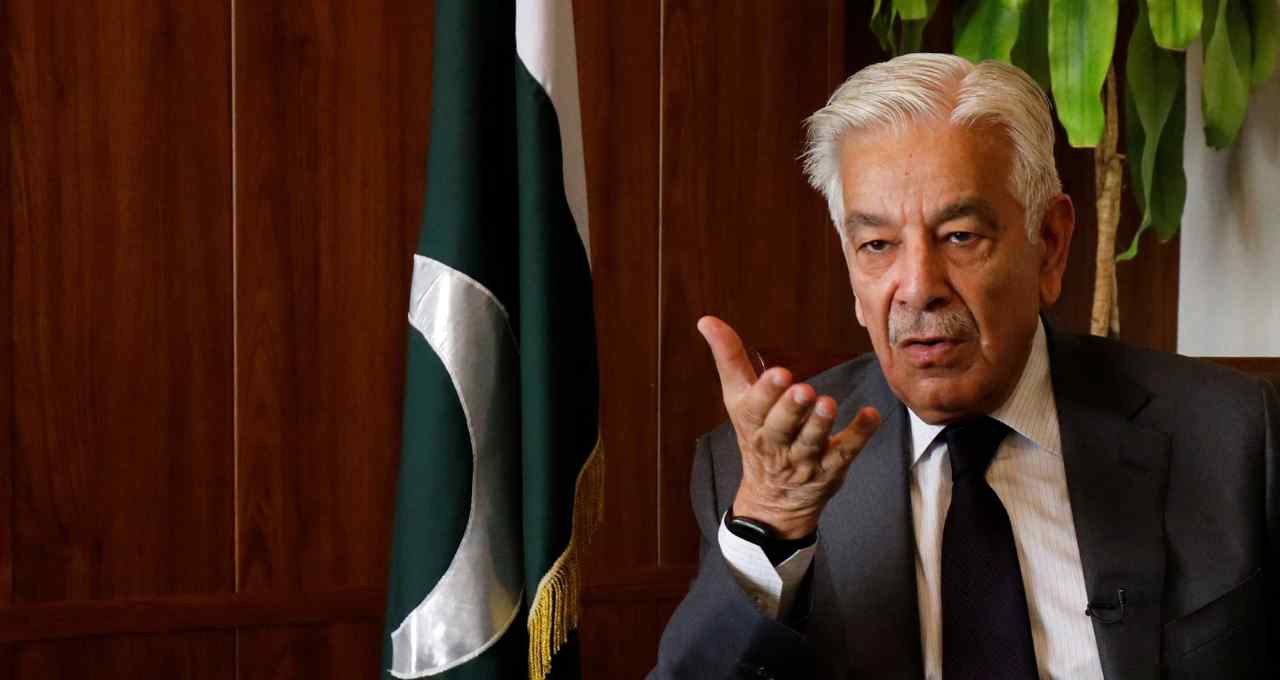
Pakistan's army maintains a substantial deployment there, yet the insurgents employ guerrilla tactics, making it challenging for the military to manage the situation. Strategic experts assert that the Balochistan insurgency has evolved into "the third and most dangerous front" for Pakistan.
Meaning of Two-and-a-Half Fronts: Growing Pressure from Three Directions
The concept of 'two-and-a-half fronts' refers to external threats from India and Afghanistan, coupled with an internal insurgency in Balochistan. Pakistan's borders stretch 3300 kilometers with India and 2600 kilometers with Afghanistan. Furthermore, Balochistan's mountainous terrain extends over 1000 kilometers, making effective control a considerable challenge.
On the Eastern Front, the Kashmir dispute remains a persistent issue. In May 2025, an attack in Pahalgam resulted in 26 fatalities, prompting India to adopt a firm stance. On the Western Front, the TTP and other terrorist organizations infiltrate Pakistan from the Afghan border.
Status of Pakistani Army: Possesses Weapons, But Lacks Strength
Pakistan undoubtedly possesses nuclear weapons, which provide it with deterrence. However, in terms of conventional warfare capabilities, it significantly lags behind India.
India boasts modern tanks, missile systems, fighter jets, and advanced defense technology, whereas Pakistan's defense budget is constrained by an economic crisis. In 2025, Pakistan's inflation surpassed 25%, and its foreign exchange reserves rapidly diminished.
While Pakistan recently established a new unit for missile surveillance and claims readiness for a two-front war, experts argue that the army is already stretched thin in Balochistan and Khyber Pakhtunkhwa.
Economic Crisis: The Most Significant Vulnerability
A nation's military strength is inherently dependent on its economy. Pakistan's economy is in a continuous state of decline. Inflation has reached record levels, foreign debt is escalating, and the government is heavily reliant on the IMF (International Monetary Fund).
In such a scenario, a conflict could entirely devastate its economy. Sustaining the army on two or three fronts would be exceptionally challenging. The 'half-front' of Balochistan is already a significant drain on resources.