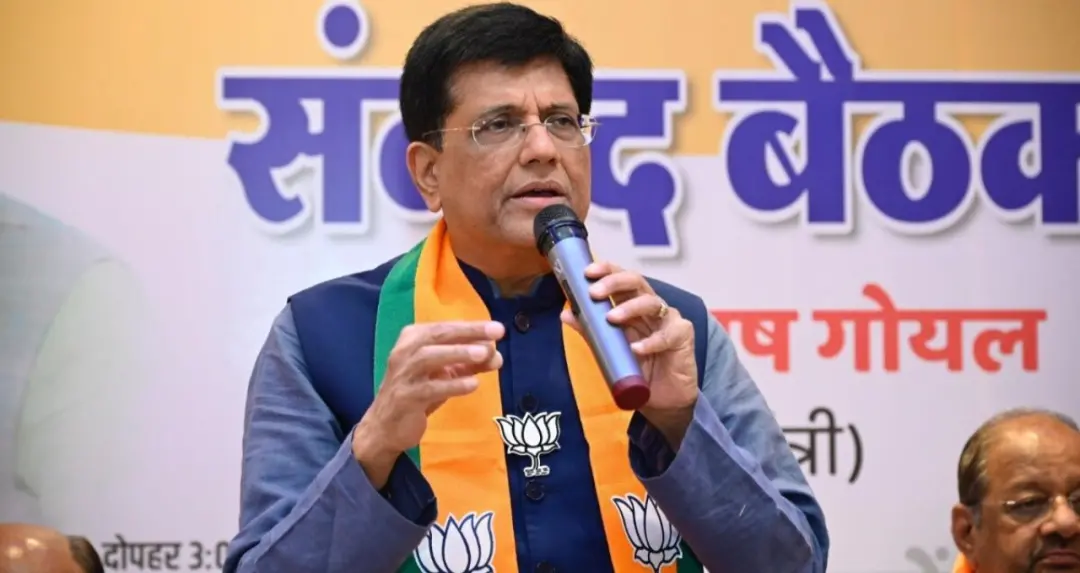
Union Commerce and Industry Minister Piyush Goyal has criticised those questioning India’s latest GDP growth figures, saying critics are distorting facts and attempting to mislead the public. His remarks came after India recorded 7.8% GDP growth in the April-June quarter.
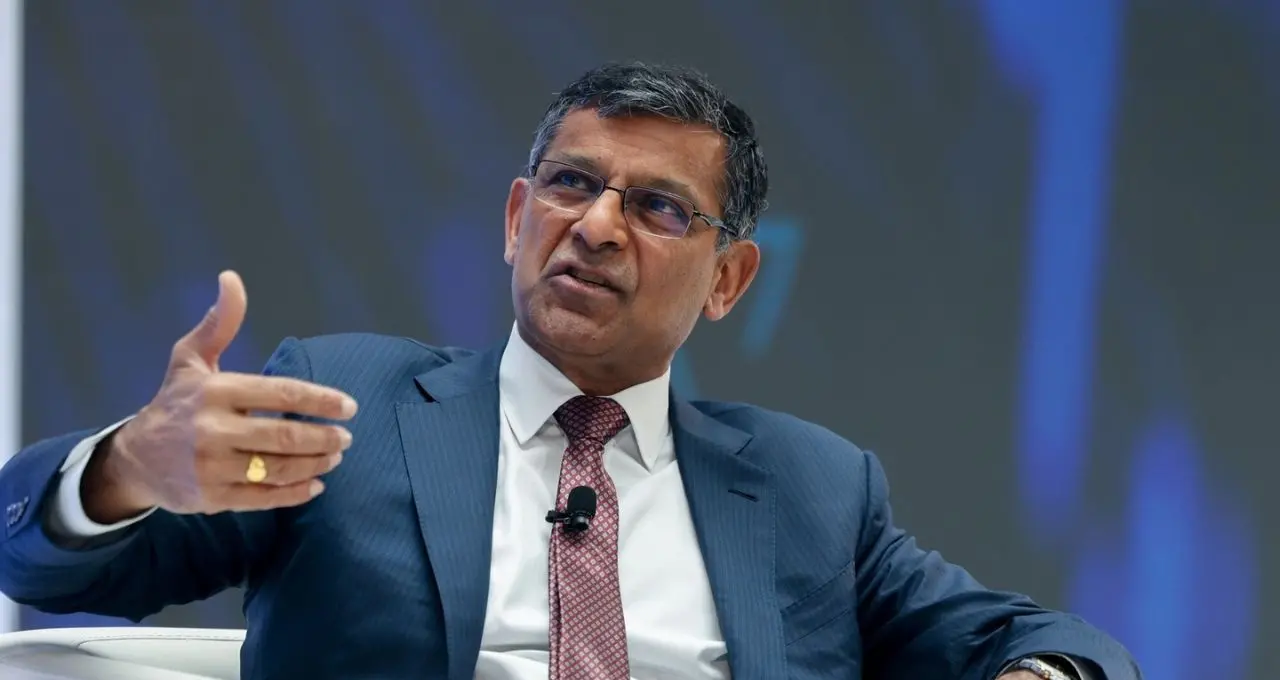
Speaking at a meeting of the Automotive Component Manufacturers Association (ACMA) in Delhi, Goyal defended the latest economic growth figures. Although he did not directly name former Reserve Bank of India (RBI) Governor Raghuram Rajan, he referred to comparisons involving Rajan’s tenure and economic data.
Goyal said some people were unable to accept India’s economic growth and claimed that such critics were now left with the task of arguing their case in television debates. He accused the Opposition and those critical of the government’s economic policies of presenting India’s economic position negatively.
Goyal also said that the reality reflected in economic data could not be hidden. According to him, attempts were being made to understate India’s economic achievements because of a negative outlook.
Without naming the former RBI governor, Goyal said critics could include people who were unable to complete their tenure in India and did not know how to compare data.
His remarks came after recent comments by Raghuram Rajan questioning India’s latest GDP growth figures.
Former RBI Governor Raghuram Rajan had questioned the latest GDP figures, asking why employment and investment were not showing improvement in proportion to the reported pace of economic growth if the economy was expanding so rapidly.
Rajan also questioned the reliability of the GDP figures, saying that if the data did not accurately reflect the actual economic situation, questions could arise over the assessment of the economy as a whole.

He raised concerns about employment opportunities and private investment. Rajan questioned why companies were not making large-scale investments if the economy was growing at a b pace and why sufficient foreign direct investment (FDI) was not coming into India.
The debate over GDP growth figures has therefore extended beyond the growth rate to employment, investment and the actual state of the economy.
According to government data, India’s GDP growth rate stood at 7.8% in the April-June quarter. The figure was higher than the RBI’s estimate of 7% growth for the period.
GDP growth had stood at 6.9% in the corresponding quarter of the previous year. The latest figure therefore reflected an increase in economic activity.
The government views the growth as evidence of the strength and economic capacity of the Indian economy amid global conditions. Critics, however, argue that the GDP growth rate alone does not provide a complete picture of the economy and that indicators such as employment, income, investment and consumption also need to be considered.
After the GDP figures were released, Prime Minister Narendra Modi responded on social media platform X. He said India had achieved 7.8% economic growth in the first quarter despite ongoing global challenges and rising oil prices.
The Prime Minister attributed the growth to the strength and economic capacity of the people of the country. The government believes that b growth amid global uncertainty could help India strengthen its position among the world’s major economies.
Congress president Mallikarjun Kharge criticised the government over the GDP figures. Questioning the Prime Minister’s economic claims, he said people in the country were facing problems including unemployment, inflation and economic inequality.
Kharge criticised the government’s economic policies and called for GDP growth figures to be considered in relation to economic conditions on the ground. The GDP figures have also led to a new political dispute between the government and the Opposition.
GDP, or Gross Domestic Product, represents the total economic value of goods produced and services provided within an economy during a specific period. It is generally considered one of the key indicators used to measure economic activity.
GDP includes economic activity related to production and services within the country. It can also include activities of foreign companies producing within the country.
GDP does not, however, provide a complete picture of an economy. Other indicators, including unemployment, per capita income, inflation, income distribution and investment, are also considered when assessing economic conditions.
The distinction between real and nominal GDP is important for understanding GDP. Real GDP attempts to measure actual growth in production by removing the effect of changes in prices. This helps assess how much production in the economy has actually increased.
Nominal GDP, by contrast, is based on current market prices. It includes changes in the prices of goods and services. As a result, nominal GDP can increase when inflation rises even if actual production does not increase by the same amount.
GDP is commonly explained using the expenditure-based formula:
GDP = C + G + I + NX
Here, C refers to private consumption, or spending by people and households. G represents government spending. I refers to private and business investment, while NX, or net exports, represents the difference between exports and imports.
Changes in these components help indicate the direction of economic growth.
India uses a base year for calculating GDP. In the recently revised GDP series, 2022-23 has been adopted as the new base year. The objective is to better reflect the current structure of the economy and changing economic patterns.
The base year is the reference year whose prices and economic conditions are used as the basis for assessing real economic growth. The base year is updated over time as the structure of the economy changes.
For example, if the price of a product doubles over several years while its production remains unchanged, using prices alone would not provide an accurate measure of real economic growth. Real GDP attempts to account for the effect of prices to measure actual changes in production.
Employment and investment are key issues in the debate over India’s GDP growth. The government views b GDP growth as an indicator of economic strength, while critics are questioning how much of that growth is reflected in employment and private investment.
Raghuram Rajan’s questions have brought this difference to the centre of the debate. Piyush Goyal, meanwhile, has emphasised that official economic data should not be rejected from a negative perspective.
For global investors and economic analysts, indicators including industrial production, private investment, employment, inflation, exports and foreign investment are also important alongside India’s GDP growth.