

Prime Minister Narendra Modi and RSS Chief Mohan Bhagwat hoisted the saffron flag atop the Ram Temple in Ayodhya. Devotees celebrated the historic flag-hoisting ceremony amidst the darshan (sacred viewing) and worship of Ramlala.
Ayodhya: Prime Minister Narendra Modi today arrived at the Shri Ram Janmabhoomi Temple in Ayodhya and, along with Rashtriya Swayamsevak Sangh (RSS) Chief Mohan Bhagwat, hoisted the saffron flag atop the temple. On this occasion, PM Modi had darshan of Ramlala and performed worship amidst chanting of mantras in Ram Darbar. Uttar Pradesh Chief Minister Yogi Adityanath and Governor Anandiben Patel were also present with them.
Flag's Size and Symbolism
The saffron flag hoisted atop the Ram Temple is triangular, measuring 10 feet high and 20 feet long. It is considered a symbol of the temple's completion. The flag bears emblems depicting the brilliance and valor of Lord Shri Ram. Hoisted on the 161-foot-high spire, it became a symbol of sacrifice, devotion, and the values of Ram Rajya.


Festive Atmosphere in Ayodhya
During the flag hoisting, the enthusiasm of devotees throughout Ayodhya city was remarkable. The entire atmosphere became imbued with devotion to Ram, filled with chants of 'Jai Shri Ram'. On this occasion, Chief Minister Yogi Adityanath stated that this day is a day of pride for every Indian and expressed gratitude to PM Modi for hoisting this historic flag. RSS Chief Mohan Bhagwat also addressed the public, saying that this day is significant for everyone and that the dream of those who sacrificed their lives for this cause has come true today.
Worship in Ram Darbar
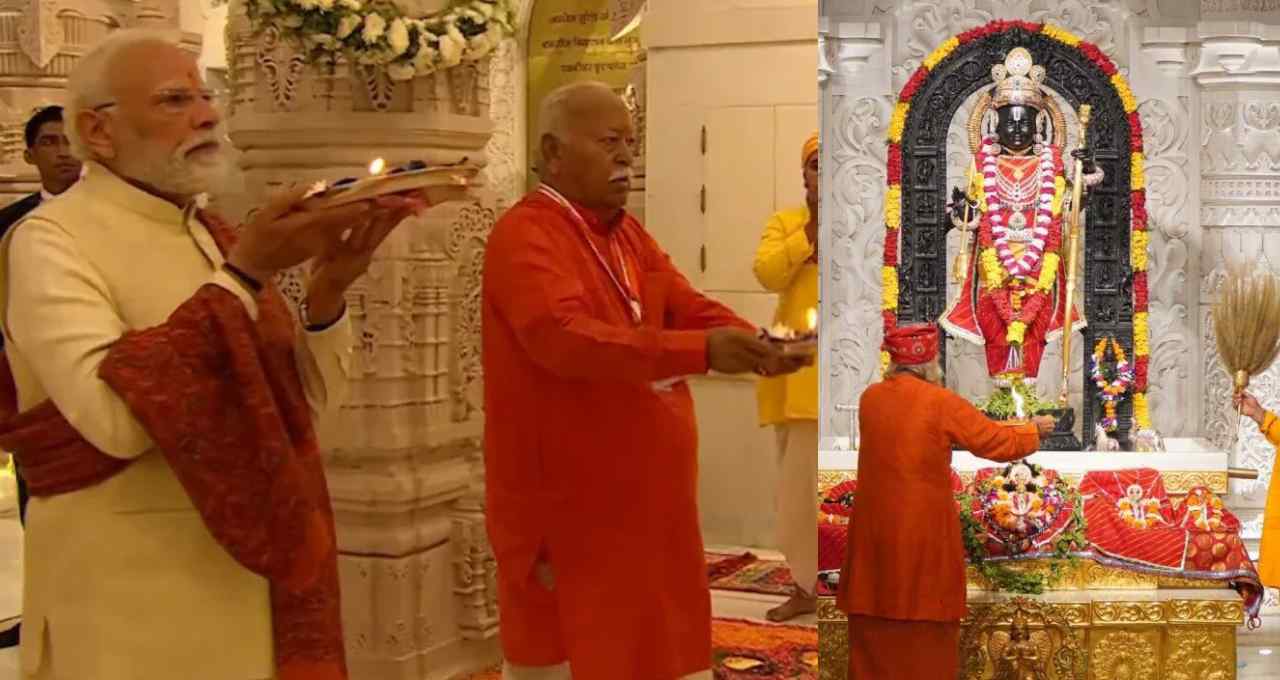
Prime Minister Modi arrived in Ayodhya around 10 AM and first offered prayers at Saptamandir. After this, he visited the Sheshavtar Temple and received blessings amidst Vedic chants in the Ram Darbar. The flag-hoisting ceremony concluded after the darshan of Ramlala. The Shri Ram Mandir Trust specially invited devotees for this grand event, and the entire city was adorned. Strict security arrangements were made as several VVIPs were present at the event.
Uniqueness of the Dharma Dhwaja
The saffron Dharma Dhwaja (religious flag) hoisted atop the Ram Temple was prepared in 25 days by a parachute manufacturing company from Gujarat. It is made from durable parachute-grade fabric and premium silk threads. This flag can withstand winds up to 60 km/h, rain, and sunlight.
The three sacred symbols inscribed on the flag are: the Sun, Om, and the Kovidar tree. The Sun is a symbol of God and represents victory. Om is considered the essence of all mantras and represents the entire creation. The Kovidar tree is considered significant in the Raghuvansh tradition and is also mentioned in the Valmiki Ramayana.
Significance of the Saffron Color
The saffron color of the flag in Sanatana tradition symbolizes sacrifice, devotion, valor, and piety. This color represents knowledge, prowess, dedication, and the triumph of truth. In ancient times, it was given special importance on the flags of the kings of the Suryavansh (Solar Dynasty).
This historic flag-hoisting ceremony was held on the auspicious occasion of Vivah Panchami, further enhancing its religious significance. Devotees traveled from far and wide to Ayodhya to witness this magnificent spectacle. The saffron flag, fluttering atop the 161-foot-high spire, brought an atmosphere of devotion and enthusiasm throughout the city.
During the flag-hoisting ceremony, the temple premises and surrounding areas were adorned like a bride. Security arrangements were also tightened to prevent any disruption. The event was organized on a grand scale by the Shri Ram Mandir Trust and was considered a global declaration of the temple's completion.


