In the Bihar elections 2025, Prashant Kishor's Jansuraj Party was limited to 0 to 2 seats in exit polls. Weak organization, incorrect ticket distribution, caste-based politics, and over-reliance on social media were major reasons for the party's defeat.
Patna. The exit polls for the Bihar Assembly Elections 2025 have delivered a significant blow to Prashant Kishor's (PK) party, Jansuraj (JSP). Almost all major exit polls, including Axis My India, C-Voter, Chanakya, and Matrize, have projected Jansuraj to secure between 0 and 2 seats. The vote percentage is also estimated to be only around 10 to 12 percent. This performance stands in stark contrast to the initial hype the party generated.
Jansuraj Absent in NDA's Strong Comeback
Jansuraj's performance has been declared negligible in the 'Poll of Exit Polls' as well. Meanwhile, the NDA is predicted to win between 135 and 160 seats, making Jansuraj's impact appear almost zero. Despite initial buzz on social media, the party's influence did not materialize at the grassroots level. Several influencers have termed it a flop show.
Political Analysts' Opinion
Political analyst Omprakash Ashk states that Jansuraj's failure reflects the deep roots of Bihar's caste-based politics. According to him, “No new party can survive in Bihar without a b local base.” PK's former associates also admitted that irregularities in ticket distribution and organizational weakness shook the party's foundation. Many workers became disgruntled and remained inactive during the elections.
Incorrect Feedback and Internal Confusion
A former associate of PK revealed that some individuals provided incorrect feedback, keeping the party leadership confused. Many active workers were denied tickets, while outsiders were directly allocated them. This increased organizational dissatisfaction and weakened the ground-level network.
Youth Hype Did Not Convert into Votes




Political commentator Dr. Shobhit Suman stated that Prashant Kishor's strategy was focused on youth, but the social media hype could not convert into votes. This is a classic example of “Digital vs Ground Reality.”
11 Major Reasons Why PK's Experiment Failed
1. Limited Reach in Rural Areas
The majority of Bihar's population is rural, but Jansuraj's reach remained limited. Rural voters were unaware of the party's candidates and election symbol, preventing vote transfer.
2. Image as an Untested Party
Voters perceived Jansuraj as an “Unproven Party.” Many felt that voting for this party was a risky move as it lacked any track record.
3. Prashant Kishor Not Contesting Elections Himself
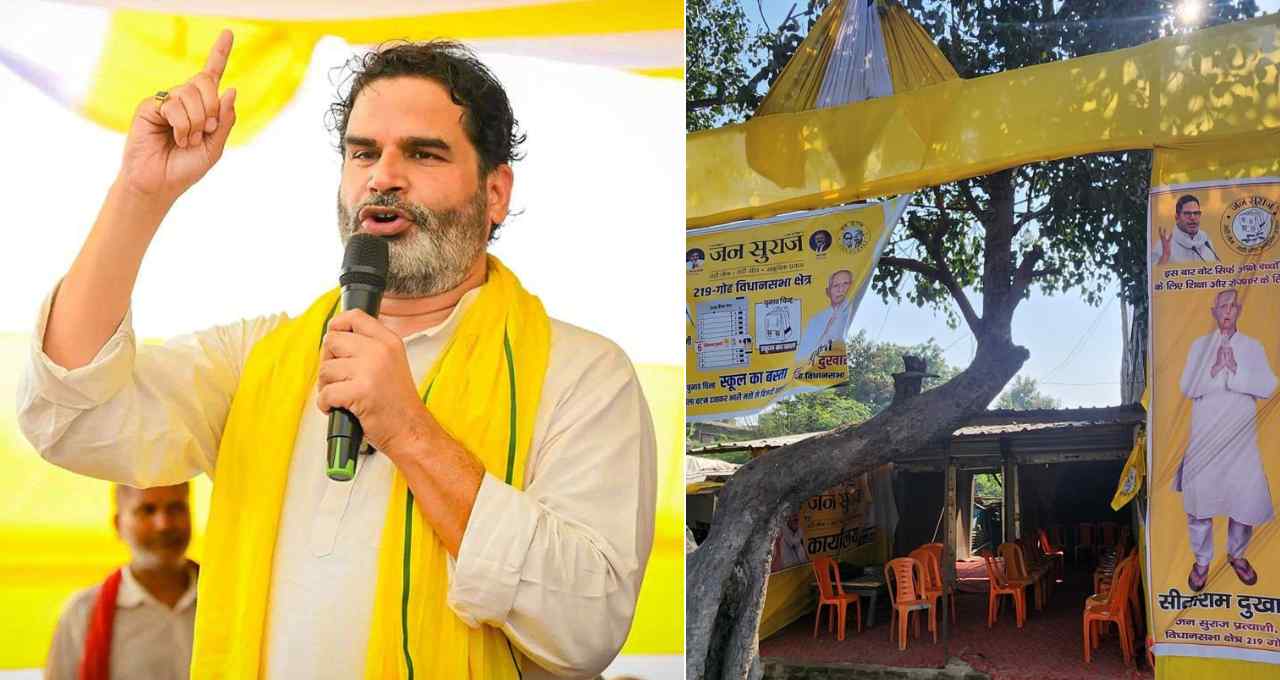
The fact that party founder Prashant Kishor did not contest the elections himself disappointed voters. Many questioned, “If the leader himself doesn't contest, why should the public take him seriously?”
4. Image as BJP's B-Team
Opposition parties labeled Jansuraj as the BJP's B-team. On social media, the party was called a “Spoiler Party” for splitting NDA votes, which affected its credibility.
5. Withdrawal of Candidates' Nominations
At least three candidates withdrew their nominations, which PK attributed to pressure from the BJP. This exposed the party's internal weakness and demoralized its workers.
6. Inability to Penetrate Caste Equations
Bihar's politics is built on caste equations. Jansuraj failed to make an impact on these. Voters continued to cast their ballots based on family and community lines.
7. Failed Attempt at a Third Front
The contest in Bihar remained bipolar — NDA vs. Mahagathbandhan. Jansuraj attempted to emerge as a third alternative but could not find a foothold due to a lack of a vote bank.
8. Impact of Government Schemes
Nitish Kumar's schemes — money transfers to women, pensions for the elderly, free electricity — attracted the public towards the NDA. This weakened Jansuraj's youth base.
9. Lack of Local Leadership
The party lacked a b popular face. In the absence of local leaders, Jansuraj's appeal remained limited.
10. Over-reliance on Social Media
Jansuraj showed excessive reliance on social media campaigning, but this hype did not convert into ground votes. The message did not reach rural areas, preventing the party from building real strength.
11. Weak Grip at Booth Level
During the elections, the party was actively searching for its BLA (Booth Level Agents). On many booths, no JSP representative was even present. This organizational laxity became a major reason for the party's downfall.
Social Media Hype Becomes a Liability
Internet media analyst Rajesh Yadav states that an 8 to 10 percent vote share offers hope for the future, but relying solely on social media is political self-destruction. He remarked, “Emotional connection is built only through ground-level work, not digital campaigning.”