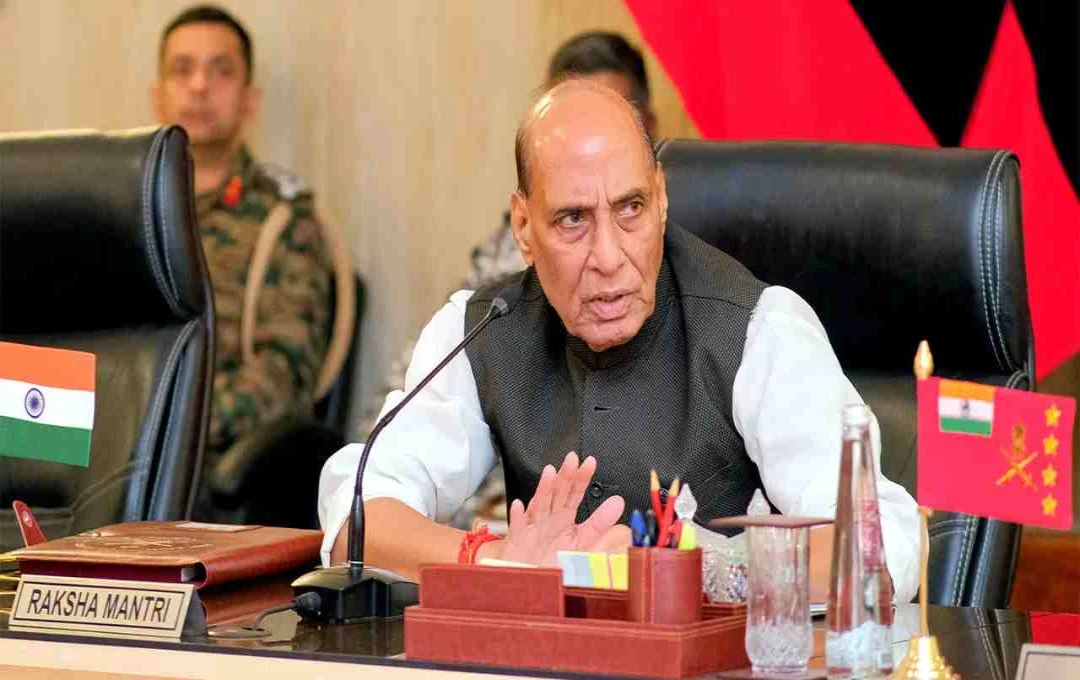
Indian Defence Minister Rajnath Singh participated in the ASEAN Defence Ministers' Meeting held in Kuala Lumpur, Malaysia. During his address, Rajnath Singh lauded the strategic partnership between India and ASEAN countries and stated that the relations between both sides are continuously strengthening.
Kuala Lumpur: Participating in the ASEAN Defence Ministers' Meeting (ADMM-Plus) held in Malaysia's capital Kuala Lumpur, India's Defence Minister Rajnath Singh stated that “ASEAN is an essential and integral part of India's Act East Policy.” He described this platform as extremely crucial for strategic, economic, and humanitarian cooperation in the Indo-Pacific region.
Rajnath Singh said that India has been an active member of the ASEAN Defence Ministers' Meeting-Plus (ADMM-Plus) since its inception, and this platform has now evolved from merely a medium for dialogue into a practical framework for defence cooperation.




‘ASEAN is a crucial pillar of India's Act East Policy’
In his address, Rajnath Singh stated that the strategic partnership between India and ASEAN countries has further strengthened over the past years. The elevation of ASEAN-India relations to a Strategic Partnership in 2022 was a testament to this deep cooperation. This not only signifies the robustness of the ties but also reflects the convergence of our shared regional priorities and perspectives.
He added that the Act East Policy is a significant pillar of India's foreign policy, working towards elevating economic, cultural, and defence cooperation with Southeast Asian nations to new heights.
India's Focus on Peace and Stability in the Indo-Pacific Region
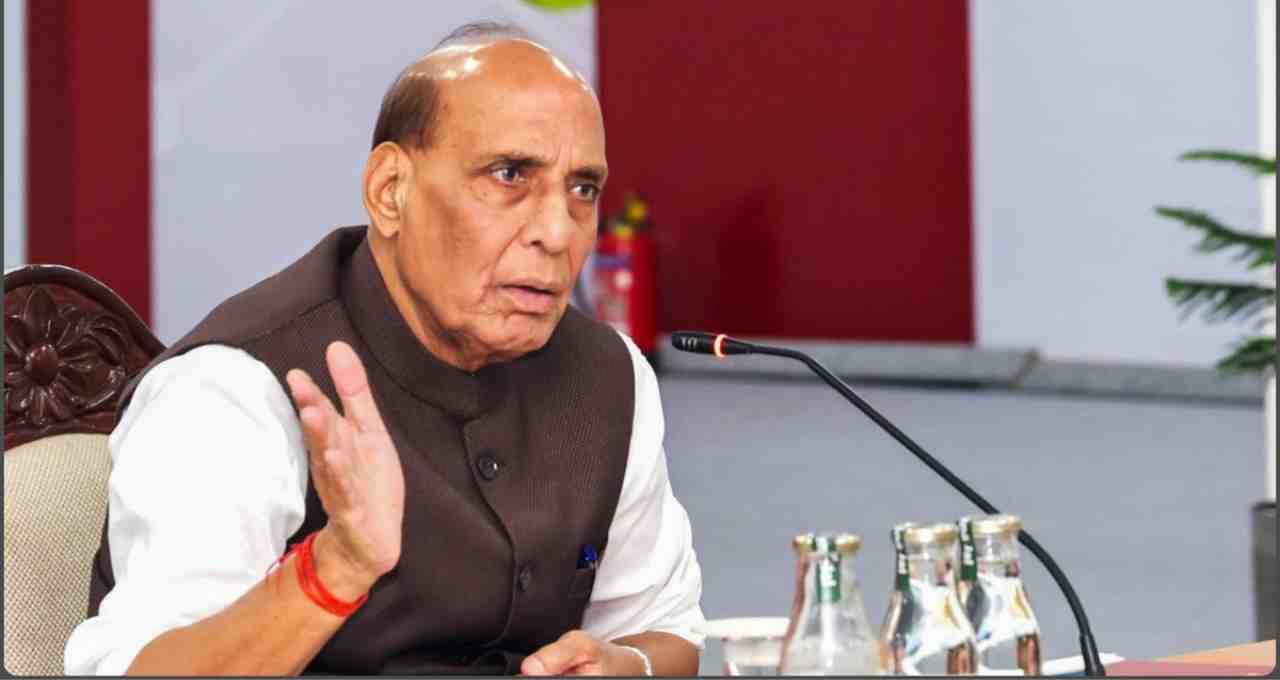
Referring to the evolving geopolitical landscape in the Indo-Pacific region, Rajnath Singh stated that India's goal is to maintain the region as free, inclusive, and rules-based. He said, India views defence cooperation with ASEAN countries as a means for regional peace, stability, and capacity building. Our vision is for the rule of law to prevail in the Indo-Pacific Ocean region and for freedom of navigation to be ensured under the UN Convention on the Law of the Sea (UNCLOS). Although he did not name any country, his statement reflects India's strategic concern regarding China's growing influence in the region.
ADMM-Plus: A Platform for Collective Security and Cooperation
Rajnath Singh stated in his speech that the role and significance of the ASEAN Defence Ministers' Meeting Plus (ADMM-Plus) have remarkably increased over the past decade and a half. He added, “This platform is no longer merely a medium for dialogue, but is now moving towards practical defence cooperation. India also seeks to advance economic development, technological partnerships, and human resource development through this platform.”
Besides the 11 ASEAN member countries, ADMM-Plus includes India, China, Japan, Australia, New Zealand, South Korea, Russia, and the United States. This platform focuses on enhancing defence and security cooperation, capacity building, and humanitarian assistance-related initiatives in the region.
What is the Act East Policy?
India's Act East Policy, launched in November 2014, is an advanced version of the erstwhile Look East Policy. The objective of this policy is to strengthen economic, strategic, and cultural ties with countries in Southeast Asia and the Asia-Pacific region. Under this policy, India is enhancing partnerships with these countries in areas such as —
- Trade and Investment,
- Connectivity Projects,
- Defence and Security Cooperation,
- Technology and Education, and
- Cultural and People-to-People Connections
Rajnath Singh stated that the connection between India and ASEAN is not merely limited to geography but is also linked by shared history, culture, and future aspirations.