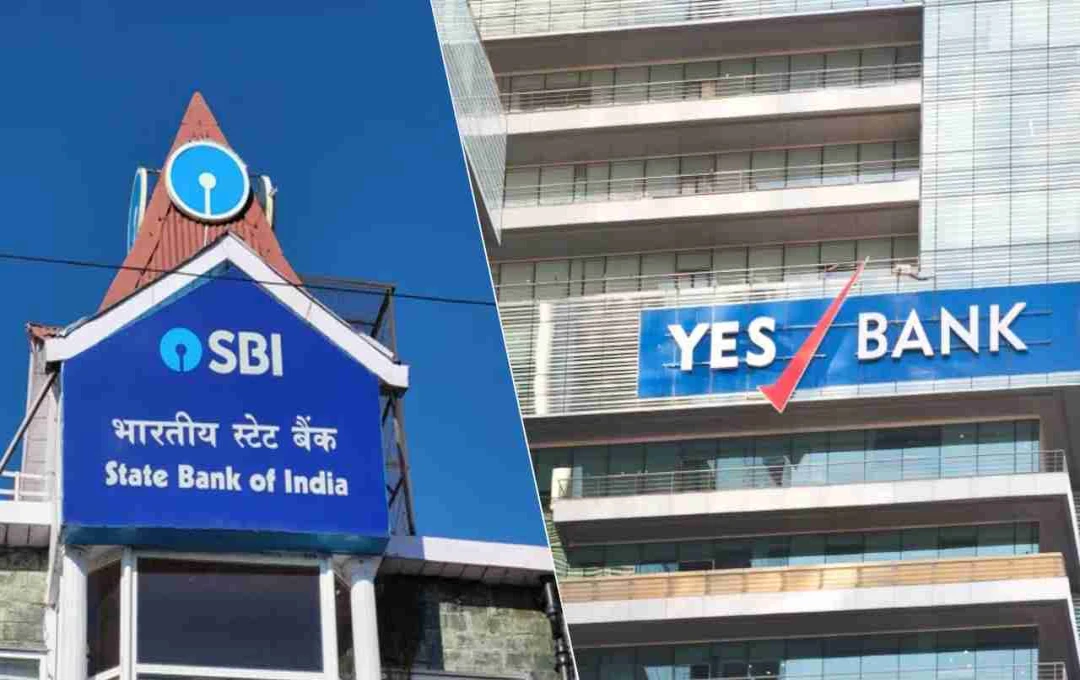
SBI Earns 14% IRR Return on Yes Bank Investment. This move was strategic for the stability of the banking system. The bank's financial situation has improved, and there are currently no plans to sell its stake.
Business News: State Bank of India Chairman C.S. Shetty has announced that SBI has achieved an approximate 14 percent Tax-Before Internal Rate of Return (IRR) on its investment in Yes Bank. This return is considered significant at a time when there is ongoing discussion about investment stability and improvement in the banking sector.
The Chairman stated that for SBI, this investment was not solely for profit but primarily aimed at strengthening Yes Bank's financial position and extricating it from its crisis. He added that this step was taken from the perspective of systemic stability to prevent a negative impact on the private banking sector.
Crucial Decision Taken During Crisis


A few years ago, when Yes Bank was undergoing a financial and management crisis, a negative atmosphere regarding the banking system began to form in the market. In response, the RBI and the government devised a Reconstruction Plan, in which SBI played a central role.
SBI made a significant financial investment in Yes Bank to provide the necessary capital and stabilize its operations. According to the Chairman, the objective at that time was not merely profit, but to prevent the collapse of a major private bank and maintain confidence in the banking system. This step was taken in the interest of the country's financial system.
Improvement in Yes Bank's Situation
Over the past few years, following the implementation of the reconstruction plan, Yes Bank's situation has gradually improved. The bank has taken several steps to strengthen its balance sheet, reduce bad loans (NPA Reduction), improve risk management, and transform its business model.
The bank's new management, along with SBI's support, played a crucial role in steering the bank back towards stable operations. The Chairman stated that today, Yes Bank's financial health is significantly better compared to that difficult period, and the bank is now moving towards growth.
No Haste to Sell Stake
A significant question that arose was when SBI would sell its approximately 10 percent stake in Yes Bank. On this, the Chairman explicitly stated that there are currently no plans to sell the stake.
He added that SBI is not under any pressure to hold or sell its stake at this time. A decision will only be made when the timing is appropriate and market conditions are favorable. This implies that SBI intends to strategically maintain this investment for now.
Foreign Investor Activity
Recently, Japan's banking firm SMBC received approval from the Reserve Bank of India to acquire up to a 24.99 percent stake in Yes Bank. This permission allows SMBC to purchase stakes from SBI and seven other major shareholders. In May, an agreement was reached to acquire approximately 20 percent of Yes Bank's stake for about 1.6 billion dollars.
This deal is considered one of India's largest cross-border Merger and Acquisition (M&A) transactions in the financial sector. This foreign investment will help bring new capital, technology, expertise, and an international network to the bank.
Current Stock Market Status
In trading on November 6, Yes Bank shares were observed trading at ₹22.86, showing a decline of 0.65 percent. Although there has been a slight dip in shares, investors view this situation as normal fluctuation.