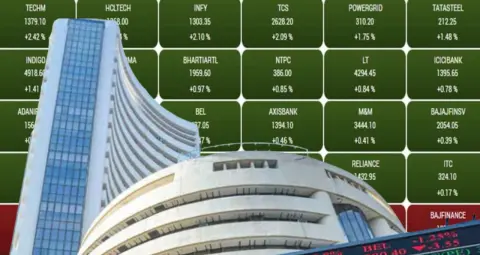
Indian stock markets came under selling pressure on Tuesday, with the Sensex falling by around 400 points and the Nifty slipping below the important 23,700 level.
The benchmark indices had started the session almost flat, but selling in major stocks intensified as trading progressed. Increased pressure on banking and other large-cap stocks weakened the initial stability in the market.




The Sensex declined by around 400 points during Tuesday’s session, while the Nifty moved below 23,700. Selling was seen in several major stocks as investor caution increased. Adani Enterprises and Axis Bank recorded relatively higher weakness. Declines in large and influential stocks weighed directly on the benchmark indices.
According to market experts, investors are currently cautious about risk assets. Uncertainty in global cues, along with caution over elevated valuations in the domestic market, has added to the cautious approach.

Higher crude oil prices were among the factors behind the market decline. Oil prices are significant for a major importing country such as India, as higher prices can increase the import bill and put pressure on inflation. If crude oil prices remain elevated for an extended period, they could affect companies’ costs and broader economic indicators. Investors are therefore monitoring movements in the oil market.
Uncertainty over US Federal Reserve monetary policy has also remained a challenge for Indian markets. Expectations of interest rates remaining elevated or potentially increasing could affect global investors’ willingness to take risks. Changes in US bond yields and the dollar can affect emerging markets, including India. Any shift in foreign investors’ strategies could increase selling pressure in the Indian equity market.
Continued activity in India’s primary market, with new IPOs and increased investor participation, has also affected stock market liquidity. According to analysts, when substantial capital flows into IPOs and new issues, the funds available for buying existing shares in the secondary market can be affected. The impact can be more visible when the market is already under pressure from global cues.
According to technical analysts, the Nifty’s near-term trend remains weak. The 24,025 level is considered important for the market. If the Nifty remains below this level, further weakness could be seen. In such a situation, the 23,600–23,500 zone could act as the next important support area. This zone is linked to the previous major gap and the July 2026 low. Investors will therefore continue to monitor these technical levels in the coming sessions.