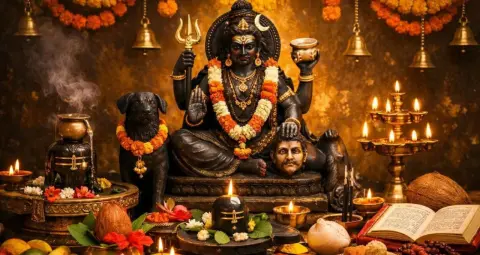
The Shakambhari Navratri festival will be celebrated from December 28, 2025, to January 3, 2026. This Navratri is dedicated to Goddess Shakambhari, revered as the deity of plants and agriculture. Over an eight-day period, rituals such as the worship of the Goddess, the establishment of a Kalash (sacred pitcher), and the sowing of barley seeds are performed to invoke prosperity, greenery, and agricultural production.
Shakambhari Navratri in India: Shakambhari Navratri is being celebrated in India, primarily in Rajasthan, Maharashtra, Karnataka, Tamil Nadu, and Uttar Pradesh, with enthusiasm and devotion. The celebrations include the worship of Goddess Shakambhari, the establishment of a Kalash, and the tradition of sowing barley seeds. This festival holds particular significance for farmers and those involved in agriculture, as it promotes the fertility of the land, food abundance, and environmental balance. The aim of this festival is also to raise awareness about both religious devotion and social and environmental issues.
The Significance of Shakambhari Navratri in India
There are four Navratris celebrated throughout the year in India. The Chaitra and Sharadiya Navratris are dedicated to Goddess Durga, while the Ashada and Magha month Navratris are dedicated to the 10 Mahakalas. In addition, Shakambhari Navratri is celebrated in the month of Paush, which is particularly celebrated with joy and enthusiasm in various parts of Rajasthan, Karnataka, Maharashtra, Tamil Nadu, and Uttar Pradesh. This Navratri lasts for eight days and is dedicated to Goddess Shakambhari.

Dates for Shakambhari Navratri 2025
This year, Shakambhari Navratri will begin on December 28, 2025, and continue until January 3, 2026. This Navratri is celebrated during the Shukla Paksha of Paush month, from the Ashtami to the Purnima. The first day of Navratri is known as ‘Banaada Ashtami,’ and the last day is ‘Shakambhari Purnima.’ During this time, various religious events and collective prayer programs are organized.
Who is Goddess Shakambhari?
According to religious beliefs, Goddess Shakambhari is the form of Goddess Shakti. Goddess Shakambhari is known as the Goddess of plants and is believed to incarnate to remove famine and food crises from the earth. She is considered the Goddess of vegetables, fruits, and green leaves. Worshiping her increases the yield of agricultural land and maintains balance in the environment. Furthermore, this festival holds particular significance for farmers and those involved in agriculture.

Shakambhari Navratri Worship Method
To perform Shakambhari Navratri worship, first, get up early in the morning and complete your daily rituals and bathe. Clean the worship place and pour water on a clay pot filled with barley seeds. On the first day of Navratri, in the auspicious time, install the Kalash on the worship place by wrapping it in a red cloth.
Fill the Kalash with Ganga water and place fresh leaves of dates and a jata (hair-adorned) coconut on it. Tie a red chunri and a cloth around the coconut and decorate it with flowers, garlands, roli (vermilion powder), akshat (whole rice grains), and camphor to worship Goddess Shakambhari. After completing the worship on the last day of Navratri, perform ‘Ghat Visarjan’ (immersing the Ghat – a ceremonial platform) and lift the Kalash from the altar.
The Importance of Shakambhari Navratri
By worshipping Goddess Shakambhari during Shakambhari Navratri, the stores of food and wealth increase. This festival is a symbol of prosperity and abundance in agriculture and crops. According to religious beliefs, with the grace of the Goddess, the land becomes fertile, and the balance of natural resources is maintained. Therefore, the importance of this festival is particularly high for farmers and those in the agricultural sector.
Spiritual and Social Aspects
Shakambhari Navratri is not limited to worship and religious rituals; it brings the community and family together. During this time, people organize collective bhajans (devotional songs), kirtans (religious discourses), and katha (narrations). Children are also educated about the importance of the Goddess and nature during this period.
Economic and Environmental Significance
The focus of this Navratri is also on agriculture and the environment. Sowing barley seeds and establishing a Kalash have symbolic meanings that life should be full of prosperity and greenery. This festival also reflects the importance of conserving natural resources.