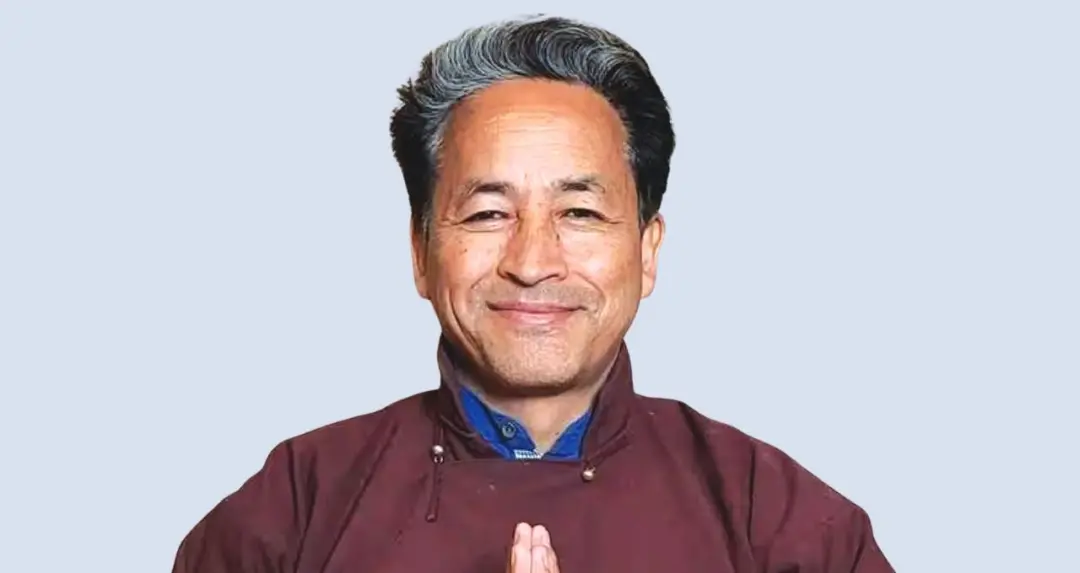
Activist and education reformer Sonam Wangchuk has questioned India’s development trajectory and political system, saying that if current conditions continue, the country will not achieve its goal of becoming a developed nation by 2047. Citing India’s per capita income and the economic progress of neighbouring countries, he called for major changes in the system.
In a video message released late Thursday night, Wangchuk said he had been unwell for the past few days, giving him an opportunity to reflect seriously on the country’s current situation and future. He said that simply changing the government would not be enough to move India forward and called for broader reforms in the way political leadership is selected and governance is conducted.
Wangchuk said several countries that were considered behind or roughly comparable with India around five decades ago have since moved ahead on several measures of economic development. He cited Thailand, Malaysia, Indonesia, Sri Lanka and Bangladesh as examples.
He said India has set a goal of becoming a developed and respected nation by 2047, but achieving it would require major changes to the existing system. He said development should not be limited to economic figures and linked the country’s progress with education, governance, institutional systems and political leadership.
At the same time, comparisons between countries based on per capita income and different development indicators require consideration of different economic parameters. In his statement, Wangchuk primarily expressed concern about India’s pace of development and per capita income.
Wangchuk said it would not be sufficient to hold any one political party responsible for problems associated with India’s governance system. According to him, governments led by different parties have been in power at different times, but several issues, including the suppression of dissenting voices, have continued.


Linking political change with broader institutional change, he said that merely changing the government would not eliminate corruption, injustice and administrative problems. He said the country needs a system that increases citizen participation and strengthens accountability in governance.
Wangchuk also referred to the anti-corruption movement of 2012-13. He said the public movement during that period was followed by significant changes in the country’s politics and a change in government, but, according to him, problems such as corruption and injustice did not disappear.
He claimed that over time these problems have taken new forms and, in some cases, the situation has become more serious than before. Wangchuk said political change needs to be linked not merely to a change in power but to long-term reforms in the system.
In his message on India’s political future, Wangchuk called for a peaceful revolution. He said the country needs leadership that is selfless, fearless, principled and capable.
He appealed to citizens to identify people in their areas and across the country who could contribute to public life with integrity and ability. Wangchuk asked people to suggest the name of at least one person whom they consider suitable to provide leadership for the country’s future.
He said identifying such people and engaging with them would be an important contribution on the occasion of Independence Day. He added that he wanted to meet people who could help develop a new vision for the country’s future.
Wangchuk also raised the issue of education in his message. He questioned whether changes in the Education Ministry and the new system would lead to major reforms. He said India’s progress is directly linked to its education system.
He said that unless the country’s education system is strengthened, it would be difficult to strengthen India’s future. According to him, education is not only a means of employment but also the foundation for scientific thinking, civic awareness, skill development and economic progress.
Wangchuk has long been active on issues related to education and sustainable development in Himalayan regions. His latest statement also emphasised placing education and human resources at the centre of India’s long-term development.
Wangchuk had earlier begun an indefinite hunger strike at Delhi’s Jantar Mantar over issues concerning students. According to available details, he began the protest on June 28 in support of students and against the NEET-UG paper leak and alleged irregularities in the examination system.
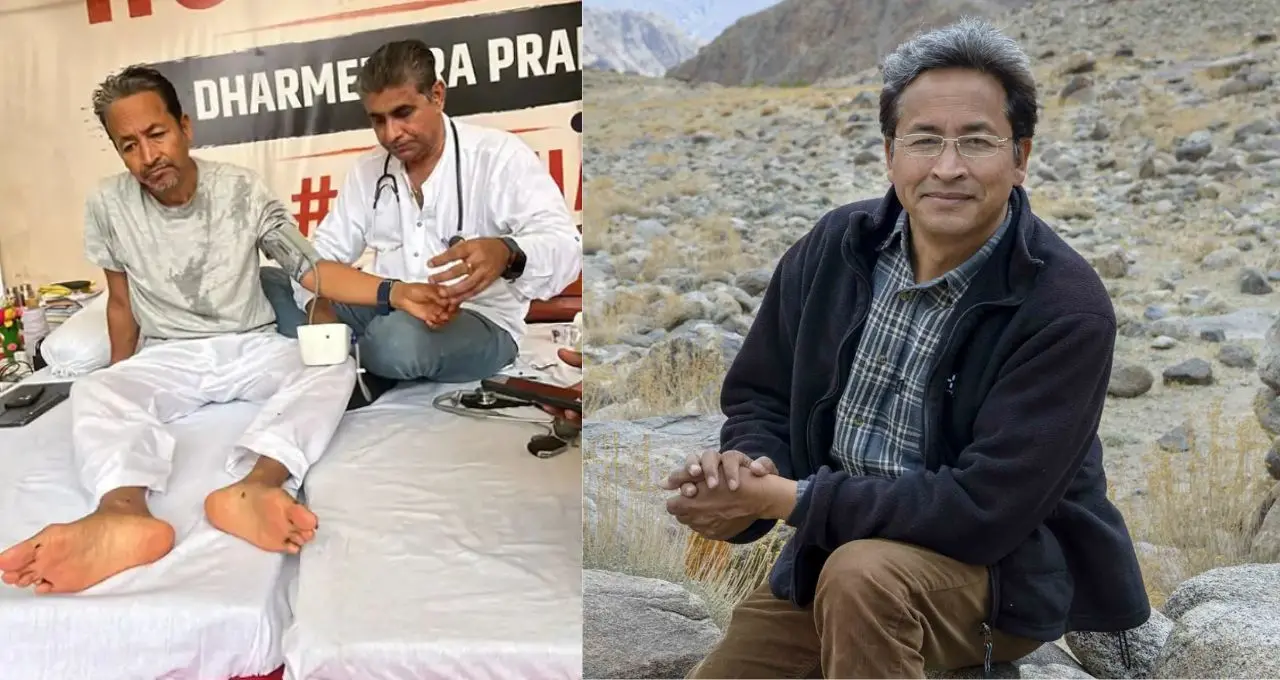
After his health deteriorated during the hunger strike, Delhi Police took him from Jantar Mantar to Safdarjung Hospital on July 18. He was later admitted to Medanta Hospital. Following assurances from the government, he decided to end the hunger strike on July 24.
Concerns were also raised about his health during the protest. Information available up to July 8 stated that his weight had fallen by about 7 kilograms and his blood pressure was recorded at 103/68.
Wangchuk has also been involved for a long time in movements over constitutional and political demands for Ladakh. His campaigns have focused on full statehood for Ladakh, environmental protection and political representation for the region.
According to available information, he had earlier remained in custody for an extended period over the demand to grant full statehood to Ladakh. He was accused in connection with violence in Leh on September 24, 2025. Four people were reported killed and around 90 injured in the violence.
The government accused Wangchuk of being linked to the incitement of violence. He was detained under the National Security Act, or NSA, on September 26 and was subsequently sent to Jodhpur jail. Wangchuk, however, has taken a different position regarding the allegations and his role.
The Indian government has set a goal of making India a developed nation by 2047. Against this backdrop, Wangchuk’s latest statement addresses India’s economic direction, education, governance system and political leadership. His central argument is that the goal of a developed India cannot be achieved solely through a faster rate of economic growth. He said better education, ber institutions, accountable governance, capable leadership and citizen participation would also be required.
In his video message, Wangchuk appealed to people to play an active role in bringing about positive changes in the political and social system. He said identifying leadership that works in the national interest above personal interests is necessary for the country’s future.
His statement comes as economic growth, employment, education, social development and governance reforms continue to be discussed in the context of India’s 2047 development goal. Wangchuk’s message adds a critical perspective to that debate and emphasises the need for change through peaceful democratic means.