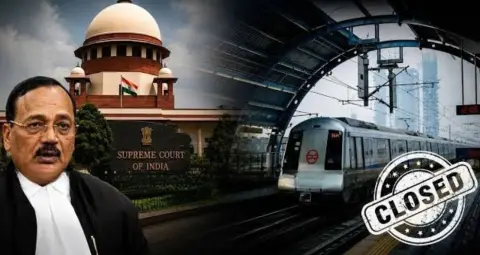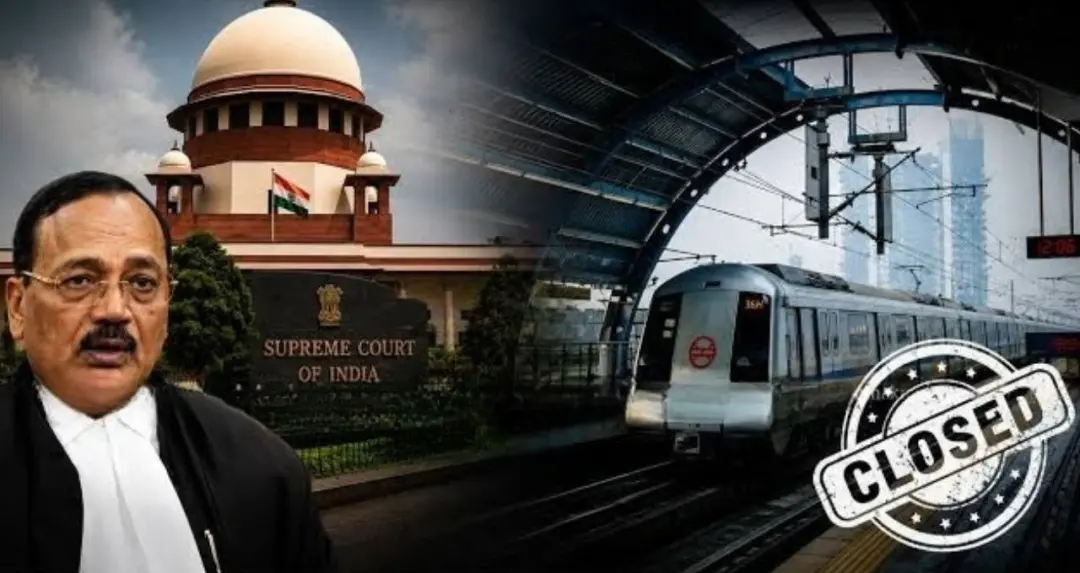
The Supreme Court heard a case concerning proposed closures of metro stations and the cancellation of trains arriving in Delhi ahead of a planned protest on October 10. The court expressed concern over the proposed restrictions, stating that measures taken to maintain law and order must be necessary and proportionate to the circumstances.
A bench headed by Chief Justice of India Surya Kant referred to the principle of proportionality, emphasising that authorities should not impose excessively stringent measures to address a potential problem. The proceedings highlighted the need to balance the convenience of ordinary commuters with the right to hold peaceful protests.
The matter reached the Supreme Court amid concerns that 57 metro stations could be closed and train services arriving in Delhi could be cancelled ahead of the planned October 10 protest. The petitioners argued that disrupting the transport system across the city in anticipation of a possible demonstration would be inappropriate and could inconvenience ordinary citizens, commuters and people travelling to work daily.



During the hearing, the court asked the central government to consider whether transport services could continue in a controlled and organised manner rather than being suspended entirely. The court emphasised that public movement should remain as normal as possible while the authorities maintain security arrangements.
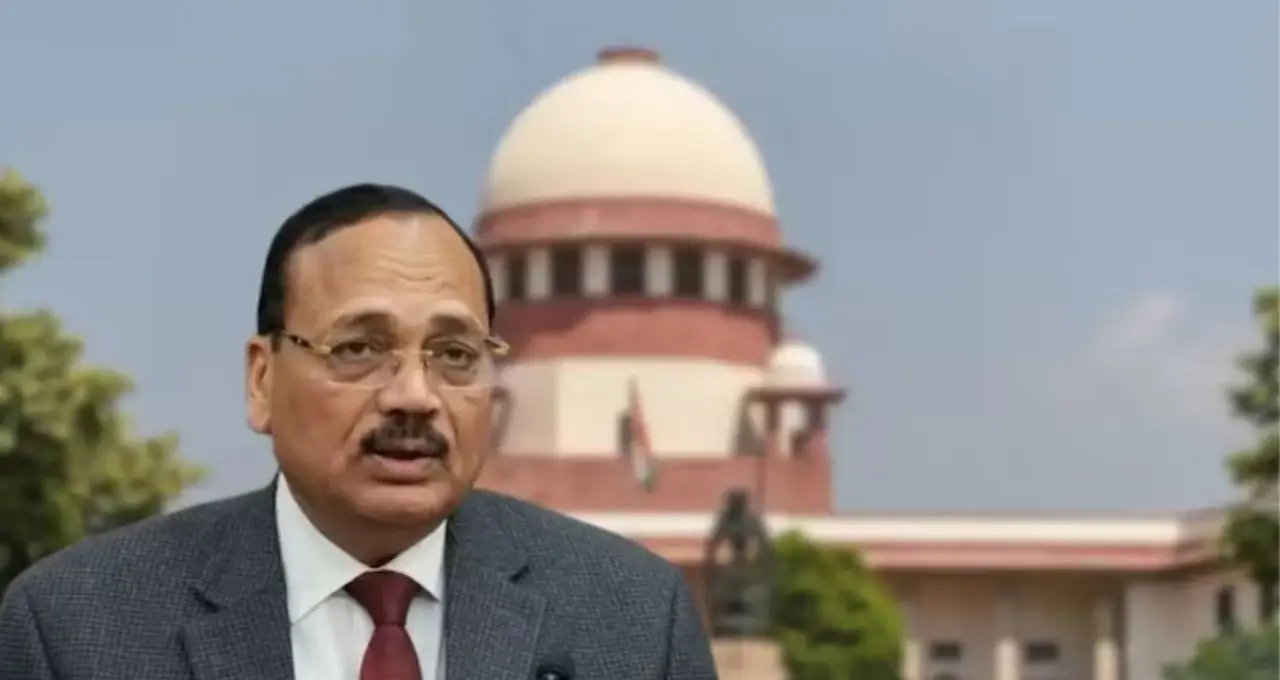
Chief Justice Surya Kant highlighted the importance of the principle of proportionality during the hearing. He said restrictions imposed to prevent a potential threat should be limited to what is actually necessary. Illustrating the point, he remarked that a hammer should not be used to kill a fly.
The observation underscored the need for security decisions to reflect the actual requirements and seriousness of the potential threat. The court indicated that the possibility of a protest should not, by itself, lead to sweeping measures that cause unnecessary inconvenience to large numbers of people.
During the proceedings, Solicitor General Tushar Mehta clarified that the court's observation should not be presented as a direct allegation against the government. He said the Chief Justice had used the example to explain the principle of proportionality.
The hearing also addressed the availability of designated venues for peaceful protests. The Supreme Court asked the central government to identify another suitable location apart from Jantar Mantar and consider the proposal.
Solicitor General Tushar Mehta assured the court that the competent authority would consider the proposal to designate an alternative venue for peaceful demonstrations.
According to the court's directions, the availability of necessary facilities for protesters at any alternative location should also be taken into account. The proceedings further emphasised the need to widely publicise information about revised restrictions, advisories and alternative routes through newspapers, official websites and other channels so that the public receives the necessary information in time.