The Supreme Court recently ruled on the Presidential Reference case. In this matter, President Droupadi Murmu had posed 14 questions to the Supreme Court, primarily asking whether courts could set deadlines for Governors and the President in legislative matters.
New Delhi: The Supreme Court on Thursday delivered its verdict on the Presidential Reference. In this case, President Droupadi Murmu had sought the court's opinion to clarify whether a constitutional court could prescribe timelines for the President and Governors to assent to bills passed by state legislatures.
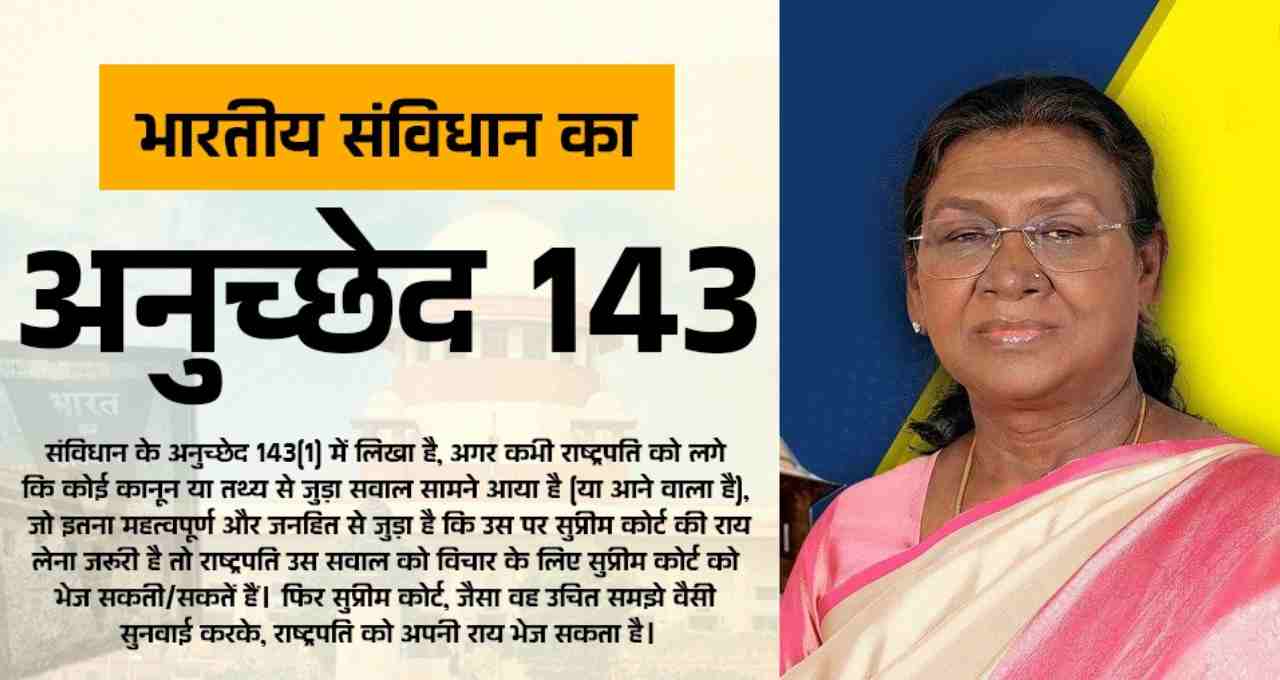
This ruling came under Article 143, which defines the process of Presidential Reference in the Constitution of India. Under this, the President is empowered to seek advice or opinion from the Supreme Court on any law, bill, or constitutional matter. This process is a formal way to seek guidance on any constitutional dispute or significant legal question.



What is a Presidential Reference?
Simply put, a Presidential Reference is a special procedure where the President seeks the Supreme Court's opinion on a constitutional or legal matter. This procedure is adopted when an issue is significant for the country or states and requires clear legal guidance. Under Article 143 of the Constitution, the President can seek advice from the Supreme Court on any law, bill, or constitutional dispute.
This process ensures that the decisions of the President and Governors in constitutional matters are in consonance with the Constitution and that any dispute can be resolved through judicial means.
Case Related to Tamil Nadu Governor Dispute
Article 143 empowers the President to seek the Supreme Court's opinion on issues of national importance. Under Article 143(2), the President can refer certain disputes to the Supreme Court that do not fall under the original jurisdiction of Article 131. The objective is to clearly resolve constitutional disputes between the Centre and the States.
This Presidential Reference originated from the dispute between the Government of Tamil Nadu and Governor R.N. Ravi. In April 2026, the Supreme Court ruled that the Governor must decide within a maximum period of three months when forwarding bills passed by the assembly for the President's assent. The bench of Justice J.B. Pardiwala and Justice Mahadevan stated that this limit is necessary to expedite the legislative process and ensure constitutional responsibilities.
Following this decision, the President expressed concern that this limit might infringe upon constitutional discretion. She sought the Supreme Court's advice on 14 questions regarding whether Governors and the President can indefinitely withhold bills.
President's 14 Questions
The key questions on which President Droupadi Murmu sought the Supreme Court's opinion include:
- What options are available to the Governor under Article 200?
- Is it necessary for the Governor to seek the advice of the Council of Ministers?
- Can the Governor's decisions under Article 200 be subjected to judicial review?
- Does Article 361 prevent judicial review of the Governor's decisions?
- If the Constitution does not prescribe the time and manner for the Governor to make decisions, can a court determine the time and manner?
- Is judicial review of decisions made by the President under Article 201 possible or not?
- Can the court prescribe a deadline for the President to make decisions or not?
- Is the Supreme Court's advice necessary before forwarding a bill to the President?
- Can decisions made under Articles 200 and 201 be reviewed before the bill becomes law or not?
- Can the Supreme Court substitute the constitutional powers of the President or Governor under Article 142 or not?
- Can a bill passed by a state legislature be considered law without the Governor's assent?
- What should be the minimum number of judges on a Supreme Court bench under Article 145(3) of the Constitution?
- Is Article 142 merely procedural, or can it also affect the substantive content?
- Can the Supreme Court resolve disputes between the Centre and States outside its original jurisdiction under Article 131?
The significance of this Presidential Reference is not limited to Tamil Nadu. This case aims to clarify the constitutional role of Governors and the President across India and the court's limits in the legislative process. The court's decision will determine the direction of constitutional relations between the Centre and the States in India.