

Towards the end of 2024, there were fears of a major threat to Earth. Scientists had estimated that Asteroid 2024 YR4 could collide with Earth by the year 2032. This prediction had raised global concerns, but after some time, the threat was completely averted, and people felt relieved.
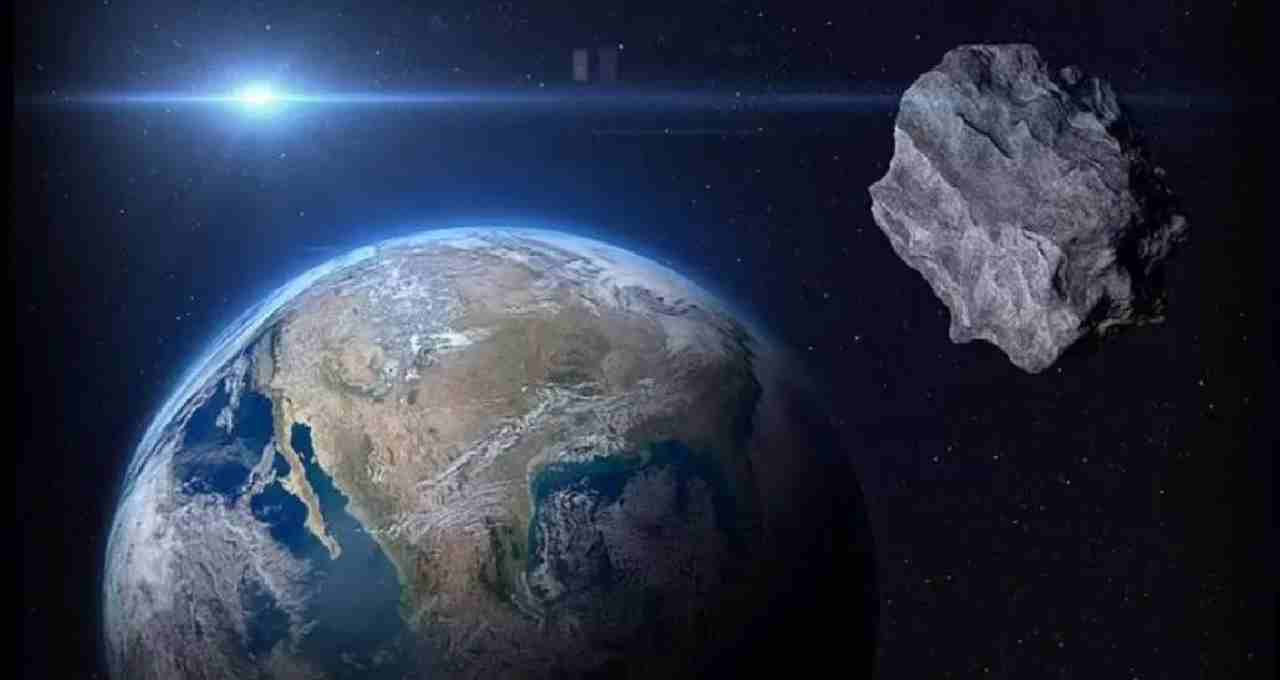
Asteroid 2024 YR4: Space scientists are currently focused on an asteroid that could pose a serious threat to the Moon in the coming years. Asteroid 2024 YR4, which was previously considered a high-risk object due to a potential collision with Earth in 2032, is now, according to new estimates, heading towards the Moon. Both NASA and the European Space Agency (ESA) are tracking this asteroid, and the latest data suggests there is approximately a 4% chance of it colliding with the Moon.
However, scientists have also clarified that there is a 96% chance it will pass through space without touching any celestial body, but even this small percentage has raised global concerns.
How Did the Threat Estimation Begin?




Scientists first detected Asteroid 2024 YR4 towards the end of 2024. Initial calculations raised concerns that this asteroid could pass dangerously close to Earth in 2032. After some time, orbital calculations were refined, and that possibility largely diminished. However, according to new tracking reports, this asteroid is now coming very close to the Moon's path. NASA states that it is rapidly changing its direction, and if its current orbit remains stable, it could impact the Moon by 2032.
How Real is the Collision Probability?
According to the latest report released by ESA:
- Probability of collision with the Moon: 4%
- Probability of no collision: 96%
Scientists estimate that more precise information about the asteroid's orbit will be available by 2026. At that point, this percentage could drop to 0% or increase to 30%, depending on the direction the asteroid takes in the coming years.
What Would Be the Impact on the Moon if a Collision Occurs?
If Asteroid 2024 YR4 collides with the Moon's surface, the impact would not be minor. It is estimated that:
- A crater 0.5 to 1 kilometer deep and wide could form on the Moon.
- Several tons of debris could scatter into space at the moment of impact.
This debris could pose a threat to communication and weather satellites orbiting Earth.
An increase in the amount of dust and rocks in space could also lead to micro-meteorite showers (a phenomenon similar to shooting stars). Although there would be no physical damage or disturbance on the Moon due to the absence of an atmosphere, its indirect impact on Earth's space infrastructure could be severe.
Can the Threat Be Averted?
NASA and ESA are both discussing several options to address this potential risk. These include:
- Asteroid Deflection (Deflection Mission): A special spacecraft can be sent to gently push the asteroid, altering its direction. NASA has previously done this with the DART Mission.
- Using a Kinetic Impactor: A solid object sent at high speed can collide with the asteroid to change its trajectory.
- Last Resort — Nuclear Device: This option is extremely risky and is being considered only as a last resort. No agency has agreed to this yet.
Based on current scientific estimates, there is no direct threat to Earth. Nevertheless, global space agencies are cautious about a potential collision with the Moon, as the Moon is Earth's largest natural satellite and is extremely important for space missions and communication infrastructure.


