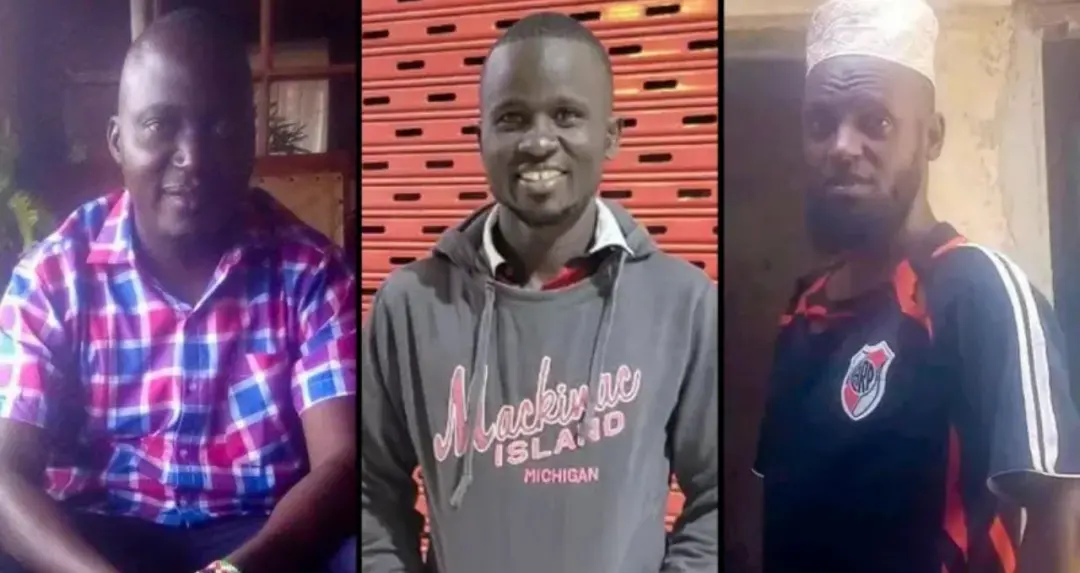
BBC Africa Eye’s investigation has found that three people killed by police gunfire during a memorial event for former Kenyan Prime Minister Raila Odinga were far from a clash near the VIP area of Kasarani Stadium in Nairobi. One of the victims was approximately 60 metres from the confrontation, while the other two were at least 160 metres away.
The incident occurred on October 16, 2025, when thousands of people gathered at the stadium to pay their respects to the former prime minister. Three people were killed in the police shooting. BBC Africa Eye analysed more than 1,500 photographs and videos and interviewed the victims’ relatives as part of its investigation. The findings have raised questions about police conduct and accountability. Nearly a year after the incident, an investigation by Kenya’s Independent Policing Oversight Authority (IPOA) remains ongoing, and no one has been held accountable.
Kenya was plunged into mourning following Odinga’s death at the age of 80 while receiving medical treatment in India. He was one of the country’s most influential political leaders and had led the opposition for many years.
When his body was returned to Kenya, thousands of people gathered at Jomo Kenyatta International Airport in Nairobi. The initial plan was to place the body at Parliament for public viewing. However, concerns about the size of the crowd and possible security breaches prompted organisers to move the event to Kasarani Stadium at the last minute.
Officials said there had been insufficient time to secure the stadium, which has a capacity of 48,000. Thousands of people entered the pitch and spectator stands. Temperatures were around 30 degrees Celsius, and people had to wait for several hours. A public address system was also unavailable to provide official information.
During the event, a small section of the crowd threw plastic chairs and other objects towards officers guarding the VIP pavilion. Police subsequently opened fire. Videos recorded in other parts of the stadium showed much of the crowd remaining calm.

Kenya’s Interior Minister Kipchumba Murkomen told the BBC that the police response was restrained after members of the crowd threw stones. However, although the footage analysed by the BBC showed objects being thrown, investigators found no evidence that stones were among them.
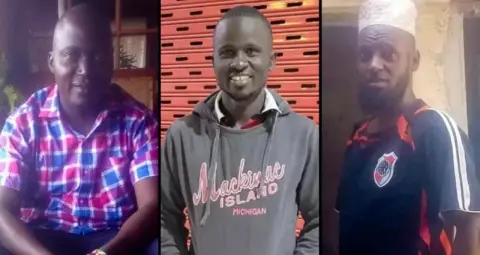
The three people killed in the shooting were Evans Kiche, Vincent Ogutu and Jidah Burka. The BBC analysed photographs, videos and the stadium layout to establish where they were when they were shot.
Evans Kiche, a 40-year-old chef and father of seven, was approximately 60 metres from the clash near the VIP area when he was shot, according to the BBC’s analysis. He sustained a gunshot wound to the head.
Vincent Ogutu, 36, was the father of three children. According to his post-mortem report, he died from a gunshot wound to the chest. The BBC investigation placed him at least 160 metres from the confrontation, in a spectator area on the opposite side of the stadium.
The third victim, Jidah Burka, was 42 years old. His post-mortem report stated that he died from a gunshot wound to the head. He was also at least 160 metres from the location of the clash.
The BBC’s central finding was that all three victims were a considerable distance from the confrontation between police and members of the crowd. However, the investigation could not establish which officer fired the shots that killed each victim.
BBC Africa Eye reconstructed a timeline of events using videos and photographs from the incident. The investigation identified at least eight police officers operating together. They wore tactical uniforms and military-style clothing, carried assault rifles, had their faces covered and had no clearly visible identifying insignia on their uniforms.
According to the BBC, the officers’ uniforms and movements resembled the practices of a security unit deployed to protect President William Ruto and other high-profile individuals. Footage showed at least three members of the group firing their weapons.
Forensic analysis indicated that officers from a specialised police unit responsible for presidential security may have carried out the fatal shooting. However, the BBC could not confirm that the bullets that killed the three victims were fired by members of that unit. The investigation also could not rule out the possibility that other police officers inside the stadium had fired their weapons.
The findings therefore raise questions about the possible involvement of police officers but do not establish that any specific officer was responsible for the three deaths.
Kenya’s Independent Policing Oversight Authority is investigating the police response and the deaths of the three people. Nearly a year after the incident, the investigation remains incomplete, and no one has been held accountable.
Murkomen defended the police, saying officers had been under considerable pressure after working continuously for several hours. He also said the last-minute change of venue had left police with very little time to establish security arrangements at the new location.
Murkomen told the BBC that the findings of the independent oversight authority’s investigation would help determine appropriate legal action. Asked about the police response, he said it was not necessarily the case that someone had sat down and directly ordered an officer to fire. According to him, the shooting could have resulted from an immediate decision made by an officer at the scene.
Kenya’s National Police Service told the BBC that the incident had provided several important lessons and would help the service respond more professionally in the future. The IPOA did not respond to the BBC’s questions.
Yvonne Akinyi, the wife of Vincent Ogutu, told the BBC that her husband had been with friends in central Nairobi on the morning of October 16. After seeing people heading towards the stadium, they joined the crowds and went there. Within a few hours, he was dead.
Akinyi said the incident had changed her family’s life. She expressed deep sorrow over her husband’s death and the circumstances facing their children. According to her, her husband had attended a memorial event organised by the government, but the circumstances of his death remained unclear.
She said that the actions of those expected to provide security had instead caused suffering for the families. Nearly a year after her husband’s death, she still had no answer to why he was among those killed when so many people were present.
BBC Africa Eye’s investigation has raised questions about police conduct, crowd control and accountability in Kenya. Its findings indicate that the three victims were far from the confrontation that preceded the police gunfire. Video footage and forensic analysis have also pointed to the possible involvement of a specialised police unit associated with presidential security.
However, it remains unclear who fired the fatal shots and which officers’ actions led to the three deaths. The findings of the Independent Policing Oversight Authority’s investigation are expected to be important in establishing accountability in the case.
The victims’ families continue to await answers, while legal accountability for the incident remains unresolved.