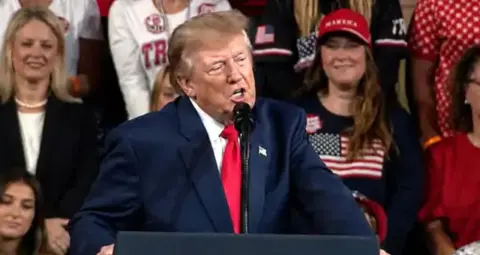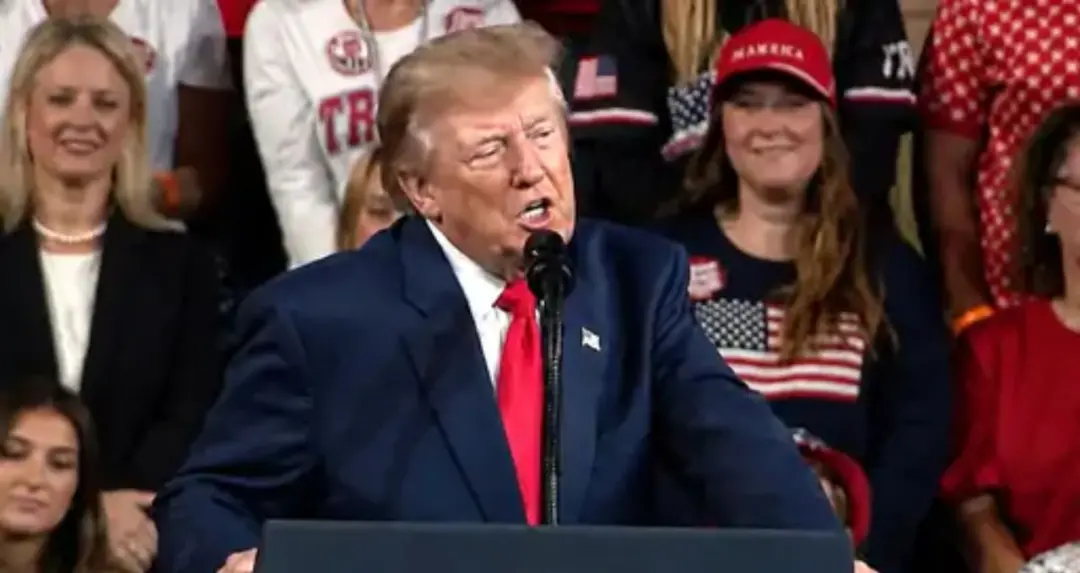
US President Donald Trump has suggested renaming either the Atlantic Ocean or the Pacific Ocean as the “Trump Ocean” or the “Ocean of America.” Speaking at an election rally in Clarksville, Tennessee, on Saturday, October 10, 2026, Trump said he wanted to rename an ocean and a major river before his presidential term ends in 2028. The audience responded with laughter and applause. However, Trump has not formally proposed a name change for either ocean.
The remarks come after the Trump administration initiated changes to several geographical names. The decision to refer to the Gulf of Mexico as the “Gulf of America” and an order to rename Lake Ontario as “Lake America” have prompted debates within the United States and with neighbouring countries over geographical naming conventions.
At the Tennessee rally, Trump said the United States already had a gulf and a lake, but that the name of an ocean should also be changed. He suggested “Trump Ocean” and “Ocean of America” as possible names for either the Atlantic or the Pacific Ocean.
Trump also indicated that he wanted to rename a major river before his presidential term ends in 2028. He did not specify which ocean or river he was considering renaming.
The remarks remain a suggestion rather than a formal government decision. No official process to rename the Atlantic or Pacific Ocean has been announced.
In January 2025, the Trump administration initiated a move to rename the Gulf of Mexico as the “Gulf of America.” The US government took steps to implement the change in official government documents and maps.
The decision triggered a debate between Mexico and the United States over geographical naming and historical identity. Mexico continued to use the traditional name, while the US administration adopted the new name for official use.




The dispute highlighted the distinction between a country's use of a geographical name in its own government records and its acceptance by other countries or international institutions. A domestic naming decision does not automatically require other countries or international organisations to adopt the same name.
Geographical naming decisions can also involve historical identity, regional interests, diplomacy and national symbols.
In August 2026, Trump issued an executive order to rename Lake Ontario, which lies between the United States and Canada, as “Lake America.” An order dated August 27, 2026, recorded instructions to implement the new name in federal records and official references.
Lake Ontario is part of North America's Great Lakes system and is located between the US state of New York and the Canadian province of Ontario. The proposed change therefore involves not only US domestic administration but also a geographical feature shared with Canada.
The case illustrates that the US government can direct the use of official names within its jurisdiction, while changing the internationally recognised name of a shared body of water is a separate matter.
Trump has also previously suggested renaming the US state of New Mexico as “New America.” He made the public remark in September 2026.
However, a US president cannot unilaterally change the state's name through an executive order because the name New Mexico is enshrined in the state constitution.
Any such change would require compliance with the state's constitutional procedures, potentially involving the state legislature and voters.
The issue differs from renaming an ocean because determining the name used in US federal records and changing the constitutional name of a state involve separate legal processes.
Whether the United States can rename an ocean on its own depends on the context in which the new name is used. The US government can direct the use of geographical names in its official documents, federal agency records and government maps.
However, the Atlantic and Pacific oceans encompass vast international waters and border numerous countries. They are used for global trade, maritime transport, fishing and international connectivity.
If the US government adopts a new name for either ocean, other countries may continue using the existing name in their official documents. International organisations and mapmaking companies may also determine naming conventions according to their own rules and policies.
An announcement renaming an ocean would not, by itself, change its geographical characteristics, maritime boundaries or any country's rights over it.
Trump has previously commented on the possibility of renaming the Strait of Hormuz. The waterway is significant to global energy supplies and maritime trade because substantial volumes of oil and other energy resources pass through it.
The Strait of Hormuz connects the Persian Gulf with the Gulf of Oman and the Arabian Sea. Given its strategic importance, international markets and governments closely monitor political and military developments in the region.
However, the suggestion to call it the “Trump Strait” should not be treated as a formal international naming decision. Renaming a strait involves official and international naming considerations.
As of October 12, 2026, Trump has suggested renaming an ocean at the Tennessee rally, but no formal proposal to rename either the Atlantic or Pacific Ocean has been announced. It also remains unclear whether the US administration will pursue the idea through an official process.
If a formal proposal emerges, questions concerning its legal scope, use in government records and international acceptance will become relevant. Adoption of a name by the US government and recognition of that name worldwide are separate matters.
Trump's latest remarks have brought geographical naming back into political discussion. For now, the proposal remains a public suggestion rather than a final decision to rename the Atlantic or Pacific Ocean.