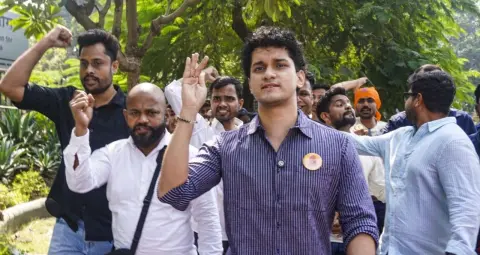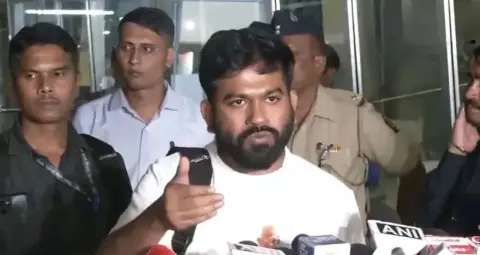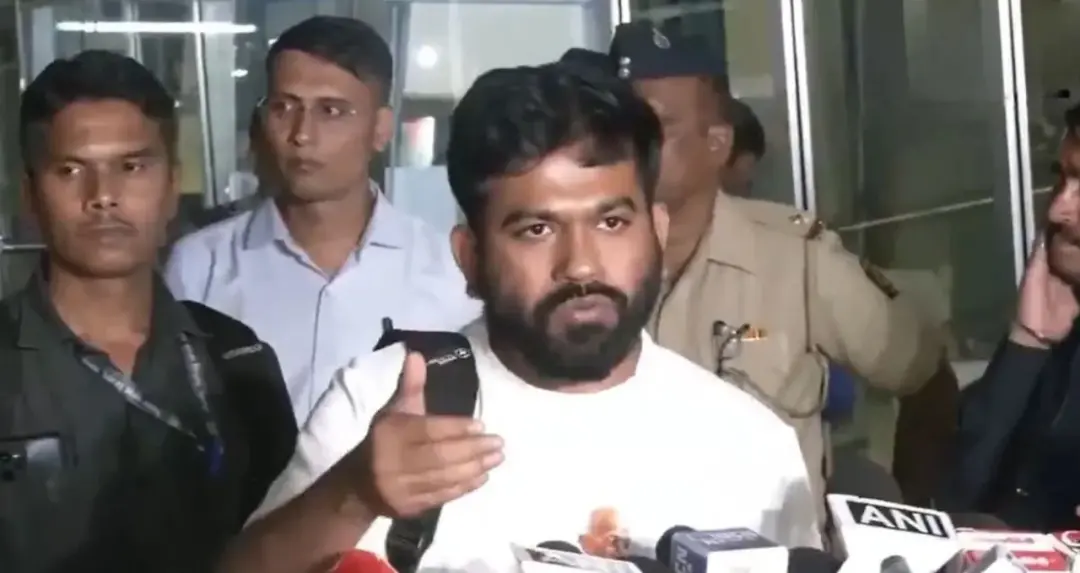
Abhijeet Dipke, founder of the Cockroach Janata Party (CJP), has accused Delhi Police of insensitivity after he was informed of his grandmother’s death. He alleged that he was not allowed to contact his family or speak to his lawyer. His parents, Bhagwan Dipke and Anita Dipke, also expressed dissatisfaction, saying he should have been given an opportunity to pay his last respects and attend the funeral on humanitarian grounds.
According to Abhijeet Dipke, Delhi Police officers informed him of his grandmother’s death in the morning. Following the news, he sought to contact his cousin, who lives in his native village. He asked the police to provide his phone so that he could retrieve the relevant contact number and speak to his family.
Dipke alleged that the officers refused to bring his phone and instead asked him to provide the mobile number from memory. He said he could not recall the number and needed his phone to obtain it. According to him, the police did not provide access to the device despite his explanation.
Dipke expressed dissatisfaction over the incident, saying he should have been allowed to contact his family following the death. His allegations have raised questions about communication with family members, personal circumstances and the treatment of individuals during arrest.
Dipke also claimed that he had requested permission to speak to his lawyer but was not allowed to make contact.
He questioned the police action, arguing that individuals facing arrest are entitled to legal assistance. However, the material provided does not include an official response from Delhi Police or a detailed account of the incident from the authorities. The allegations concerning access to his phone and lawyer therefore remain claims made by Dipke.



The circumstances of the incident and the procedures followed during the arrest would need to be assessed against the relevant official records and the police version of events.
Dipke said Delhi Police officers approached him at around 3:30 a.m. and asked him to call his parents to inform them of his arrest. He questioned why his parents were not informed during the day if the police already knew that he was being arrested.
He argued that receiving news of a son’s arrest at that hour could be distressing for parents and questioned why the communication could not have been postponed until the morning.
Dipke accused Delhi Police of insensitivity, criticising the officers’ conduct and saying he faced difficulties contacting his family after learning of his grandmother’s death.
In his statement, Dipke used b language against Delhi Police, alleging that the officers had failed to understand his circumstances or demonstrate sensitivity.
He described the police personnel as “goons in uniform” and also criticised Union Home Minister Amit Shah. Dipke said he and his supporters would not be intimidated by the government and would continue to take to the streets to raise their voices.
He also claimed that he had not signed any bond. The legal context of this statement was not specified in the material provided, and the relevant documents and official information would be required to establish the circumstances surrounding the claim.
Dipke’s remarks have added to the debate over police conduct and the treatment of people arrested during political protests. An official response from Delhi Police has not been included in the available account.
Bhagwan Dipke, Abhijeet Dipke’s father, expressed disappointment that his son was unable to attend his grandmother’s funeral.
In a statement in Hingoli, he said that if the police had released Abhijeet in time or allowed him to leave on the condition that he return to Delhi after the funeral, he could have seen his grandmother for the last time.
Bhagwan Dipke said he had seen information on social media indicating that Abhijeet had reached Nagpur. He maintained that the circumstances should have been considered after the family was informed of the death and that his son should have been given a suitable opportunity to attend the funeral.
His remarks reflected the family’s dissatisfaction with the police action and the absence of an opportunity for Abhijeet to pay his last respects.
Anita Dipke, Abhijeet’s mother, also expressed disappointment that her son had not been released in time to attend the funeral.
She said that if the police had allowed him to leave a day earlier, he could have reached his family and attended his grandmother’s funeral.
According to Anita Dipke, the family was going through a difficult period and the police should have considered showing some leniency in the circumstances. She said allowing her son to attend the funeral would have provided some relief to the family.
Both parents emphasised that humanitarian considerations should have been taken into account following the death of Abhijeet’s grandmother.
Dipke’s allegations and his parents’ statements have brought attention to questions concerning arrest procedures, access to family members and requests for consideration on humanitarian grounds.
While Dipke alleged that he was denied access to his phone and lawyer, his parents expressed dissatisfaction over his inability to attend his grandmother’s funeral.
The material provided does not include Delhi Police’s official response, arrest-related documents or independent verification of the sequence of events. The allegations can therefore be reported only as statements made by Dipke and his family.
An official police response and the relevant records would be needed to establish what procedures were followed regarding family contact and the request to attend the funeral.