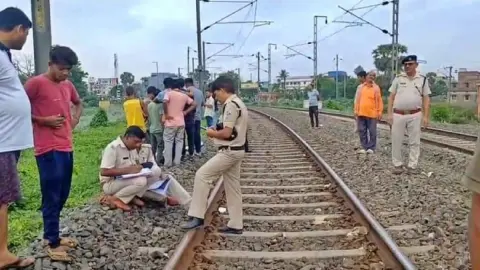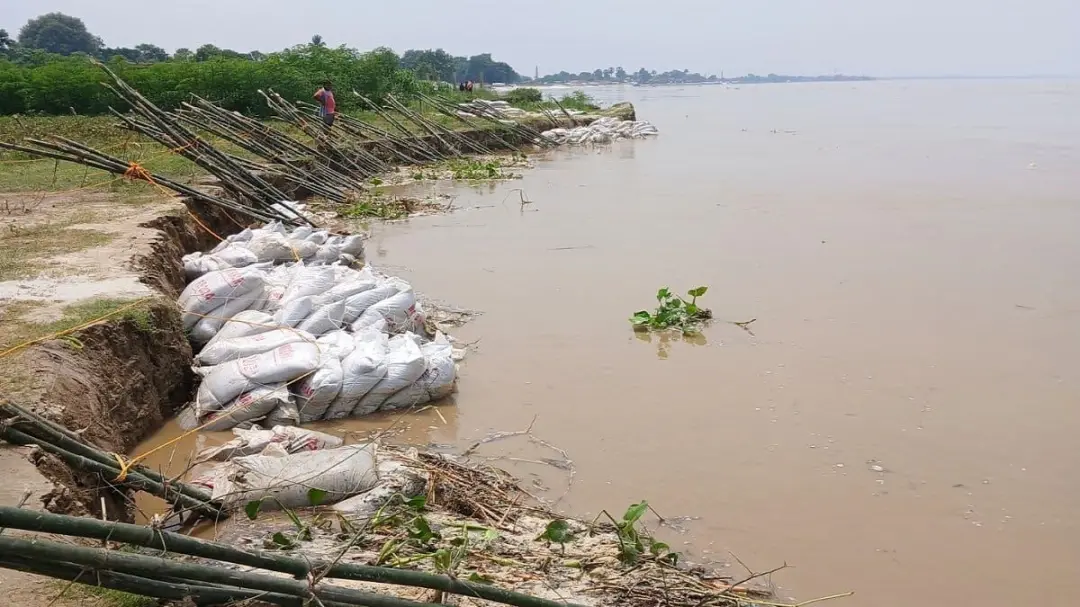
The Ganga River’s rapid erosion in the Raghopur area of Bihar’s Bhagalpur district has renewed concerns among local residents following damage to the railway embankment. Continued erosion along the riverbank has raised concerns about the safety of surrounding areas, including the No. 14 road. A team of ministers and officials visited the affected area to assess the situation, including the extent of erosion, the condition of the railway embankment and the potential threat to the road.
Residents fear that continued erosion could affect the road, adjoining land and populated areas if the river continues to cut into the riverbank.
Riverbank erosion has been a longstanding problem in Raghopur. Changes in the river’s course and b currents gradually weaken the soil along the banks, creating the risk of large sections of land being washed away. The condition of the embankment is therefore a key concern, as damage to the structure could allow erosion to affect surrounding areas.
The reported damage to the railway embankment has heightened these concerns. The administration now faces the task of assessing conditions in the affected areas and determining the measures required to prevent further erosion.




The No. 14 road has also emerged as a point of concern because of its importance for local travel and connectivity with surrounding areas. Further erosion near the road could disrupt movement, while damage to any section could necessitate alternative routes and affect daily activities.
However, any closure of the road or damage to a specific section would require separate confirmation. Following the reported damage to the railway embankment, monitoring the road and assessing its safety remain important priorities.
The visit by the team of ministers and officials was aimed at assessing the situation on the ground and understanding the extent of the threat. On-site inspections can help identify locations where erosion has caused greater damage and where immediate protective measures may be required.
Following such assessments, the relevant departments need to determine further action based on the direction of erosion, the pressure exerted by the river current and the condition of the embankment. Administrative monitoring and technical assessments are both necessary to safeguard affected residents.
For villages along the Ganga, the threat from riverbank erosion extends beyond the loss of land. It can also affect homes, agricultural fields, livestock and livelihoods. Residents face uncertainty over when erosion may accelerate and how much time they would have to move their belongings to safer locations.
Families forced to leave their homes may face difficulties securing accommodation, obtaining food, continuing their children's education and maintaining their daily livelihoods. Timely information and warnings about potential risks are therefore important in erosion-affected areas.
Alongside the railway embankment, nearby infrastructure also requires monitoring. If the embankment has weakened, the relevant departments need to conduct a technical assessment of its current condition and plan protective measures as necessary to limit the impact of river currents and further land erosion on surrounding areas.
The effectiveness of preventive work will depend on the direction of the river current, the extent to which the soil has weakened and the suitability of the measures selected for the affected locations.
Residents of Raghopur hope that the inspection will be followed by accelerated protective work and concrete measures to safeguard the embankment and the road. Continuous monitoring is important because erosion can change rapidly as the river's flow shifts. Even areas that appear stable can experience sudden soil collapse under pressure from b currents.
Maintaining coordination among the administration, engineers and local residents is essential to ensure that necessary action can be taken promptly when signs of increased risk emerge.
The administration also needs to ensure that affected families receive accurate information in a timely manner. If the threat increases in any location, residents should have sufficient time to move to safer areas. Relief and rehabilitation arrangements may also need attention where required.
For people affected by erosion, immediate protection is only one part of the challenge. Measures to support longer-term safety and the continuity of livelihoods are also important.
The situation in Raghopur highlights the importance of protecting embankments and road connectivity in areas along the Ganga. The reported damage to the railway embankment and concerns over the No. 14 road have added to the responsibilities facing the administration. Following the inspection by the ministerial and officials' team, residents are awaiting further action.
The course of the river, the pace of erosion and the effectiveness of protective measures will determine how the situation develops. For now, vigilance, regular monitoring and timely action remain essential in the affected area.